Design, Synthesis, and Acaricidal Activity of 2,5-Diphenyl-1,3-oxazoline Compounds
Yuming Chen, Jiarui Tian, Yuhao Tan, Yuxiu Liu, Qingmin Wang

TL;DR
This study designed and tested new 2,5-diphenyl-1,3-oxazoline compounds for their ability to kill mites, finding that their structure affects how well they bind to a key target enzyme.
Contribution
The paper introduces a new series of 2,5-diphenyl-1,3-oxazoline compounds and explores their acaricidal activity and binding mechanism.
Findings
2,5-diphenyl-1,3-oxazolines showed lower acaricidal activity than 2,4-diphenyl-1,3-oxazolines.
Structural differences affect binding to chitin synthase 1, a key mite enzyme.
The study helps infer the structure of chitin synthase binding pockets.
Abstract
By using a scaffold hopping/ring equivalent and intermediate derivatization strategies, a series of compounds of 2,5-diphenyl-1,3-oxazoline with substituent changes at the 5-phenyl position were prepared, and their acaricidal activity was studied. However, the synthesized 2,5-diphenyl-1,3-oxazolines showed lower activity against mite eggs and larvae compared to the 2,4-diphenyl-1,3-oxazolines with the same substituents. We speculate that there is a significant difference in the spatial extension direction of the substituents between the two skeletons of compounds, resulting in differences in their ability to bind to the potential target chitin synthase 1. This work is helpful in inferring the internal structure of chitin synthase binding pockets.
Genes, proteins, chemicals, diseases, species, mutations and cell lines named across the full text — each resolved to its canonical identifier and authoritative record.
Click any figure to enlarge with its caption.
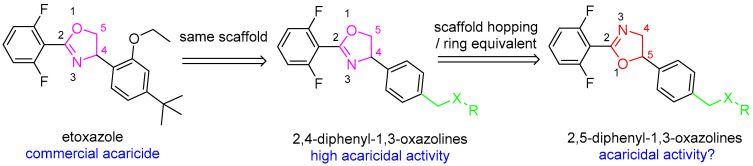 Figure 1
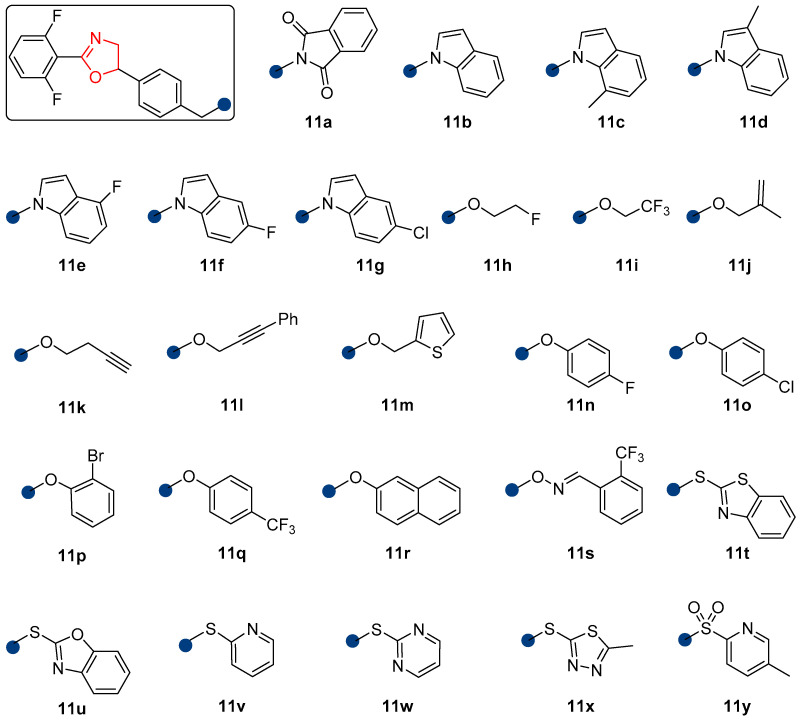 Figure 2
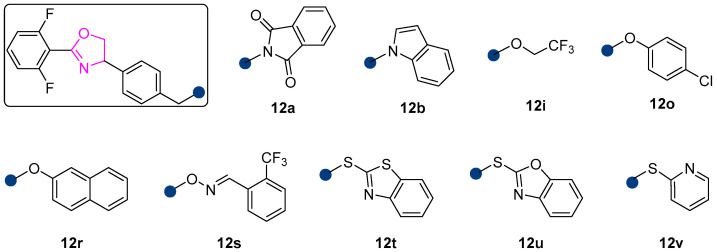 Figure 3
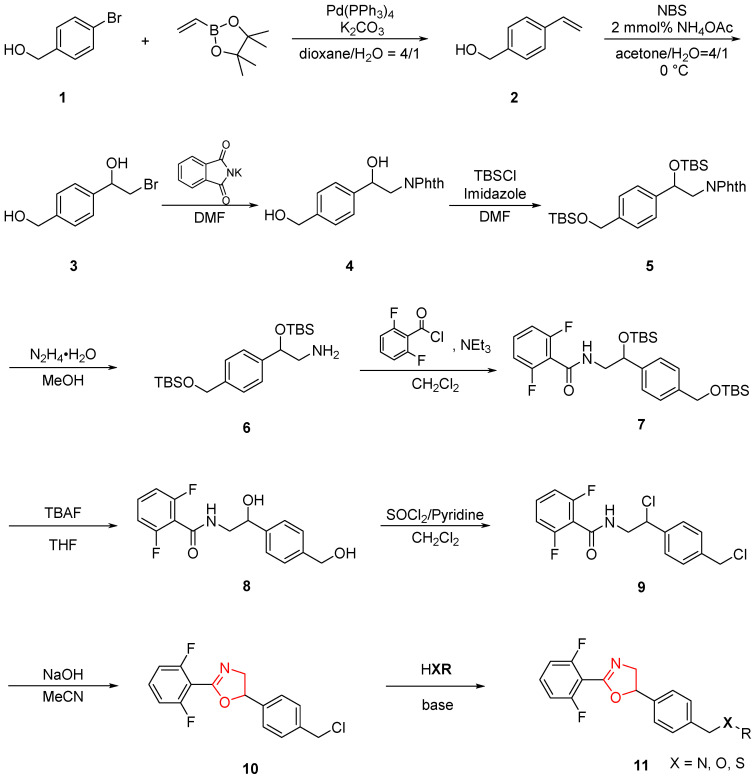 Figure 4
Peer Reviews
No public reviews on file for this paper yet. If you reviewed it on a platform where reviews are public (OpenReview, ICLR, NeurIPS, ICML), you can paste yours below so the community can read it here.
Videos
No videos yet. Explain this paper in a talk, walkthrough, or lecture? Add one.
Taxonomy
TopicsSynthesis and Biological Evaluation · Sulfur-Based Synthesis Techniques · Quinazolinone synthesis and applications