May Patients with Recurrent Venous Disease Benefit from Sequential Treatment More than Those without Previous Intervention? A Single-Center Retrospective Study on the Safety and Efficacy of Abdominal and Pelvic Veins Embolization in Sequential Approach
Cezary Szary, Justyna Wilczko-Kucharska, Krzysztof Celejewski, Małgorzata Łodyga, Marcin Napierala, Dominika Plucinska, Siavash Swieczkowski-Feiz, Jerzy Leszczynski, Michal Zawadzki, Tomasz Grzela

TL;DR
This study shows that pelvic vein embolization is safe and effective, especially for patients with a history of previous vein treatments, improving both pelvic and leg symptoms.
Contribution
The study evaluates the safety and efficacy of sequential embolization in patients with recurrent venous disease.
Findings
66.6% of patients reported improvement in pelvic symptoms after embolization.
72.1% of patients experienced improvement in leg symptoms following the procedure.
The sequential treatment protocol showed better outcomes for leg symptom improvement than embolization alone.
Abstract
Background/Objective: The endovenous embolization of insufficient abdominal/pelvic veins is the preferred method of treatment. Also, it seems to be crucial in the treatment of lower limb vein insufficiency, particularly in recurrent disease. This study aimed to evaluate of pelvic vein embolization safety and its impact on the short-term outcome in the sequential treatment of venous disease. Methods: A retrospective analysis involved data from 506 female patients with venous disease involving abdominal and pelvic veins. All records were extracted from the medical database and included patient history, imaging reports as well as pre- and post-operative surveys. Results: Among the patients analyzed, 37.2% underwent some venous intervention in the past, with significant differences in symptom severity between groups. The embolization procedure revealed a high safety profile, with no serious…
Genes, proteins, chemicals, diseases, species, mutations and cell lines named across the full text — each resolved to its canonical identifier and authoritative record.
Click any figure to enlarge with its caption.
 Figure 1
 Figure 2
 Figure 3
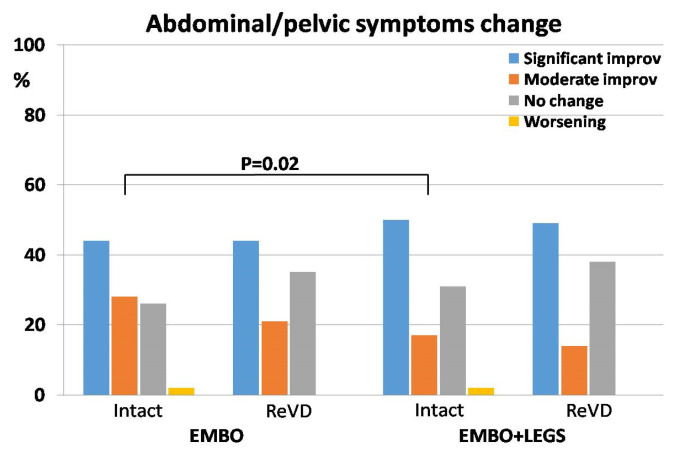 Figure 4
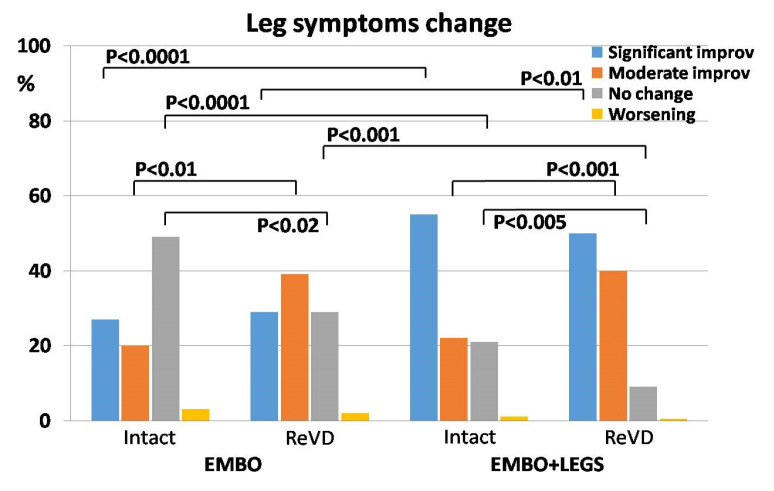 Figure 5
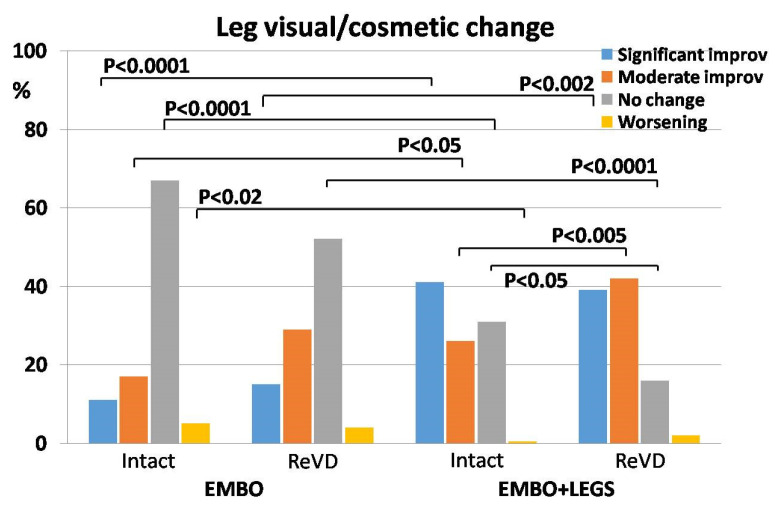 Figure 6
Peer Reviews
No public reviews on file for this paper yet. If you reviewed it on a platform where reviews are public (OpenReview, ICLR, NeurIPS, ICML), you can paste yours below so the community can read it here.
Videos
No videos yet. Explain this paper in a talk, walkthrough, or lecture? Add one.
Taxonomy
TopicsVenous Thromboembolism Diagnosis and Management · Diagnosis and Treatment of Venous Diseases · Central Venous Catheters and Hemodialysis