Distinct Variations in Gene Expression and Cell Composition across Lichen Planus Subtypes
Cadri Knoch, Veronika Baghin, Patrick Turko, Nicola Winkelbeiner, Ramon Staeger, Kongchang Wei, Irina Banzola, Mark Mellett, Mitchell P. Levesque, Thomas Kuendig, Lars E. French, Lucie Heinzerling, Barbara Meier-Schiesser

TL;DR
This study compares gene expression and immune cell differences in various types of lichen planus, revealing unique inflammatory patterns that could guide targeted treatments.
Contribution
The study provides the first detailed comparison of gene expression and immune cell profiles across multiple lichen planus subtypes.
Findings
Lichen planopilaris showed downregulated genes and increased complement pathway activity with elevated M2 macrophages.
Oral LP had the highest upregulation of cytotoxicity genes and high levels of CD8+ IL-17A+ Tc17 cells.
Oral and classical LP shared strong interferon gene signatures, while oral and genital LP showed similar TNF-related gene upregulation.
Abstract
Lichen planus (LP) is a highly prevalent inflammatory skin disease. While various clinical subtypes have been defined, detailed comparisons of these variants are lacking. This study aimed to elucidate differences in gene expression and cellular composition across LP subtypes. Lesional skin biopsies from 28 LP patients (classical, oral, genital, and lichen planopilaris) and seven non-diseased skin controls (NDC) were analyzed. Gene expression profiling of 730 inflammation-related genes was conducted using NanoString. Immune cell compositions were assessed by multiplex immunohistochemistry. Gene expression profiles revealed unique inflammatory signatures for each LP subtype. Lichen planopilaris exhibited the most divergence, with downregulated gene expression and upregulation of complement pathway genes (C5-7), along with elevated M2 macrophages. Oral and genital LP demonstrated similar…
Genes, proteins, chemicals, diseases, species, mutations and cell lines named across the full text — each resolved to its canonical identifier and authoritative record.
Click any figure to enlarge with its caption.
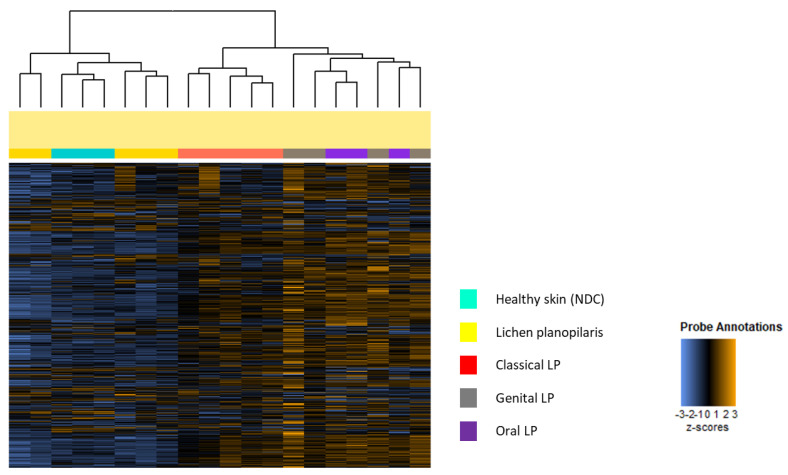 Figure 1
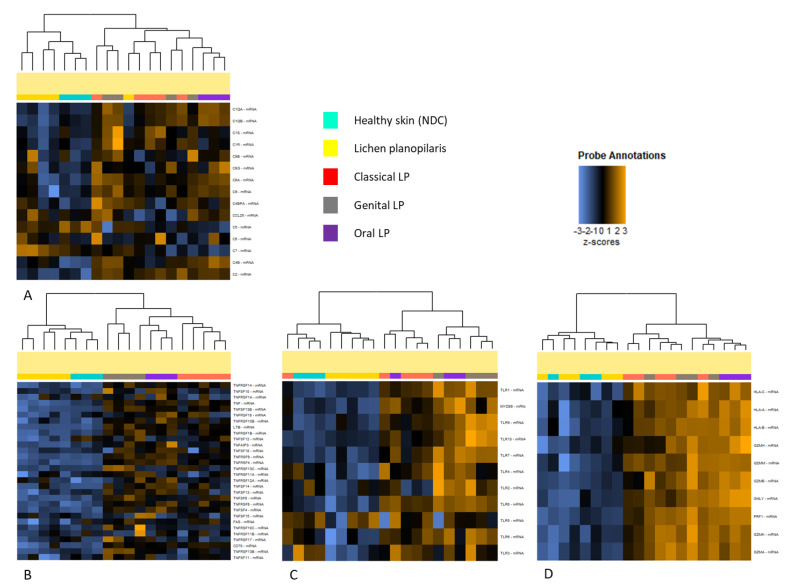 Figure 2
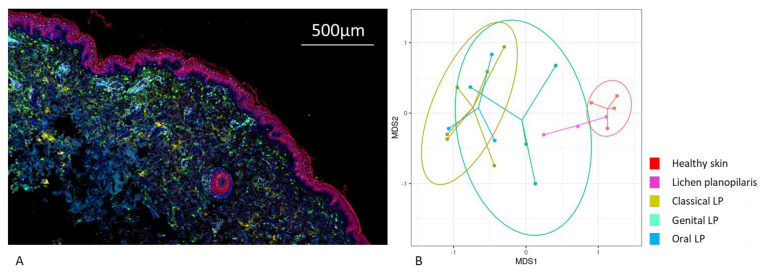 Figure 3
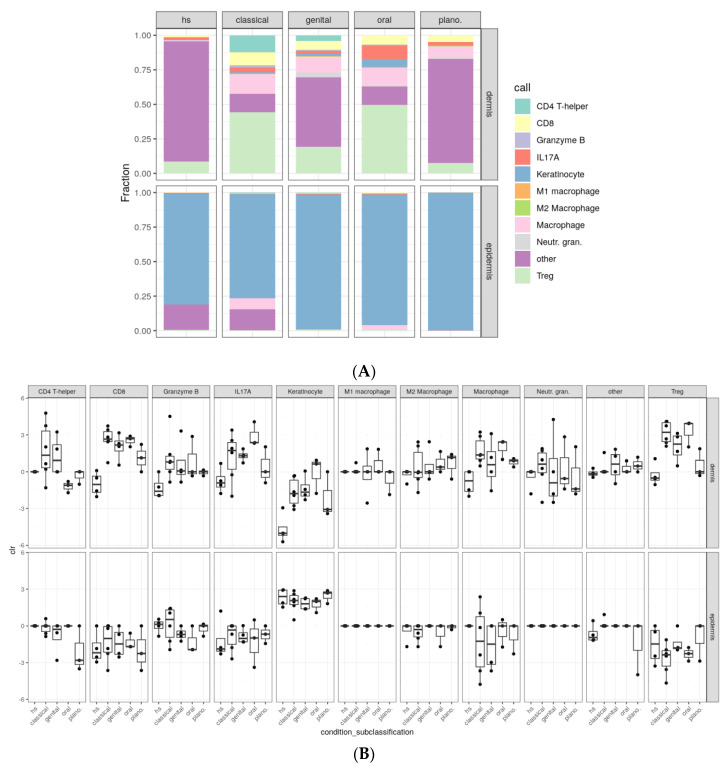 Figure 4
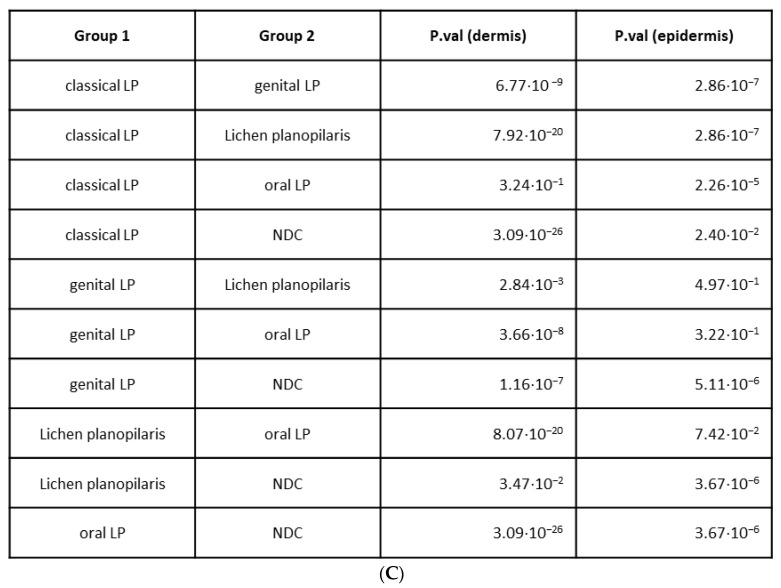 Figure 5
Peer Reviews
No public reviews on file for this paper yet. If you reviewed it on a platform where reviews are public (OpenReview, ICLR, NeurIPS, ICML), you can paste yours below so the community can read it here.
Videos
No videos yet. Explain this paper in a talk, walkthrough, or lecture? Add one.
Taxonomy
TopicsOral Health Pathology and Treatment · Skin and Cellular Biology Research · Autoimmune Bullous Skin Diseases