What Important Information Does Transesophageal Echocardiography Provide When Performed before Transvenous Lead Extraction?
Dorota Nowosielecka, Wojciech Jacheć, Małgorzata Stefańczyk Dzida, Anna Polewczyk, Dominika Mościcka, Agnieszka Nowosielecka, Andrzej Kutarski

TL;DR
Transesophageal echocardiography before transvenous lead extraction reveals critical information about lead complications and risks, influencing procedure planning and outcomes.
Contribution
The study highlights the underappreciated value of TEE in identifying factors affecting TLE complexity, complications, and survival.
Findings
Lead adhesion to heart structures significantly increases procedure complexity and major complications.
Vegetation-like masses on leads are the strongest predictor of 1-year mortality.
Preoperative TEE findings can guide clinical decisions, such as transferring patients to experienced centers.
Abstract
Background: Transesophageal echocardiography (TEE) is mandatory before transvenous lead extraction (TLE), but its usefulness remains underestimated. This study aims to describe the broad range of TEE findings in TLE candidates, as well as their influence on procedure complexity, major complications (MCs) and long-term survival. Methods: Preoperative TEE was performed in 1191 patients undergoing TLE. Results: Lead thickening (OR = 1.536; p = 0.007), lead adhesion to heart structures (OR = 2.531; p < 0.001) and abnormally long lead loops (OR = 1.632; p = 0.006) increased the complexity of TLE. Vegetation-like masses on the lead (OR = 4.080; p = 0.44), lead thickening (OR = 2.389; p = 0.049) and lead adhesion to heart structures (OR = 6.341; p < 0.001) increased the rate of MCs. The presence of vegetations (HR = 7.254; p < 0.001) was the strongest predictor of death during a 1-year…
Genes, proteins, chemicals, diseases, species, mutations and cell lines named across the full text — each resolved to its canonical identifier and authoritative record.
Click any figure to enlarge with its caption.
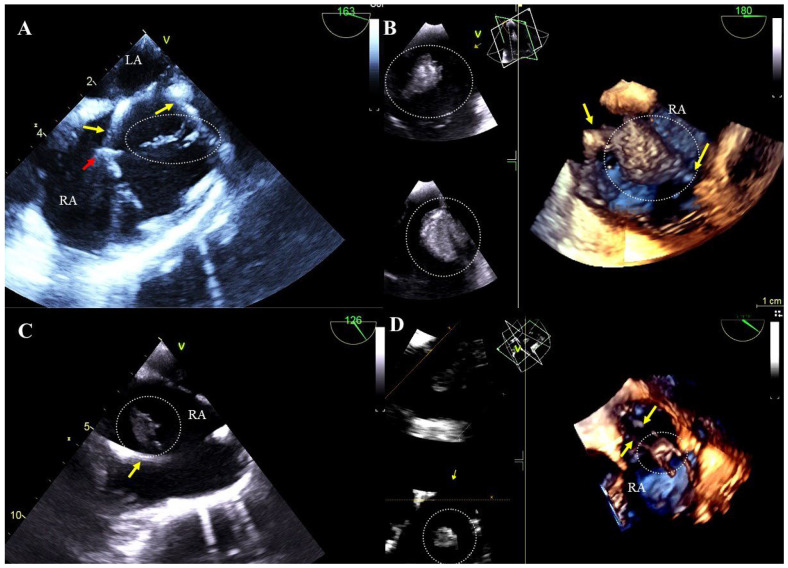 Figure 1
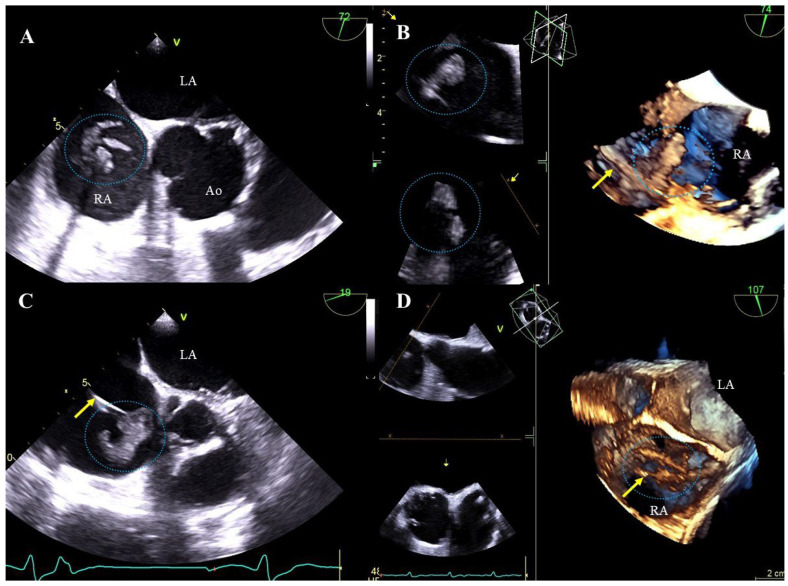 Figure 2
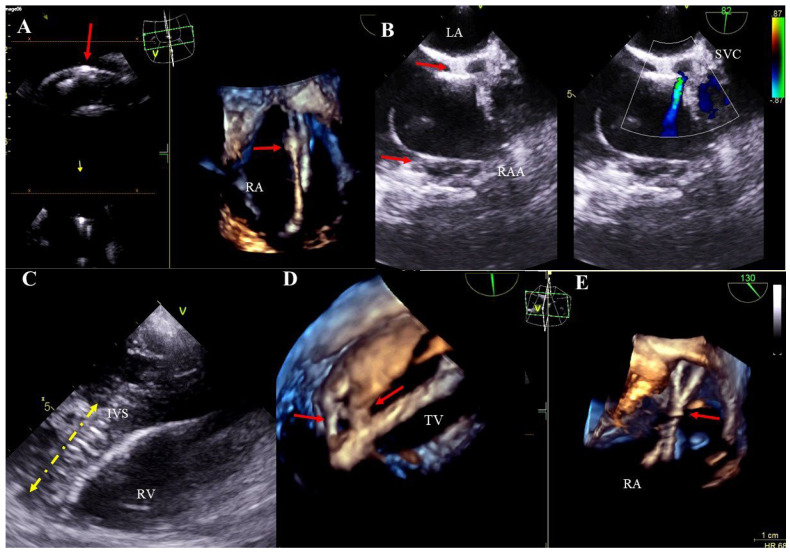 Figure 3
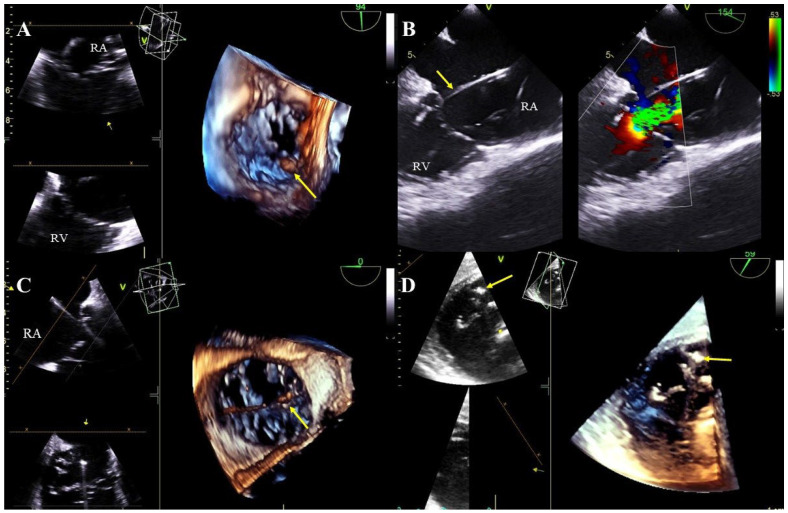 Figure 4
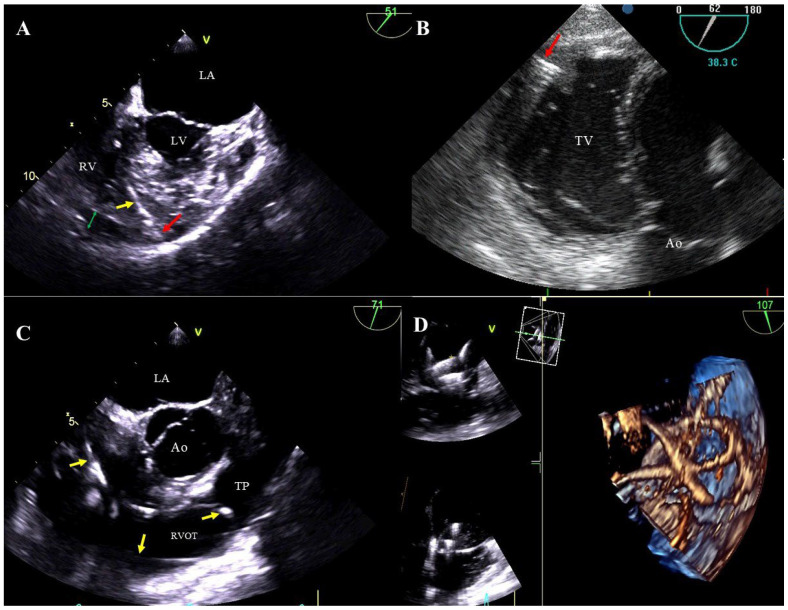 Figure 5
Peer Reviews
No public reviews on file for this paper yet. If you reviewed it on a platform where reviews are public (OpenReview, ICLR, NeurIPS, ICML), you can paste yours below so the community can read it here.
Videos
No videos yet. Explain this paper in a talk, walkthrough, or lecture? Add one.
Taxonomy
TopicsCardiac pacing and defibrillation studies · Cardiac Valve Diseases and Treatments · Cardiac Arrhythmias and Treatments