Changes in the Articular Cartilage Thickness in Patients with Symptomatic Rotator Cuff Tears: A Prospective Study with a Mean 5-Year Follow-Up
Jun Kawakami, Nobuyuki Yamamoto, Atsushi Arino, Rei Kimura, Kazuho Aizawa, Hirotaka Sano, Shin Hitachi, Toshimi Aizawa, Eiji Itoi

TL;DR
This study found that over 40% of patients with rotator cuff tears experienced significant cartilage thinning in the humeral head over five years.
Contribution
The study provides new longitudinal MRI data on cartilage changes in rotator cuff tear patients with a 5-year follow-up.
Findings
42% of shoulders showed more than 30% cartilage thinning in the humeral head over five years.
Cartilage thinning in the humeral head occurred mainly in the anterior and posterior regions.
Glenoid cartilage thinning was minimal, affecting only one shoulder (4%).
Abstract
Objectives: The purpose of this study was to prospectively investigate the progression of cartilage thinning in patients with symptomatic rotator cuff tears using MRI. Methods: Two hundred twenty-five consecutive patients with symptomatic rotator cuff tears visited our institute between 2009 and 2019. Of these, 28 shoulders of 27 patients (mean age, 65 years) who underwent at least two magnetic resonance imaging (MRI) examinations were prospectively enrolled. They all received conservative treatment. The mean follow-up was 67 months. Changes in cartilage thickness and the combined cartilage and subchondral bone thickness at the initial and final MRI were measured using a RadiAnt DICOM-viewer (Medixant, Poznan, Poland). The cartilage thickness of the humeral head was measured in the oblique coronal and sagittal images. The glenoid cartilage was measured in the axial and oblique coronal…
Genes, proteins, chemicals, diseases, species, mutations and cell lines named across the full text — each resolved to its canonical identifier and authoritative record.
Click any figure to enlarge with its caption.
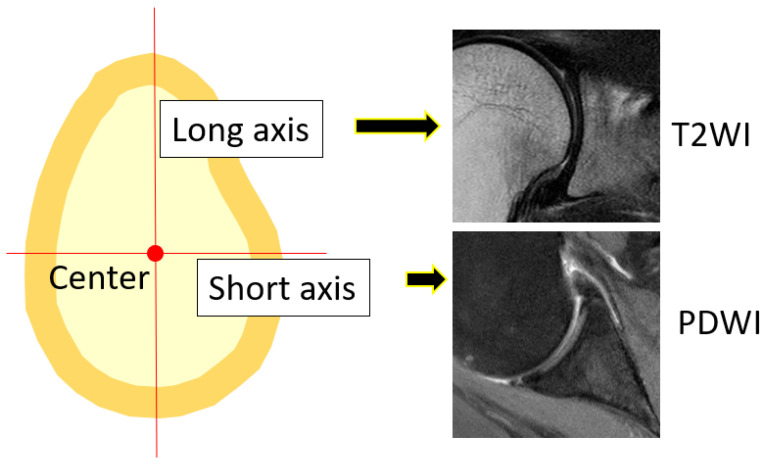 Figure 1
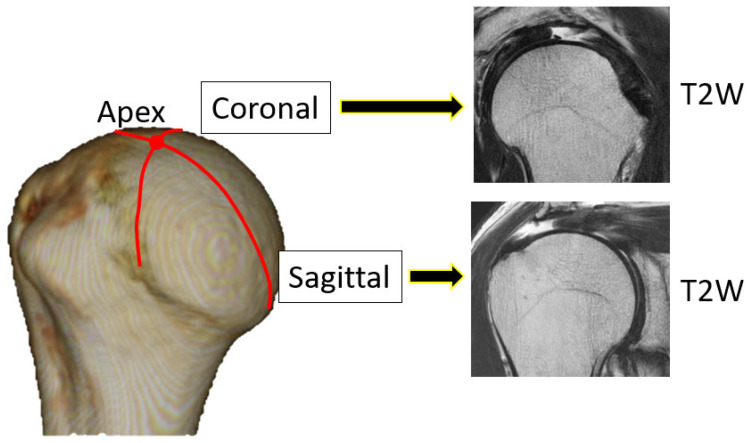 Figure 2
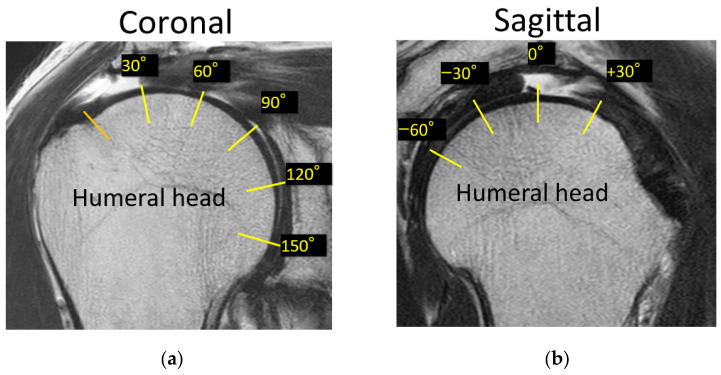 Figure 3
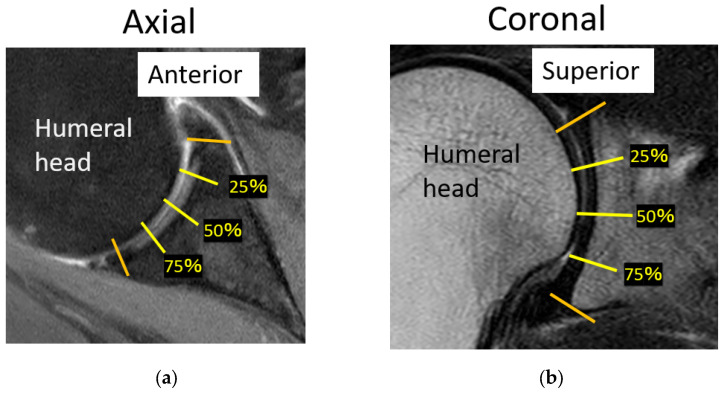 Figure 4
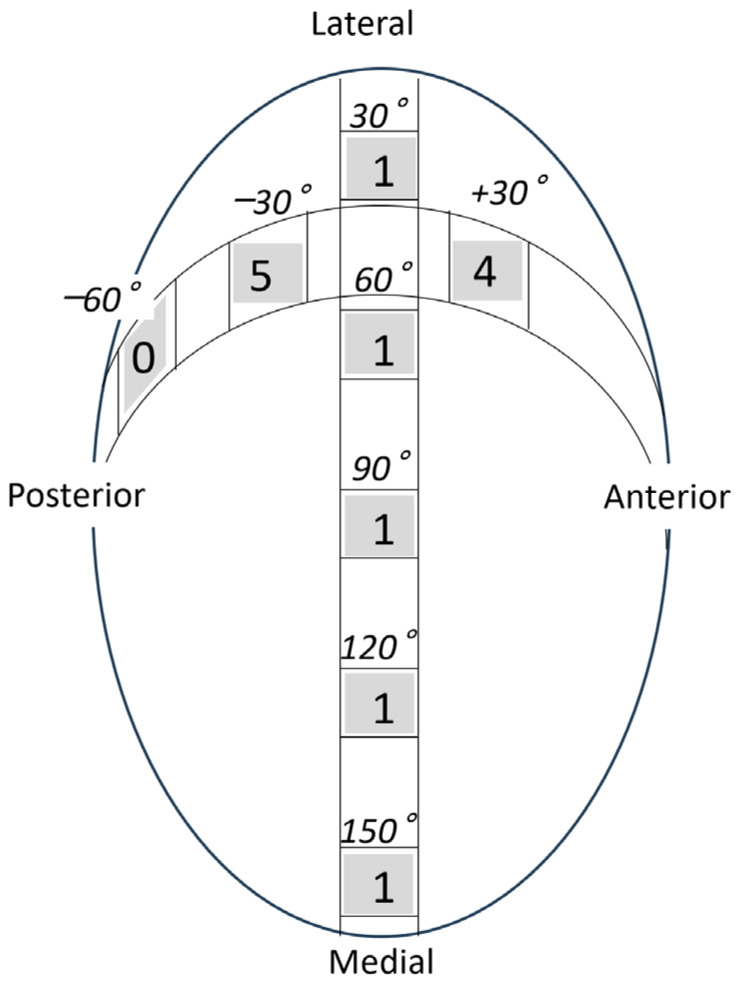 Figure 5
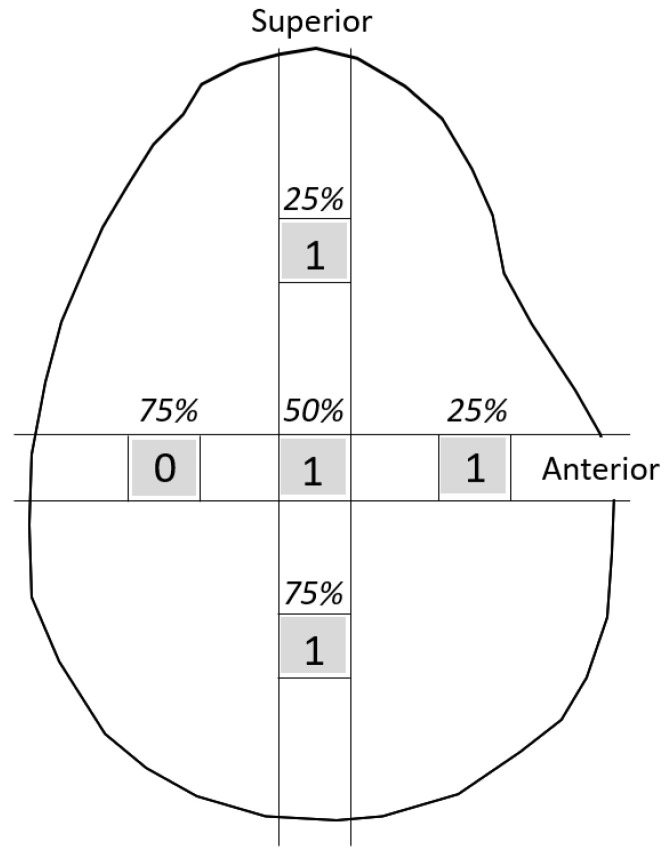 Figure 6
Peer Reviews
No public reviews on file for this paper yet. If you reviewed it on a platform where reviews are public (OpenReview, ICLR, NeurIPS, ICML), you can paste yours below so the community can read it here.
Videos
No videos yet. Explain this paper in a talk, walkthrough, or lecture? Add one.
Taxonomy
TopicsShoulder Injury and Treatment · Shoulder and Clavicle Injuries