Gender Reassignment and the Role of the Laboratory in Monitoring Gender-Affirming Hormone Therapy
Indra Ramasamy

TL;DR
This review discusses how laboratories can support transgender individuals undergoing hormone therapy by adapting reference ranges and reporting practices to their affirmed gender.
Contribution
The paper provides a comprehensive overview of laboratory considerations for transgender care, emphasizing the need for gender-affirming reference ranges.
Findings
Laboratories should report blood parameters like red blood cells using the affirmed gender's reference ranges.
Testosterone and estradiol levels should align with cisgender reference intervals for affirmed gender.
Electronic medical records should include gender identity and biological sex at birth for accurate result interpretation.
Abstract
Transgender people experience distress due to gender incongruence (i.e., a discrepancy between their gender identity and sex assigned at birth). Gender-affirming hormone treatment (GAHT) is a part of gender reassignment treatment. The therapeutic goals of the treatment are to develop the physical characteristics of the affirmed gender as far as possible. Guidelines have been developed for GAHT, which recommend dosage as well as different formulations of oestrogen and testosterone for treatment. Questions arise about the metabolic side effects of hormone treatment. Establishing reference ranges for common analytes in transgender individuals remains a task for laboratory medicine. It has been suggested once GAHT is commenced, the reference ranges for affirmed gender are reported for red blood cells, haemoglobin and haematocrit. For transgender assigned-female-at-birth (AFAB) people,…
Genes, proteins, chemicals, diseases, species, mutations and cell lines named across the full text — each resolved to its canonical identifier and authoritative record.
Click any figure to enlarge with its caption.
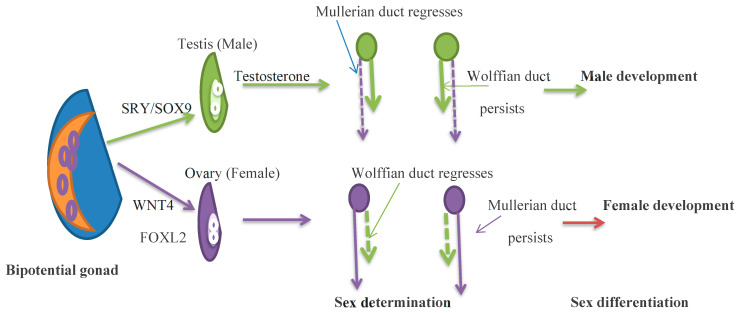 Figure 1
Peer Reviews
No public reviews on file for this paper yet. If you reviewed it on a platform where reviews are public (OpenReview, ICLR, NeurIPS, ICML), you can paste yours below so the community can read it here.
Videos
No videos yet. Explain this paper in a talk, walkthrough, or lecture? Add one.
Taxonomy
TopicsLGBTQ Health, Identity, and Policy · Sexual Differentiation and Disorders · Male Breast Health Studies