Effect of Diflunisal in Patients with Transthyretin Cardiomyopathy: A Pilot Study
Andrea Camblor Blasco, Ana Devesa, Luis Nieto Roca, Sandra Gómez-Talavera, Jairo Lumpuy-Castillo, Ana María Pello Lázaro, Lucía Llanos Jiménez, Javier Sánchez González, Óscar Lorenzo, Jose Tuñón, Borja Ibáñez, Álvaro Aceña

TL;DR
This pilot study explores the effects of diflunisal on patients with transthyretin cardiomyopathy, finding it generally well-tolerated and possibly slowing disease progression.
Contribution
The study is the first to assess diflunisal's impact on morphological changes in ATTR-CM using CMR and real-world patient data.
Findings
Diflunisal showed a non-significant trend towards stabilizing CMR parameters like LVEF, ECV, and T2.
Patients who completed treatment had a significant decrease in 6MWT distance compared to those who did not.
Diflunisal was well-tolerated with only minor, clinically irrelevant renal function changes observed.
Abstract
Background: ATTR-CM is becoming more prevalent, and disease-modifying therapy has been investigated in recent years with promising results. Diflunisal has shown TTR-stabilizing properties assessed by biomarkers and echocardiography, but there are no trials addressing the evolution of morphological changes with CMR. Methods and Results: AMILCA-DIFLU is an exploratory pilot study prospective, single-center, non-randomized, open-label clinical trial. Patients diagnosed with ATTR-CM underwent clinical, functional, biochemical and imaging assessment before and one year after diflunisal therapy initiation. Of the twelve ATTR-CM patients included, only nine patients completed treatment and study protocol in 12 months. To increase the sample size, we included seven real-world patients with one year of diflunisal treatment. Among the group of patients who completed treatment, diflunisal therapy…
Genes, proteins, chemicals, diseases, species, mutations and cell lines named across the full text — each resolved to its canonical identifier and authoritative record.
Click any figure to enlarge with its caption.
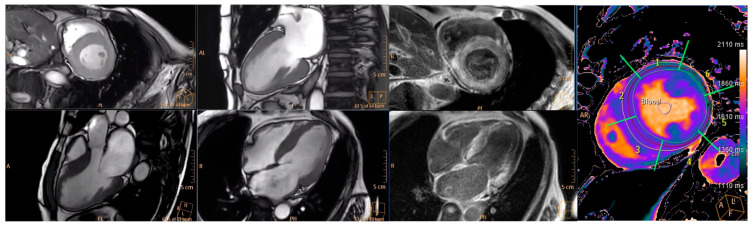 Figure 1
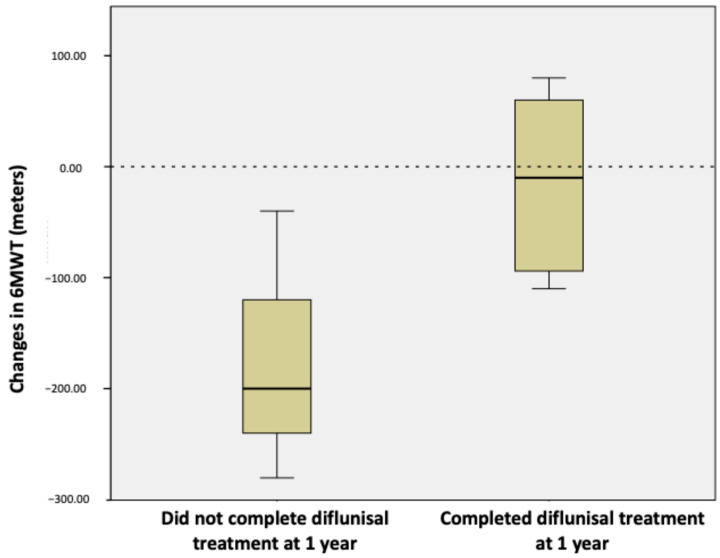 Figure 2
Peer Reviews
No public reviews on file for this paper yet. If you reviewed it on a platform where reviews are public (OpenReview, ICLR, NeurIPS, ICML), you can paste yours below so the community can read it here.
Videos
No videos yet. Explain this paper in a talk, walkthrough, or lecture? Add one.
Taxonomy
TopicsAmyloidosis: Diagnosis, Treatment, Outcomes · Coagulation, Bradykinin, Polyphosphates, and Angioedema · Protein Kinase Regulation and GTPase Signaling