Respiratory Drive, Effort, and Lung-Distending Pressure during Transitioning from Controlled to Spontaneous Assisted Ventilation in Patients with ARDS: A Multicenter Prospective Cohort Study
Eleonora Balzani, Francesco Murgolo, Matteo Pozzi, Rossella Di Mussi, Nicola Bartolomeo, Umberto Simonetti, Luca Brazzi, Savino Spadaro, Giacomo Bellani, Salvatore Grasso, Vito Fanelli

TL;DR
This study finds that patients with ARDS, especially those with COVID-19, are more likely to experience harmful breathing patterns when transitioning from controlled to assisted ventilation.
Contribution
The study identifies specific patient and treatment factors that increase the risk of harmful respiratory drive and effort during ventilation transitions in ARDS patients.
Findings
Patients with COVID-19-related ARDS had a 3-fold higher risk of excessive respiratory drive during assisted breathing.
Prolonged deep sedation and higher steroid doses were linked to increased inspiratory effort and lung-distending pressure.
A significant proportion of breaths exceeded safe thresholds for respiratory drive and transpulmonary pressure in ARDS patients.
Abstract
Objectives: To investigate the impact of patient characteristics and treatment factors on excessive respiratory drive, effort, and lung-distending pressure during transitioning from controlled to spontaneous assisted ventilation in patients with acute respiratory distress syndrome (ARDS). Methods: Multicenter cohort observational study of patients with ARDS at four academic intensive care units. Respiratory drive (P0.1), diaphragm electrical activity (EAdi), inspiratory effort derived from EAdi (∆PmusEAdi) and from occlusion of airway pressure (∆Pocc) (PmusΔPocc), and dynamic transpulmonary driving pressure (ΔPL,dyn) were measured at the first transition to assisted spontaneous breathing. Results: A total of 4171 breaths were analyzed in 48 patients. P0.1 was >3.5 cmH2O in 10%, EAdiPEAK > 15 µV in 29%, ∆PmusEAdi > 15 cmH2O in 28%, and ΔPL,dyn > 15 cmH2O in 60% of the studied breaths.…
Genes, proteins, chemicals, diseases, species, mutations and cell lines named across the full text — each resolved to its canonical identifier and authoritative record.
Click any figure to enlarge with its caption.
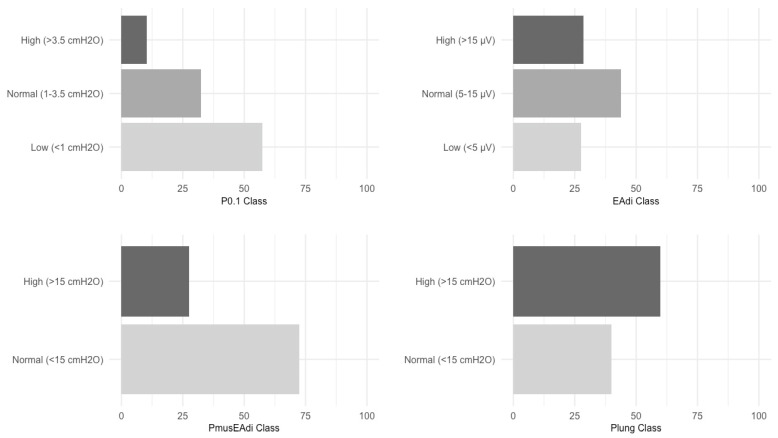 Figure 1
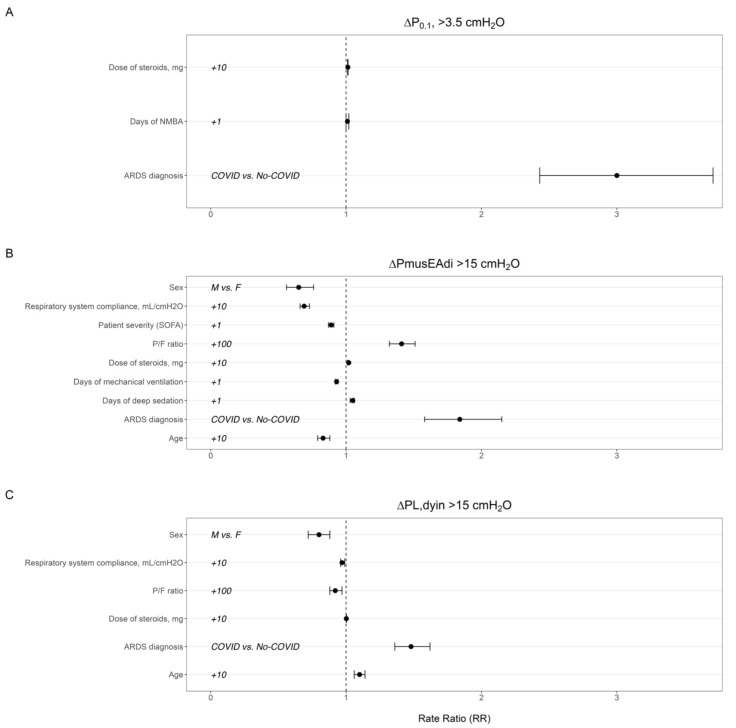 Figure 2
Peer Reviews
No public reviews on file for this paper yet. If you reviewed it on a platform where reviews are public (OpenReview, ICLR, NeurIPS, ICML), you can paste yours below so the community can read it here.
Videos
No videos yet. Explain this paper in a talk, walkthrough, or lecture? Add one.
Taxonomy
TopicsRespiratory Support and Mechanisms · Intensive Care Unit Cognitive Disorders · Sepsis Diagnosis and Treatment