Focal Cerebral Ischemia Induces Expression of Glutaminyl Cyclase along with Downstream Molecular and Cellular Inflammatory Responses
Corinna Höfling, Luise Ulrich, Sina Burghardt, Philippa Donkersloot, Michael Opitz, Stefanie Geissler, Stephan Schilling, Holger Cynis, Dominik Michalski, Steffen Roßner

TL;DR
This study shows that brain ischemia increases glutaminyl cyclase activity and triggers inflammatory responses in the brain.
Contribution
The study identifies a novel role for glutaminyl cyclase in cerebral ischemia-induced inflammation.
Findings
QC-immunoreactive neurons increase in the infarct area after cerebral ischemia.
CCL2 levels rise alongside microglial activation and immune cell recruitment.
CCL17 concentrations increase in brain tissue 72 hours post-ischemia.
Abstract
Glutaminyl cyclase (QC) and its isoenzyme (isoQC) catalyze the formation of N-terminal pyroglutamate (pGlu) from glutamine on a number of neuropeptides, peptide hormones and chemokines. Chemokines of the C-C ligand (CCL) motif family are known to contribute to inflammation in neurodegenerative conditions. Here, we used a model of transient focal cerebral ischemia to explore functional, cellular and molecular responses to ischemia in mice lacking genes for QC, isoQC and their substrate CCL2. Mice of the different genotypes were evaluated for functional consequences of stroke, infarct volume, activation of glia cells, and for QC, isoQC and CCL2 expression. The number of QC-immunoreactive, but not of isoQC-immunoreactive, neurons increased robustly in the infarct area at 24 and 72 h after ischemia. In parallel, immunohistochemical signals for the QC substrate CCL2 increased from 24 to 72 h…
Genes, proteins, chemicals, diseases, species, mutations and cell lines named across the full text — each resolved to its canonical identifier and authoritative record.
Click any figure to enlarge with its caption.
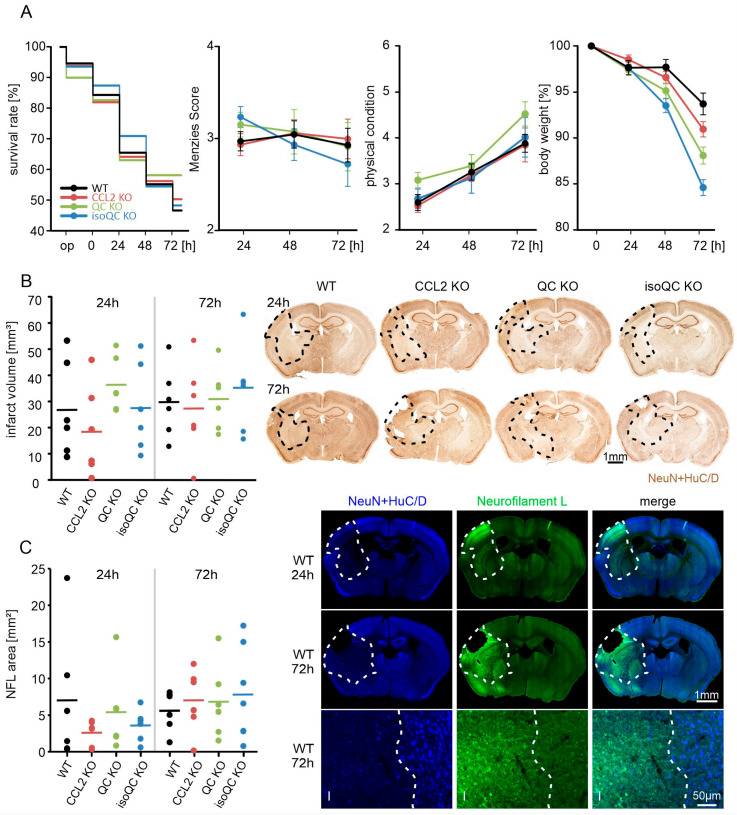 Figure 1
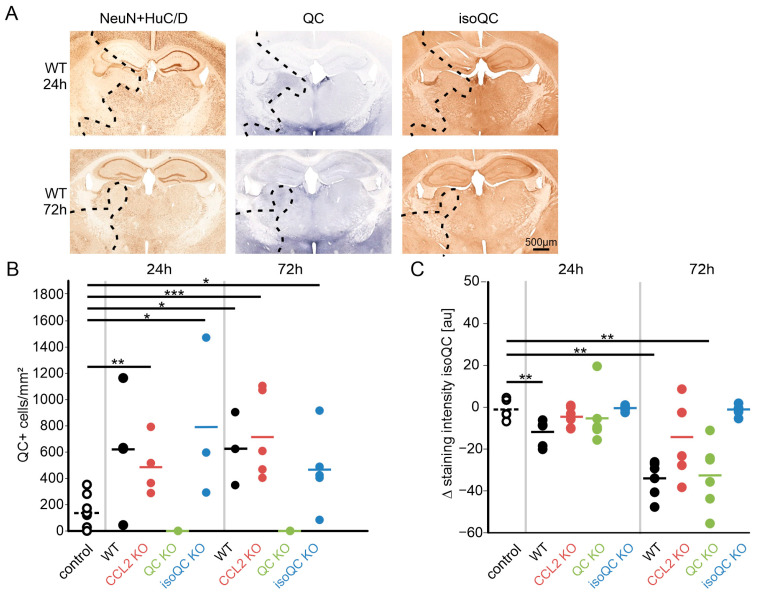 Figure 2
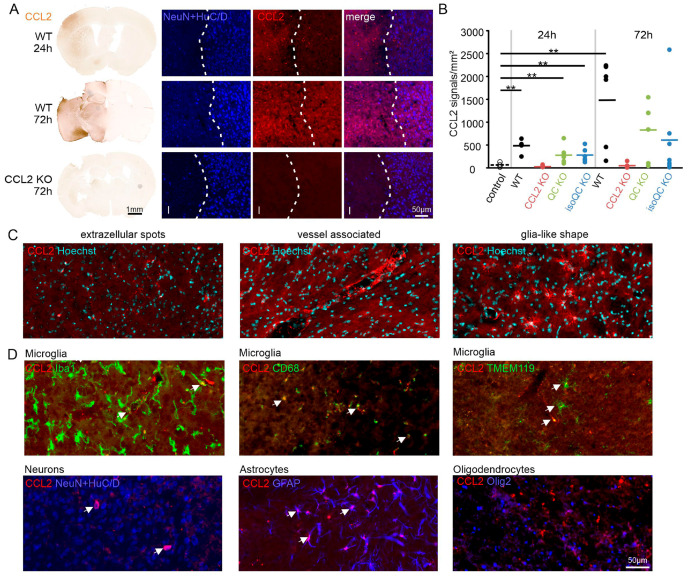 Figure 3
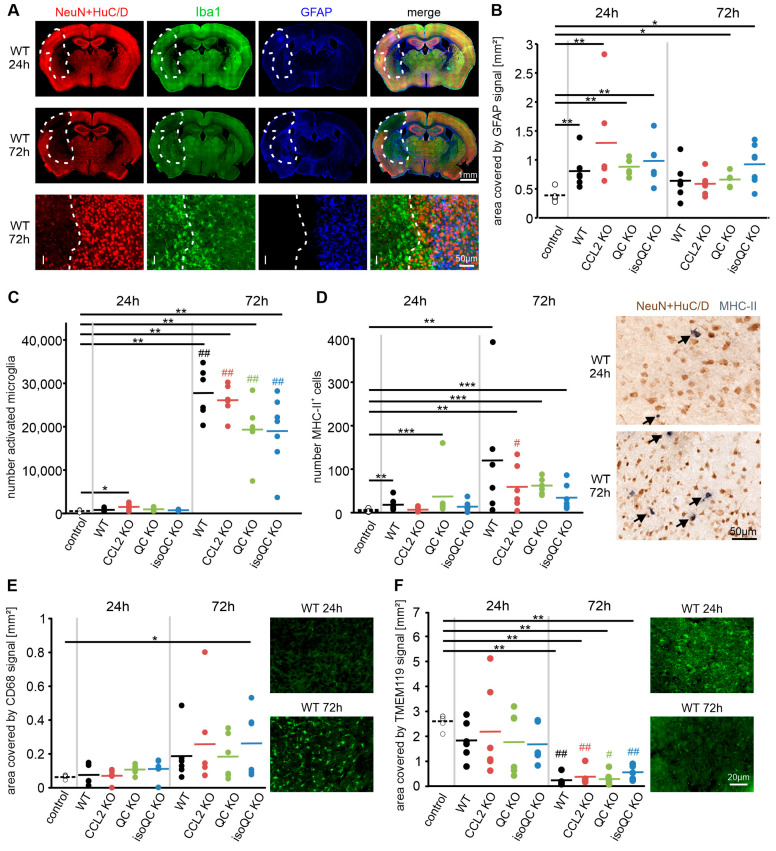 Figure 4
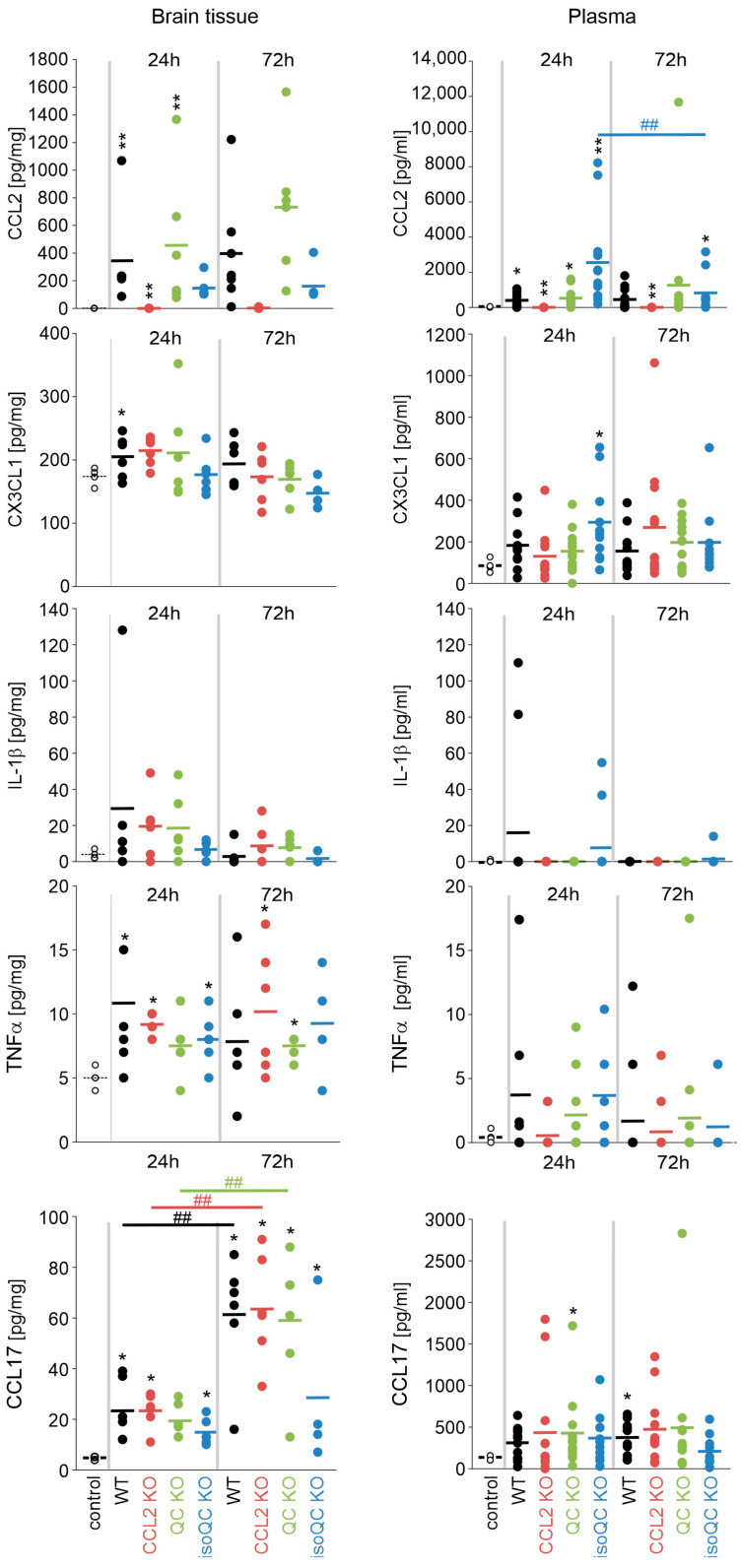 Figure 5
Peer Reviews
No public reviews on file for this paper yet. If you reviewed it on a platform where reviews are public (OpenReview, ICLR, NeurIPS, ICML), you can paste yours below so the community can read it here.
Videos
No videos yet. Explain this paper in a talk, walkthrough, or lecture? Add one.
Taxonomy
TopicsNeuroinflammation and Neurodegeneration Mechanisms · Chemokine receptors and signaling · Immune cells in cancer