Colocalised Genetic Associations Reveal Alternative Splicing Variants as Candidate Causal Links for Breast Cancer Risk in 10 Loci
André Besouro-Duarte, Beatriz Carrasqueiro, Sofia Sousa, Joana M. Xavier, Ana-Teresa Maia

TL;DR
This study identifies genetic variants linked to alternative splicing in breast cancer risk, suggesting new mechanisms and potential biomarkers.
Contribution
The study reveals alternative splicing variants as candidate causal links for breast cancer risk in 10 loci.
Findings
43 variants in twelve genes are associated with both alternative splicing and breast cancer risk.
Three genes (FDPS, SGCE, MRPL11) show potential splicing modulation by nearby variants.
Further studies are needed to confirm how these splicing changes contribute to breast cancer.
Abstract
Hundreds of common genetic variants have been linked to breast cancer, but their exact mechanisms of action remain unclear. Understanding these mechanisms could lead to better prevention strategies and improved survival rates. Our study focused on how these variants influence splicing—a process by which a gene’s coding elements are rearranged to produce different proteins. By analysing data from healthy breast tissue, we identified 43 variants within twelve genes associated with both alternative splicing and breast cancer risk. We then used advanced computational tools and existing experimental data to explore the biological significance of these findings. Genome-wide association studies (GWASs) have revealed numerous loci associated with breast cancer risk, yet the precise causal variants, their impact on molecular mechanisms, and the affected genes often remain elusive. We…
Genes, proteins, chemicals, diseases, species, mutations and cell lines named across the full text — each resolved to its canonical identifier and authoritative record.
Click any figure to enlarge with its caption.
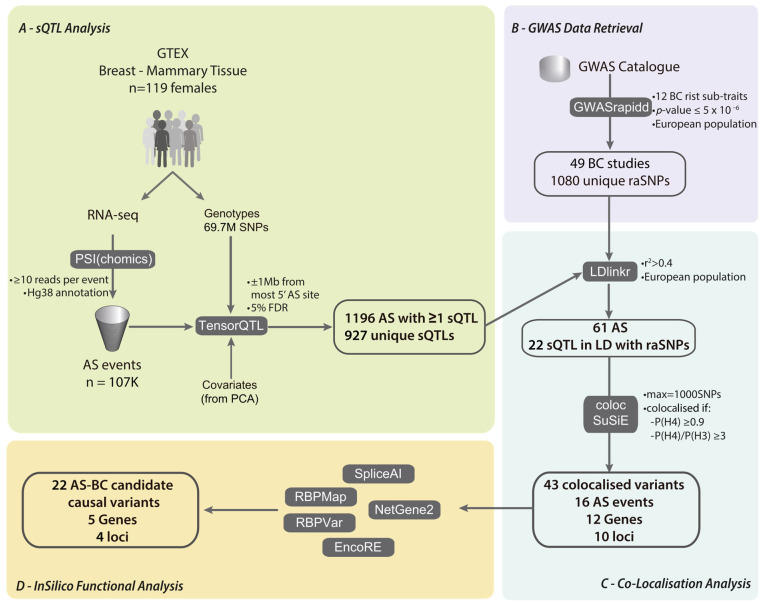 Figure 1
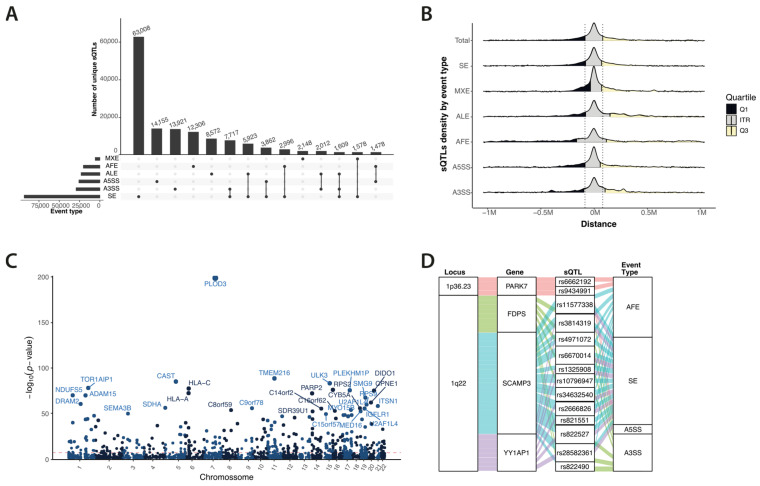 Figure 2
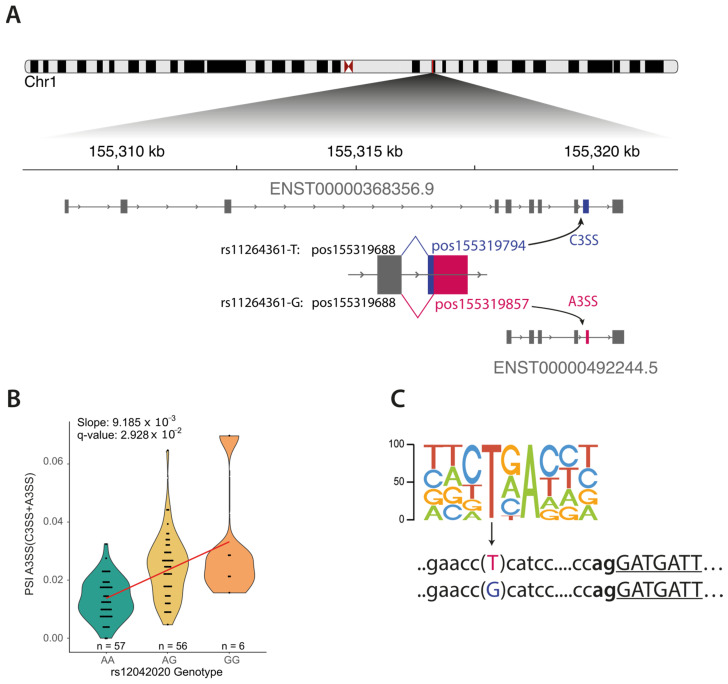 Figure 3
Peer Reviews
No public reviews on file for this paper yet. If you reviewed it on a platform where reviews are public (OpenReview, ICLR, NeurIPS, ICML), you can paste yours below so the community can read it here.
Videos
No videos yet. Explain this paper in a talk, walkthrough, or lecture? Add one.
Taxonomy
TopicsRNA Research and Splicing · RNA modifications and cancer · Genetic Associations and Epidemiology