Total Cholesterol Determination Accuracy in Dried Blood Spots
Elena Bonet Estruch, María J. López-Lara, Eva N. Gutiérrez-Cortizo, Miguel A. Castaño López, Pedro Mata, Manuel J. Romero-Jiménez

TL;DR
This study shows that measuring total cholesterol in dried blood spots is accurate and reliable for detecting familial hypercholesterolemia.
Contribution
The study evaluates the diagnostic accuracy of cholesterol measurement in dried blood spots using a manual enzymatic method.
Findings
The within- and between-day coefficient of variation was below 10.14% and 14.09%, indicating good precision.
Passing–Bablok regression showed a precision of 0.803 and accuracy of 0.96 for the method.
The positive and negative predicted values were 0.77 and 0.92, outperforming an external formula.
Abstract
Background Detecting total cholesterol in dried blood spots could aid in identifying individuals with a high likelihood of familial hypercholesterolemia and could be used as a screening measure. This study aims to assess the diagnostic accuracy of dried blood spots on Whatman 903 paper cards using a manual enzymatic technique. Methods: A total of 394 samples were collected as serum and dried blood spots were compared. Cholesterol was determined in serum using the automated reference method, while cholesterol on paper was measured using a manual enzymatic method. Within- and between-day diagnostic variability were analyzed. The correlation between both methods was assessed using Passing–Bablok regression and Bland–Altman plot. Internal validation of our correlation formula was performed on 149 samples, along with external validation of the formula proposed by Corso et al. Results: The…
Genes, proteins, chemicals, diseases, species, mutations and cell lines named across the full text — each resolved to its canonical identifier and authoritative record.
Click any figure to enlarge with its caption.
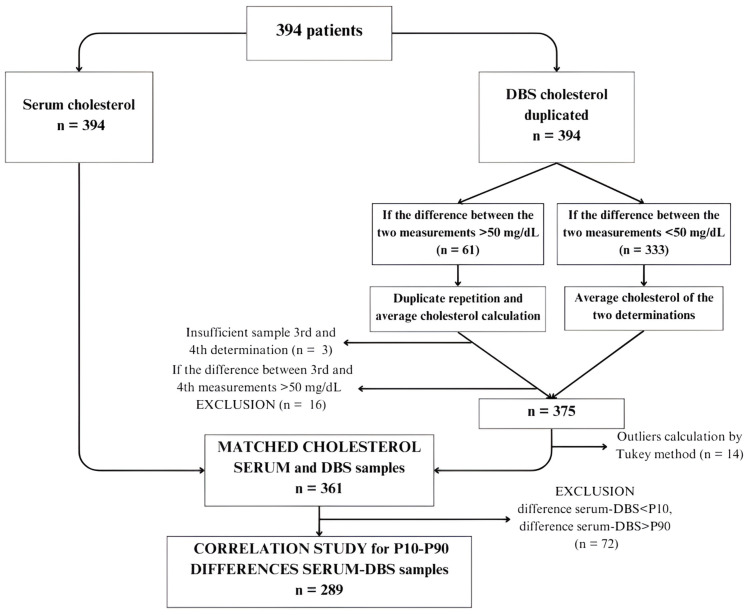 Figure 1
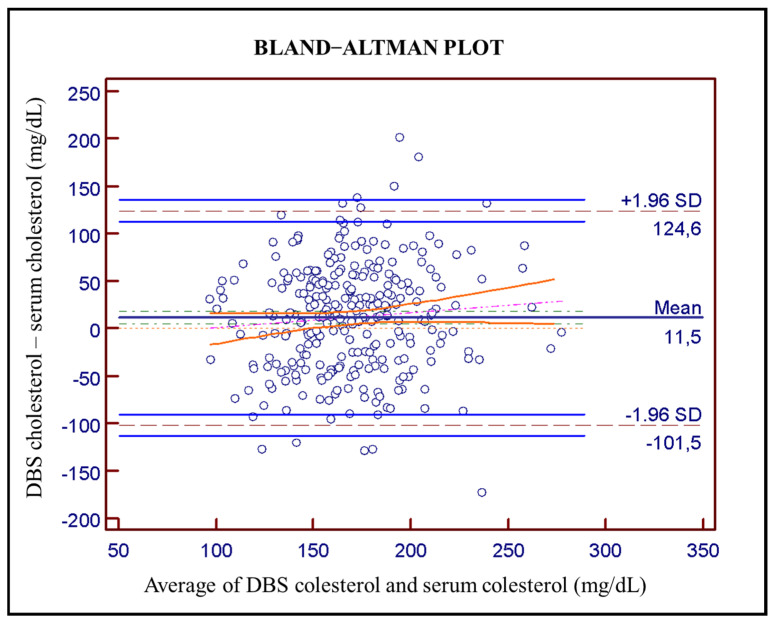 Figure 2
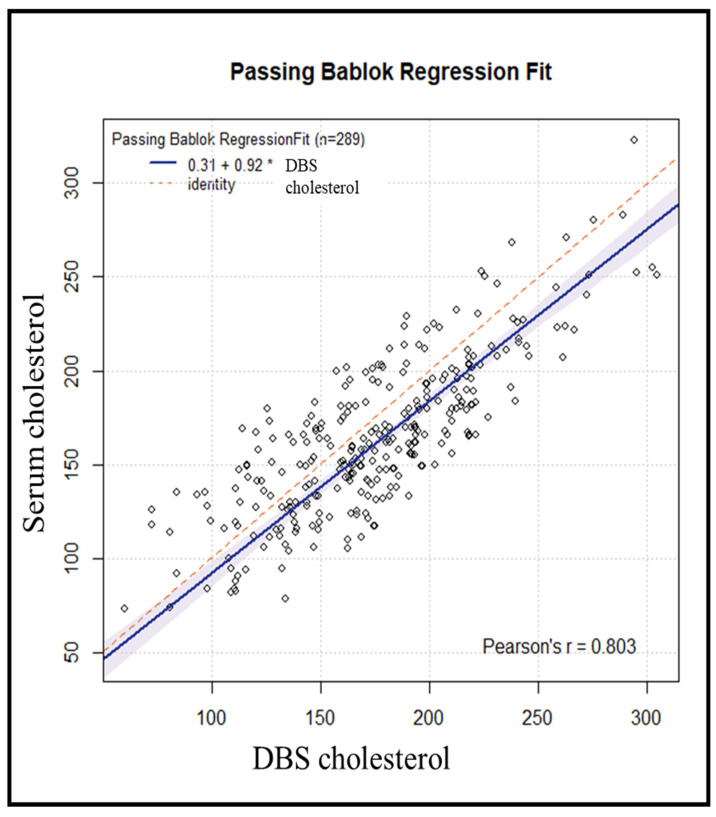 Figure 3
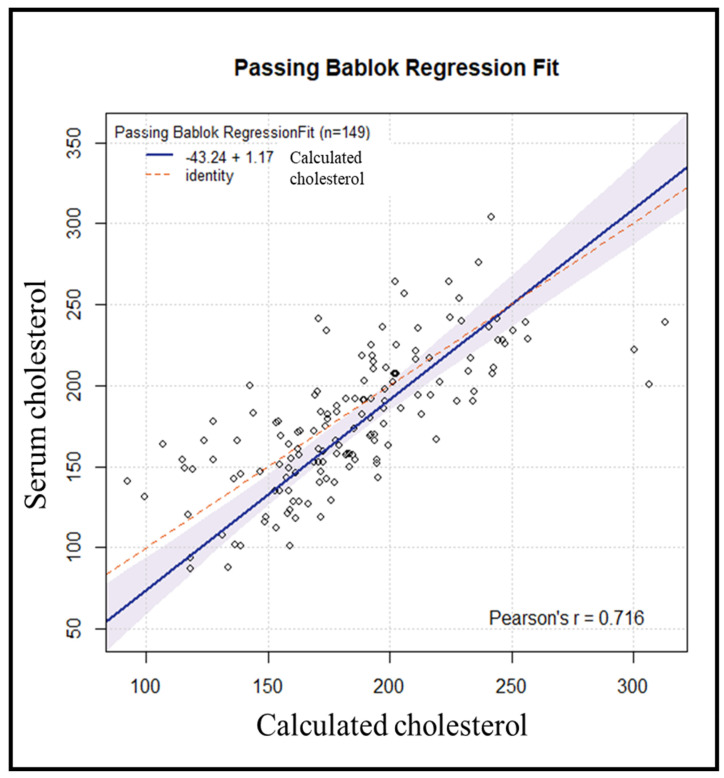 Figure 4
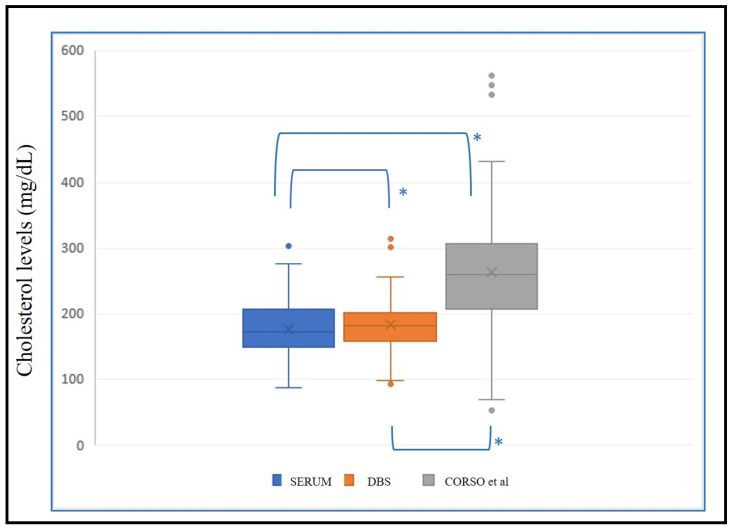 Figure 5
Peer Reviews
No public reviews on file for this paper yet. If you reviewed it on a platform where reviews are public (OpenReview, ICLR, NeurIPS, ICML), you can paste yours below so the community can read it here.
Videos
No videos yet. Explain this paper in a talk, walkthrough, or lecture? Add one.
Taxonomy
TopicsBiosimilars and Bioanalytical Methods · Lipoproteins and Cardiovascular Health · PARP inhibition in cancer therapy