Trophic Ecology of the Pyjama Shark Poroderma africanum (Gmelin, 1789) Elucidated by Stable Isotopes
Luca Caracausi, Zaira Da Ros, Alice Premici, Enrico Gennari, Emanuela Fanelli

TL;DR
This study uses stable isotope analysis to show that pyjama sharks shift from eating plankton as juveniles to benthic prey as adults, highlighting their role in marine food webs.
Contribution
The study provides new insights into the trophic ecology of the pyjama shark using stable isotope analysis and R packages SIMMR and SIBER.
Findings
Juvenile pyjama sharks consume more planktonic species compared to adults.
Adult pyjama sharks are more selective, preferring benthic prey.
The study highlights the need for monitoring mesopredators like pyjama sharks to understand their ecological impact.
Abstract
Sharks, as important members of marine food webs, are often targeted by commercial and sport fishing, and moreover they constitute a significant part of the bycatch along with marine mammals and turtles. Overfishing, especially of top-predator species, disrupts the entire food web through a process called “mesopredator release”, where the removal of top predators leads to an increase in mid-level predators, altering the ecosystem balance. Despite their crucial ecological role, there is limited information on sharks’ diets. Traditional methods like stomach content analysis and newer, less invasive techniques, such as stable isotope analysis (SIA) of muscle tissue biopsies, provide insights into their feeding habits. A study on the pyjama shark or striped catshark (Poroderma africanum), a species native to South Africa, used SIA to explore its trophic ecology. The study found that as…
Genes, proteins, chemicals, diseases, species, mutations and cell lines named across the full text — each resolved to its canonical identifier and authoritative record.
Click any figure to enlarge with its caption.
 Figure 1
 Figure 2
 Figure 3
 Figure 4
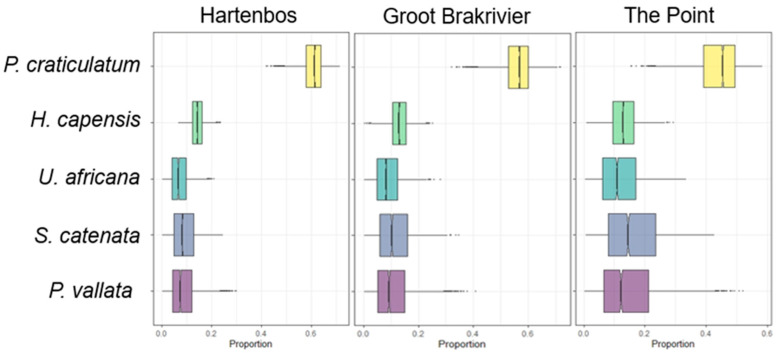 Figure 5
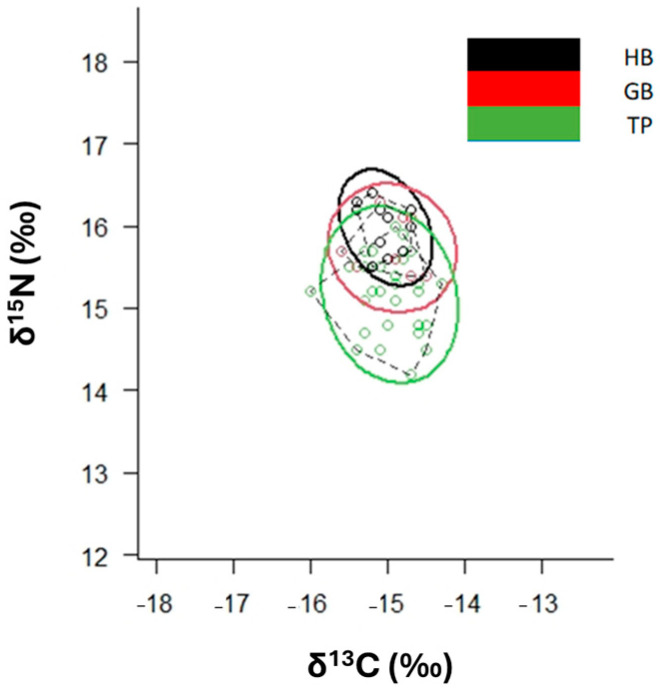 Figure 6
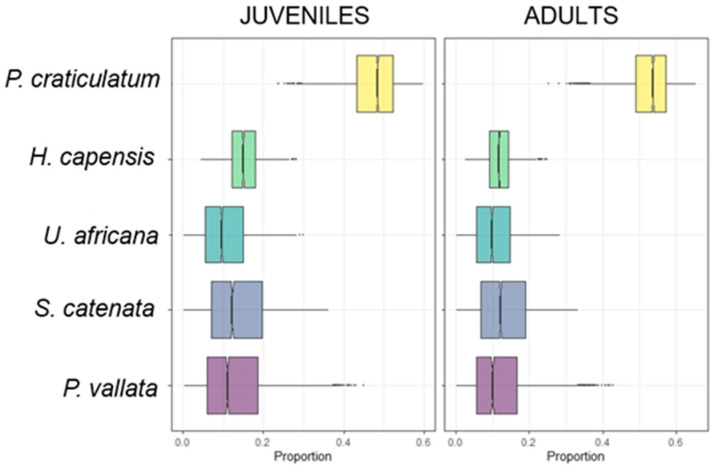 Figure 7
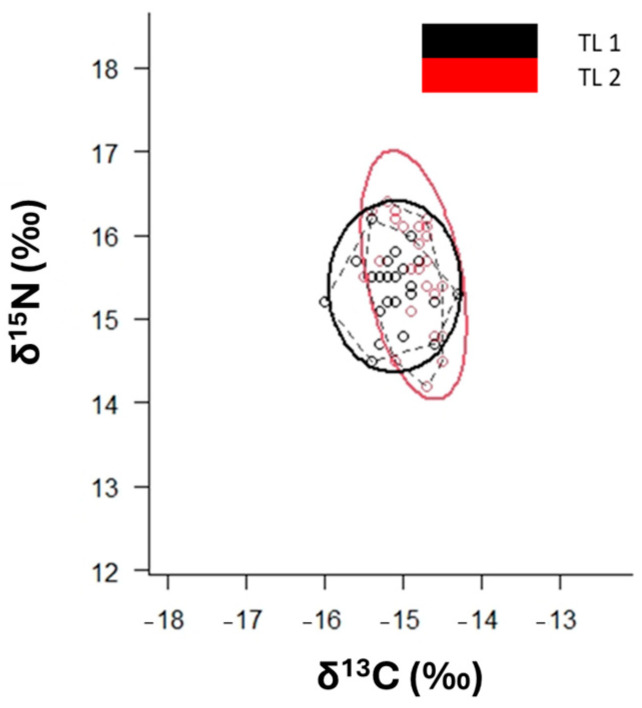 Figure 8
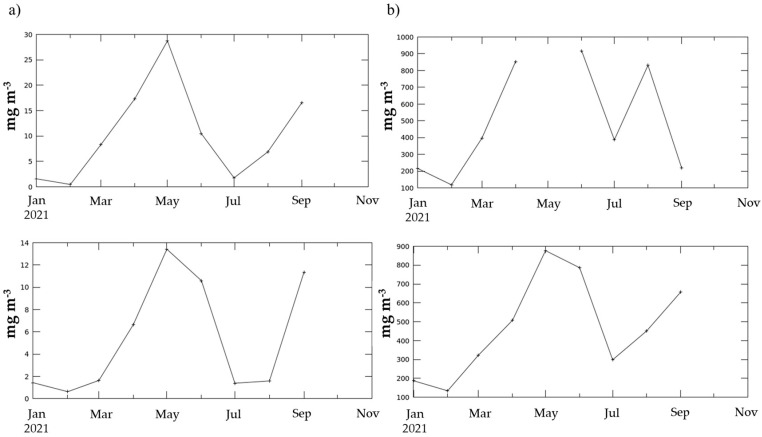 Figure 9
Peer Reviews
No public reviews on file for this paper yet. If you reviewed it on a platform where reviews are public (OpenReview, ICLR, NeurIPS, ICML), you can paste yours below so the community can read it here.
Videos
No videos yet. Explain this paper in a talk, walkthrough, or lecture? Add one.
Taxonomy
TopicsIchthyology and Marine Biology · Marine and fisheries research · Isotope Analysis in Ecology