The influence of cardiac synchronisation on self-attribution to external objects in male participants
Hiroshi Shibata, Tokiko Harada, Hideki Ohira

TL;DR
This study explores how heartbeats might influence how people attribute emotions to objects, finding that accurate awareness of heartbeats affects this process.
Contribution
The study reveals that interoceptive accuracy modulates self-attribution to synchronized objects, even when synchronisation alone does not.
Findings
Cardiac synchronisation did not significantly affect emotion assignment to bodily or non-bodily targets.
Participants with high interoceptive accuracy attributed more emotional images to synchronized targets.
Interoceptive accuracy mediates attention to cardiac synchrony in self-attribution tasks.
Abstract
Interoception, the representation of our bodily state derived from physiological signals, is fundamental to our sense of self. Previous studies using cardiac feedback paradigms demonstrated interoceptive effects on self-perception. However, it remains unclear whether interoceptive information can extend self-attribution to non-bodily objects. This study aimed to elucidate whether cardiac signals can induce self-attribution to non-bodily objects and how interoceptive accuracy modulates this effect. A total of 44 male volunteers participated in an emotion assignment task where they viewed images of palms (bodily targets) and spheres (non-bodily targets) flashing in or out of sync with their heartbeat and assigned emotional images (positive/negative) to these targets. A heartbeat discrimination task was used to measure the interoceptive accuracy. The results showed no significant effect of…
Genes, proteins, chemicals, diseases, species, mutations and cell lines named across the full text — each resolved to its canonical identifier and authoritative record.
Click any figure to enlarge with its caption.
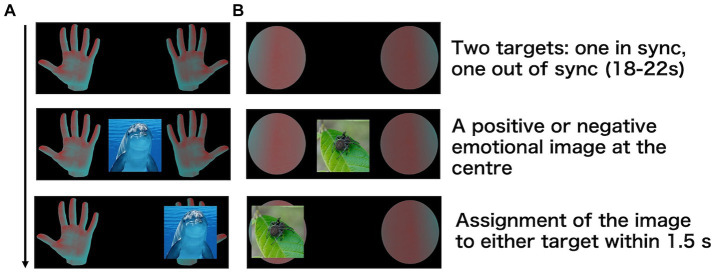 Figure 1
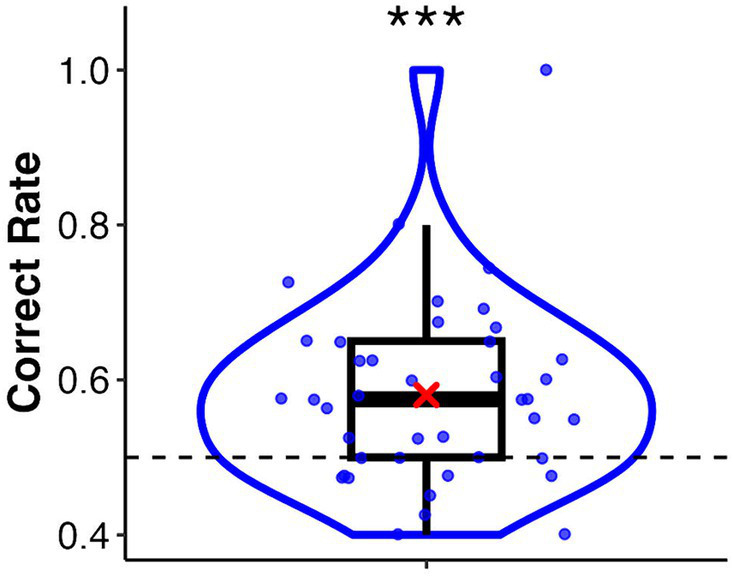 Figure 2
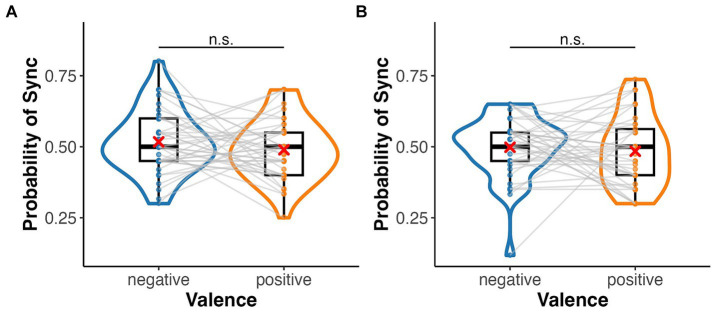 Figure 3
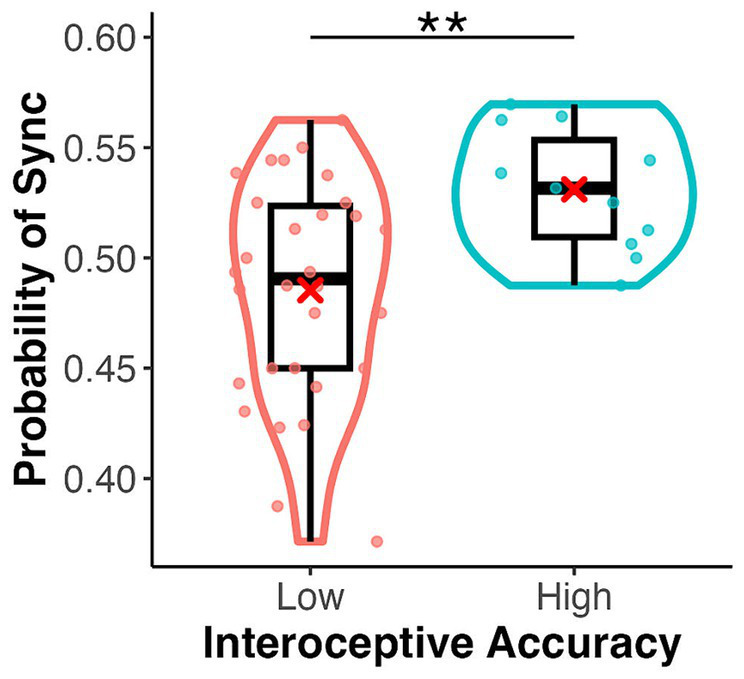 Figure 4
Peer Reviews
No public reviews on file for this paper yet. If you reviewed it on a platform where reviews are public (OpenReview, ICLR, NeurIPS, ICML), you can paste yours below so the community can read it here.
Videos
No videos yet. Explain this paper in a talk, walkthrough, or lecture? Add one.
Taxonomy
TopicsPsychosomatic Disorders and Their Treatments · Action Observation and Synchronization · Paranormal Experiences and Beliefs