The FLARE Score and Circulating Neutrophils in Patients with Cancer and COVID-19 Disease
Elia Seguí, Juan Manuel Torres, Edouard Auclin, David Casadevall, Sara Peiro Carmona, Juan Aguilar-Company, Marta García de Herreros, Teresa Gorría, Juan Carlos Laguna, Marta Rodríguez, Azucena González, Nicolas Epaillard, Javier Gavira, Victor Bolaño, Jose C. Tapia

TL;DR
This study introduces the FLARE score, a tool to predict severe COVID-19 outcomes in cancer patients, and highlights the role of immature neutrophils in disease progression.
Contribution
The FLARE score is a novel clinical tool combining tumor- and infection-induced inflammation to predict severe outcomes in cancer patients with COVID-19.
Findings
The FLARE score effectively categorizes cancer patients with COVID-19 into four prognostic groups with significantly different 30-day mortality rates.
Cancer patients with elevated dNLR before and during COVID-19 had worse outcomes, with immature neutrophils and higher IL-6 levels linked to severe disease.
The FLARE score is an independent predictor of early mortality in cancer patients with COVID-19.
Abstract
Understanding the inflammatory interplay between cancer and COVID-19 infection is essential for improving patient care. Our study bridges a vital knowledge gap by exploring how a pre-existing tumor-induced inflammatory state can exacerbate the inflammatory response to COVID-19, adversely impacting COVID-19 outcomes. We introduce the FLARE score, a robust predictor derived from circulating inflammatory markers, that provides clinicians a practical tool for early identification of patients with cancer at higher risk of severe COVID-19 complications who might benefit most from immediate and intensive treatment strategies. Additionally, our study also underscore the role of immature neutrophils in the progression of COVID-19 in patients with cancer, advocating for further investigation into how these cells contribute to both cancer and COVID-19 disease. Purpose: Inflammation and…
Genes, proteins, chemicals, diseases, species, mutations and cell lines named across the full text — each resolved to its canonical identifier and authoritative record.
Click any figure to enlarge with its caption.
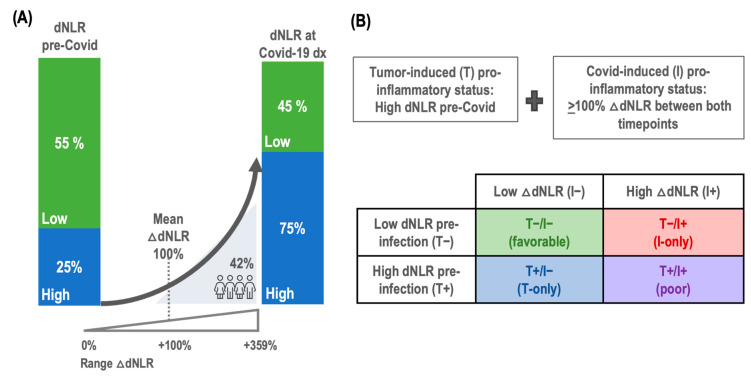 Figure 1
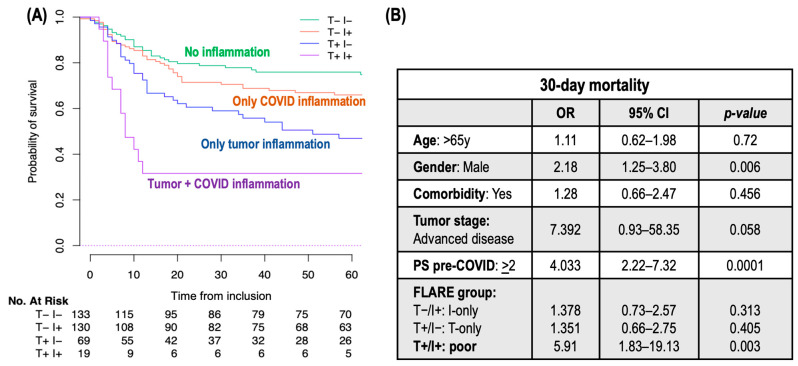 Figure 2
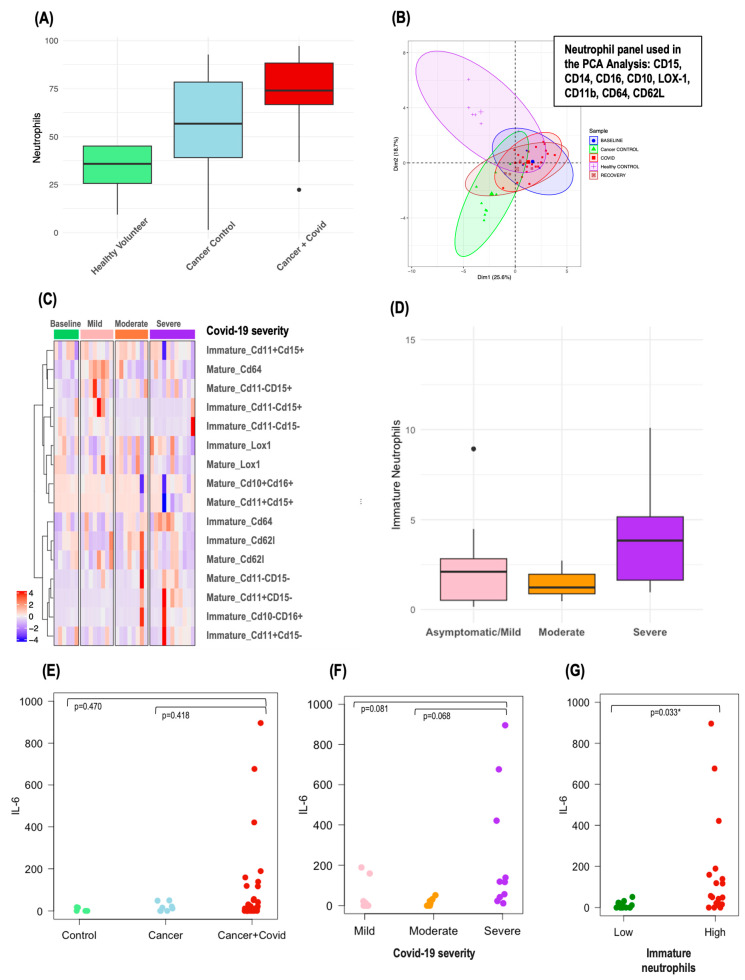 Figure 3
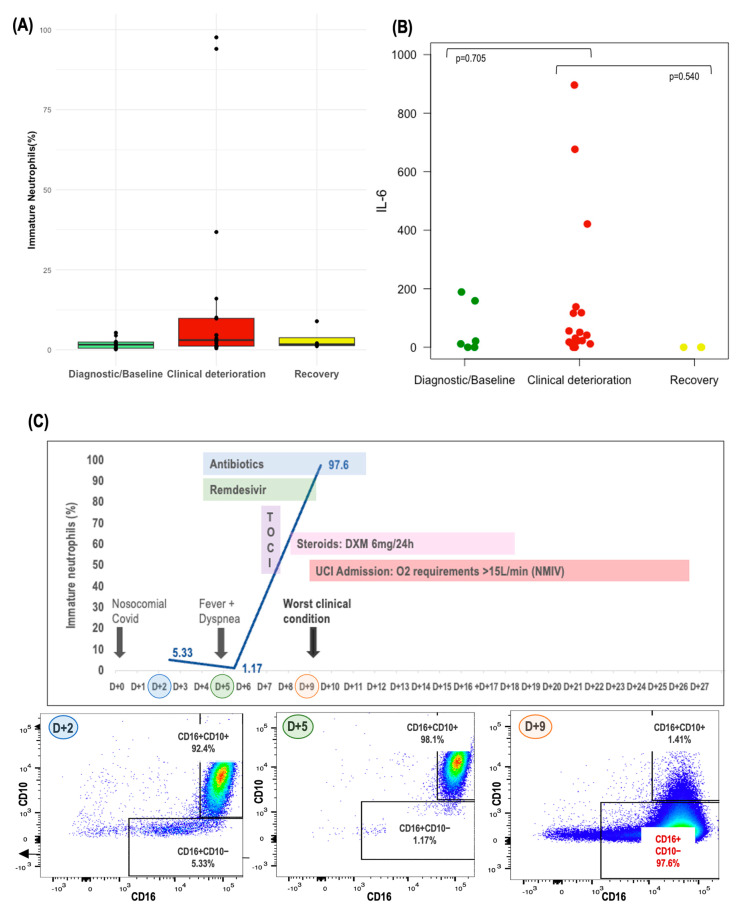 Figure 4
Peer Reviews
No public reviews on file for this paper yet. If you reviewed it on a platform where reviews are public (OpenReview, ICLR, NeurIPS, ICML), you can paste yours below so the community can read it here.
Videos
No videos yet. Explain this paper in a talk, walkthrough, or lecture? Add one.
Taxonomy
TopicsInflammatory Biomarkers in Disease Prognosis · COVID-19 and healthcare impacts · Hematological disorders and diagnostics