A Study of Small Intestinal Epigenomic Changes Induced by Royal Jelly
Genki Kobayashi, Takahiro Ichikawa, Takuro Okamura, Tomoyuki Matsuyama, Masahide Hamaguchi, Hideto Okamoto, Nobuaki Okumura, Michiaki Fukui

TL;DR
Royal jelly induces beneficial epigenomic changes in the small intestine, improving metabolic health and reducing cancer-related gene activity.
Contribution
This study identifies specific epigenomic modifications in small intestinal cells caused by royal jelly, linking them to metabolic and cancer-related pathways.
Findings
Royal jelly improved insulin sensitivity and lipid metabolism without affecting body weight.
RJ altered histone modifications, increasing H3K27me3 and decreasing H3K23Ac in genes related to the G2M checkpoint.
Genes like Smc2, Mcm3, and Ccnd1 were affected, linking to cancer progression and metabolic regulation.
Abstract
This study explores the impact of royal jelly (RJ) on small intestinal epigenomic changes. RJ, produced by honeybees, is known for its effects on metabolic diseases. The hypothesis is that RJ induces epigenomic modifications in small intestinal epithelial cells, affecting gene expression and contributing to metabolic health. Male db/m and db/db mice were used to examine RJ’s effects through mRNA sequencing and CUT&Tag methods. This study focused on histone modifications and gene expression changes, with statistical significance set at p < 0.05. RJ administration improved insulin sensitivity and lipid metabolism without affecting body weight. GO and KEGG pathway analyses showed significant enrichment in metabolic processes, cellular components, and molecular functions. RJ altered histone modifications, increasing H3K27me3 and decreasing H3K23Ac in genes associated with the G2M…
Genes, proteins, chemicals, diseases, species, mutations and cell lines named across the full text — each resolved to its canonical identifier and authoritative record.
Click any figure to enlarge with its caption.
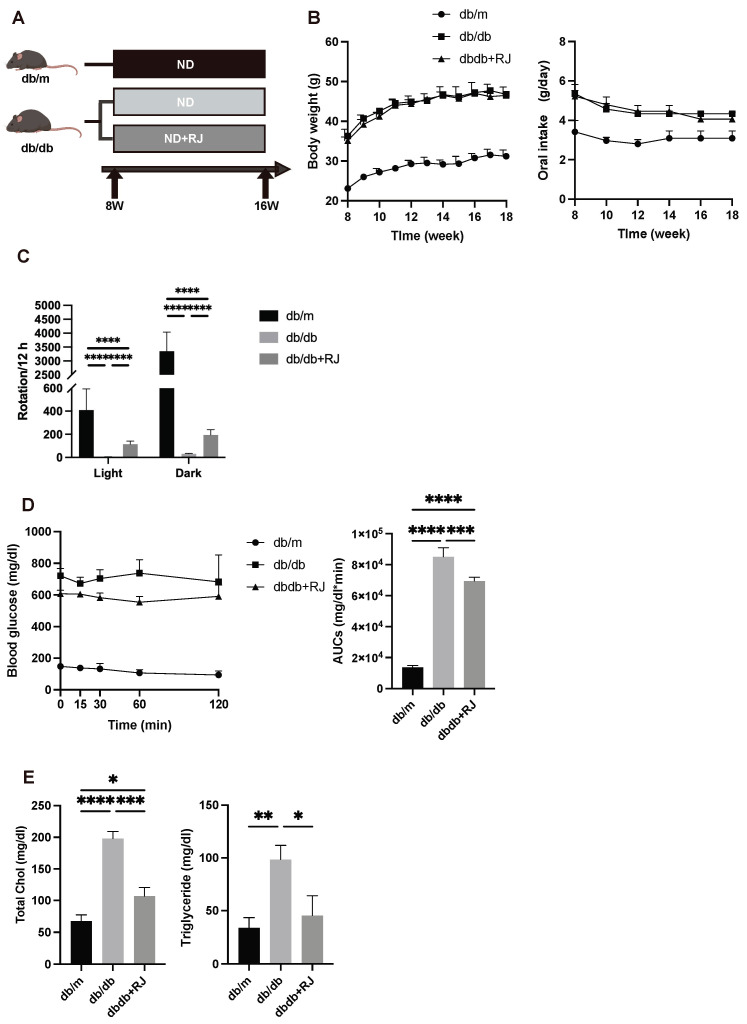 Figure 1
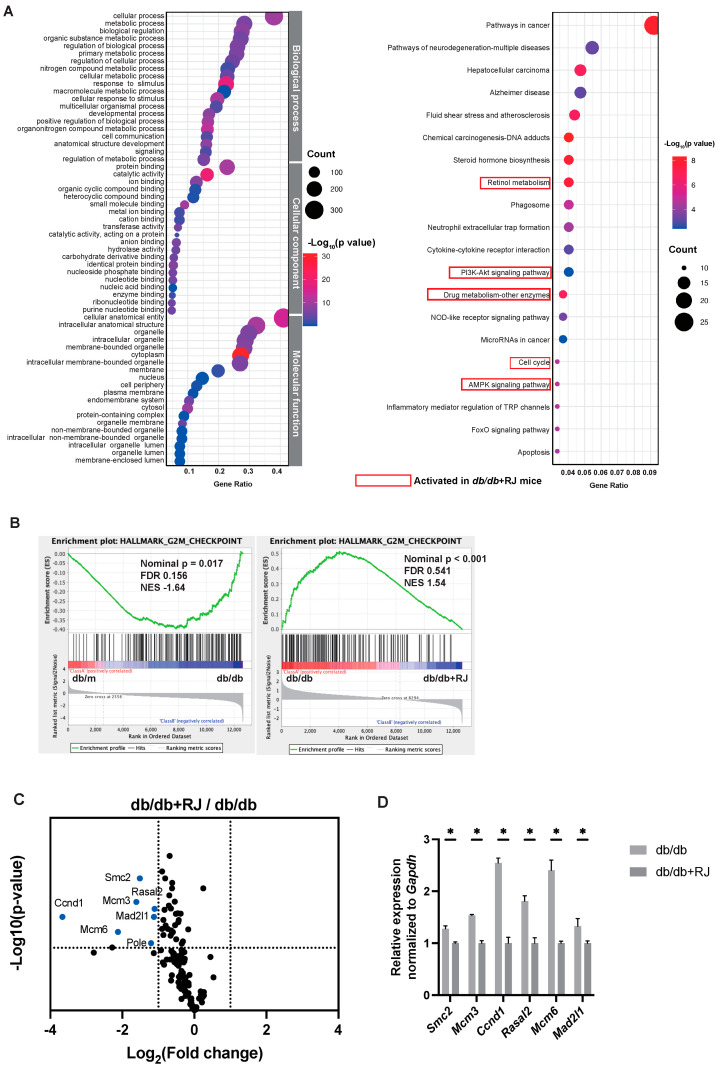 Figure 2
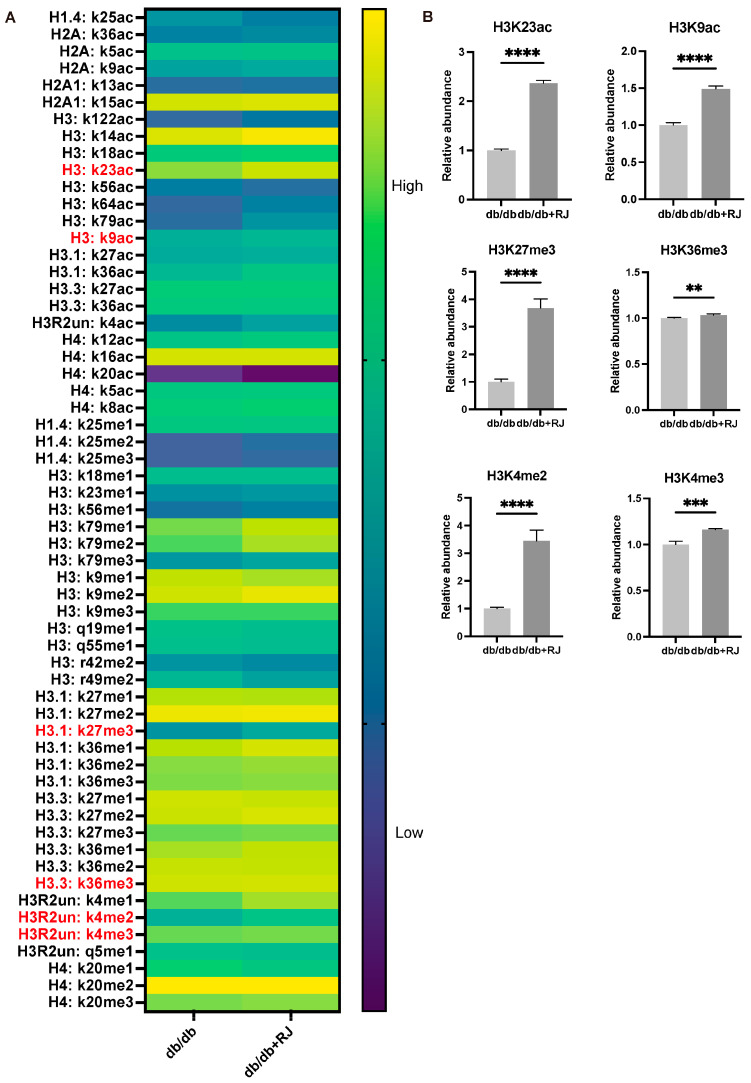 Figure 3
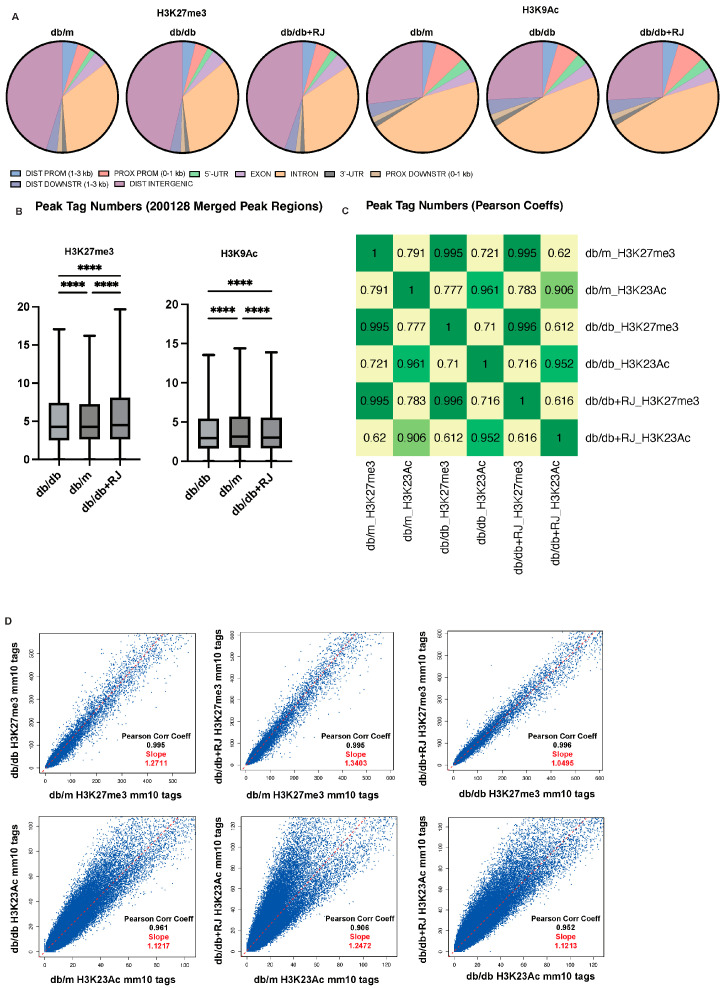 Figure 4
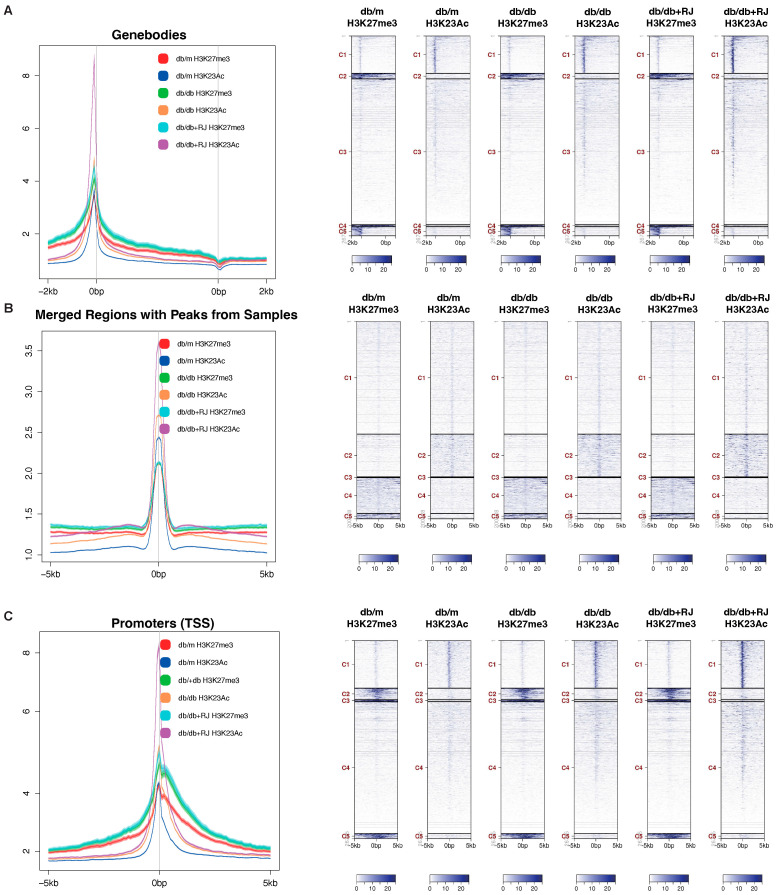 Figure 5
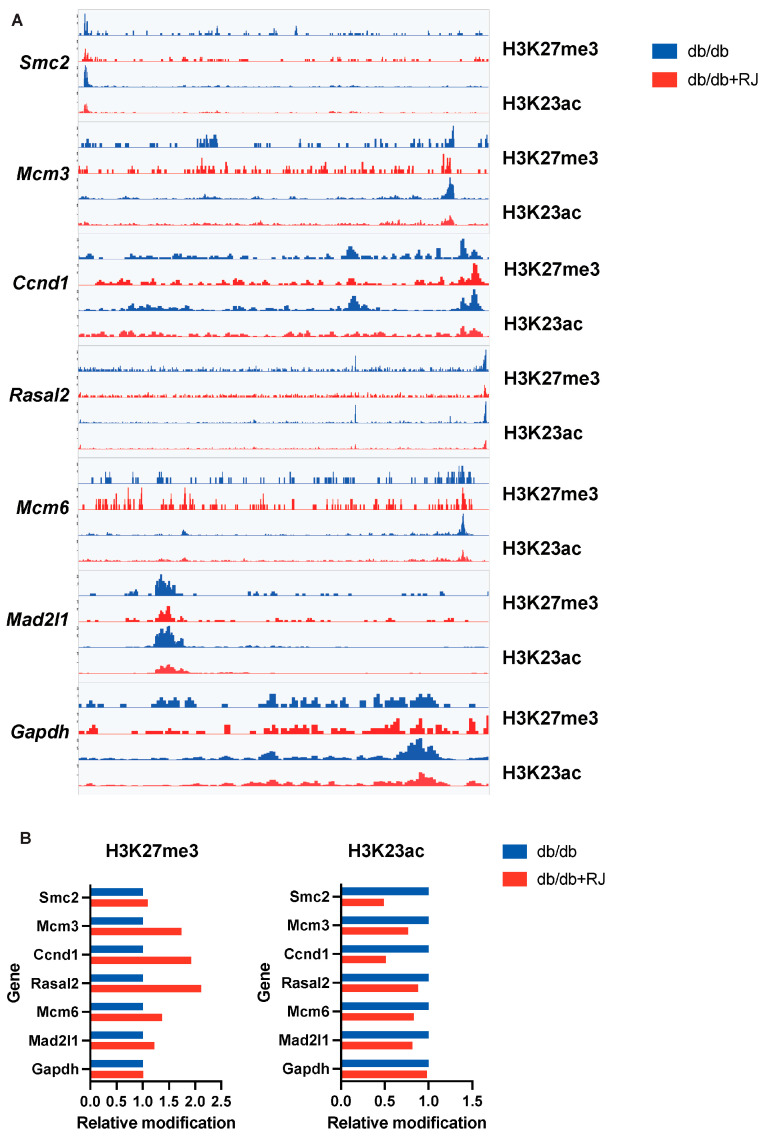 Figure 6
Peer Reviews
No public reviews on file for this paper yet. If you reviewed it on a platform where reviews are public (OpenReview, ICLR, NeurIPS, ICML), you can paste yours below so the community can read it here.
Videos
No videos yet. Explain this paper in a talk, walkthrough, or lecture? Add one.
Taxonomy
TopicsBee Products Chemical Analysis · Sperm and Testicular Function · Ovarian function and disorders