The Impact of Surgical Telementoring on Reducing the Complication Rate in Endoscopic Endonasal Surgery of the Skull Base
Janez Ravnik, Hojka Rowbottom, Carl H. Snyderman, Paul A. Gardner, Tomaž Šmigoc, Matic Glavan, Urška Kšela, Nenad Kljaić, Boštjan Lanišnik

TL;DR
This study shows that telementoring during endoscopic pituitary surgery improves outcomes by reducing complications and enhancing resection rates.
Contribution
The study demonstrates the effectiveness of telementoring in improving surgical outcomes for pituitary tumors in low-volume centers.
Findings
The proportion of complication-free patients increased significantly from 60% to 79%.
Patients' vision improved significantly over the observed period.
The extent of gross total tumour resection increased from 67% to 79%.
Abstract
Background: Pituitary adenomas represent the most common pituitary disorder, with an estimated prevalence as high as 20%, and they can manifest with hormone hypersecretion or deficiency, neurological symptoms from mass effect, or incidental findings on imaging. Transsphenoidal surgery, performed either microscopically or endoscopically, allows for a better extent of resection while minimising the associated risk in comparison to the transcranial approach. Endoscopy allows for better visualisation and improvement in tumour resection with an improved working angle and less nasal morbidity, making it likely to become the preferred surgical treatment for pituitary neoplasms. The learning curve can be aided by telementoring. Methods: We retrospectively analysed the clinical records of 94 patients who underwent an endoscopic endonasal resection of a pituitary neoplasm between the years 2011…
Genes, proteins, chemicals, diseases, species, mutations and cell lines named across the full text — each resolved to its canonical identifier and authoritative record.
Click any figure to enlarge with its caption.
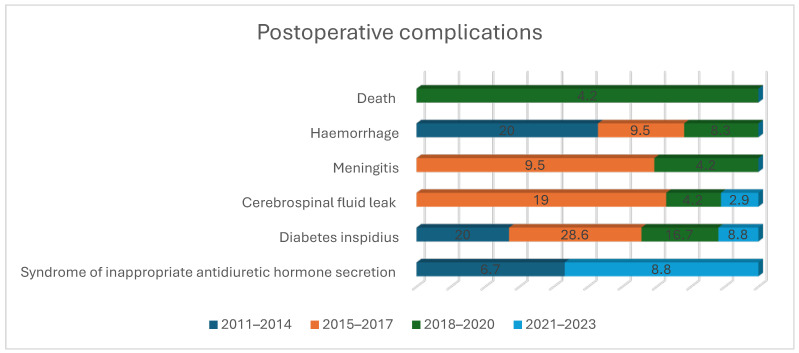 Figure 1
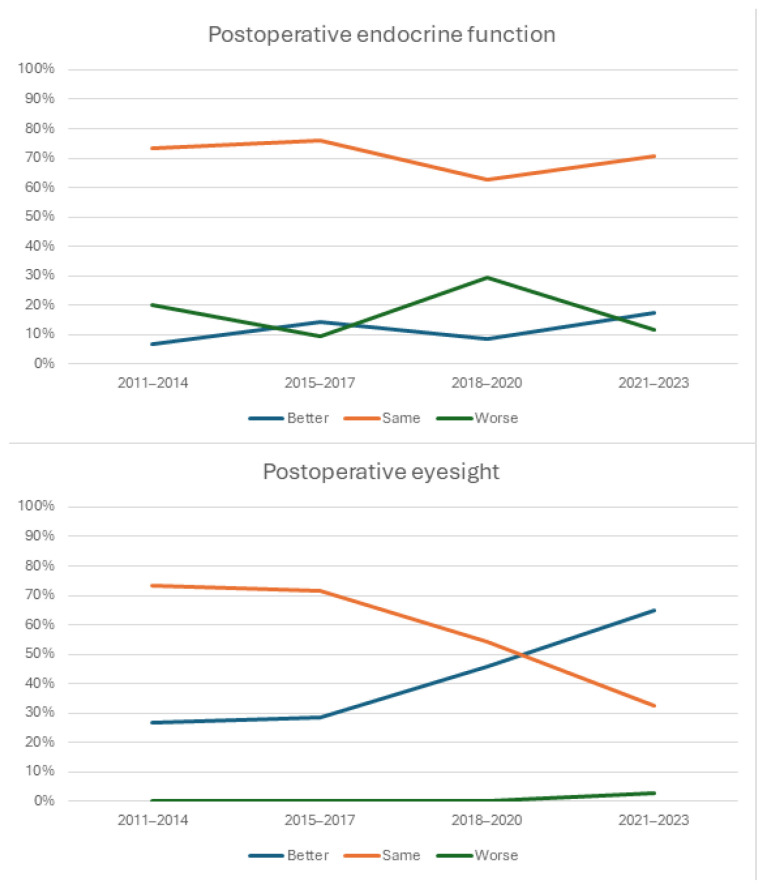 Figure 2
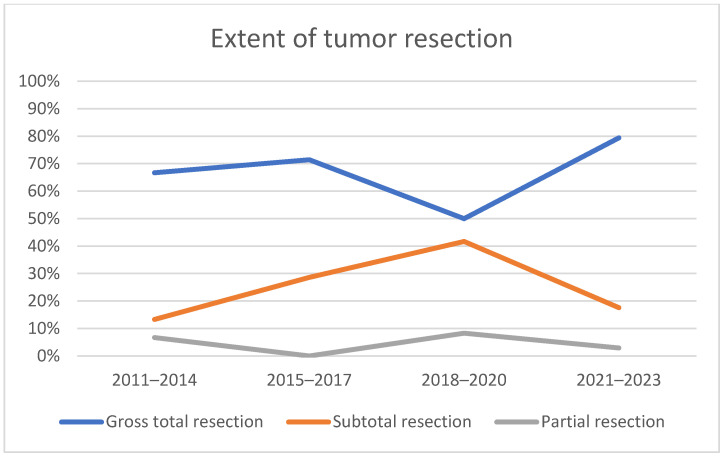 Figure 3
Peer Reviews
No public reviews on file for this paper yet. If you reviewed it on a platform where reviews are public (OpenReview, ICLR, NeurIPS, ICML), you can paste yours below so the community can read it here.
Videos
No videos yet. Explain this paper in a talk, walkthrough, or lecture? Add one.
Taxonomy
TopicsPituitary Gland Disorders and Treatments · Meningioma and schwannoma management · Growth Hormone and Insulin-like Growth Factors