Phylogeography of the woolly mammoth (Mammuthus primigenius) in the Minusinsk Depression of southern Siberia in the Late Pleistocene
S.A. Modina, M.A. Kusliy, D.G. Malikov, A.S. Molodtseva

TL;DR
This study explores the genetic diversity and migration patterns of woolly mammoths in southern Siberia during the Late Pleistocene.
Contribution
The study provides new insights into the genetic diversity and phylogeography of woolly mammoths in the Minusinsk Depression of southern Siberia.
Findings
Phylogenetic analysis placed all studied mammoths in clade I, indicating a shared lineage.
Mammoths in the Minusinsk Depression showed genetic diversity within clade I.
Phylogeographic reconstructions suggest genetic proximity to eastern Siberian mammoths and divergence around 100–150 thousand years ago.
Abstract
To date, a number of studies have been published on the phylogenetics of woolly mammoths (Mammuthus primigenius), ranging from analyses of parts of the mitochondrial genome to studies of complete nuclear genomes. However, until recently nothing was known about the genetic diversity of woolly mammoths in southern Siberia, in the Minusinsk Depression in particular. Within the framework of this effort, libraries for high-throughput sequencing of seven bone samples of woolly mammoths were obtained, two-round enrichment using biotinylated probes of modern mtDNA of Elephas maximus immobilised on magnetic microspheres and sequencing with subsequent bioinformatic analysis were carried out. Phylogenetic reconstructions showed the presence of all studied mammoths in clade I, which expanded its range. The assignment of mammoth mitotypes in the Minusinsk Depression to different clusters within…
Genes, proteins, chemicals, diseases, species, mutations and cell lines named across the full text — each resolved to its canonical identifier and authoritative record.
Click any figure to enlarge with its caption.
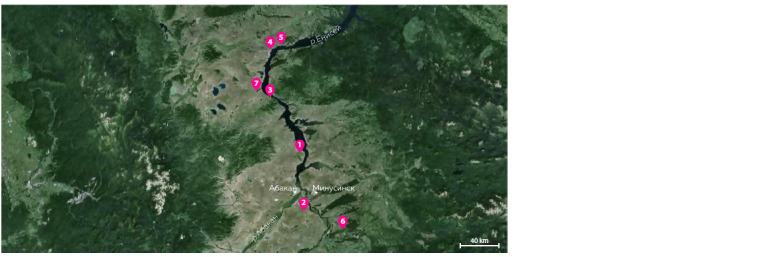 Figure 1
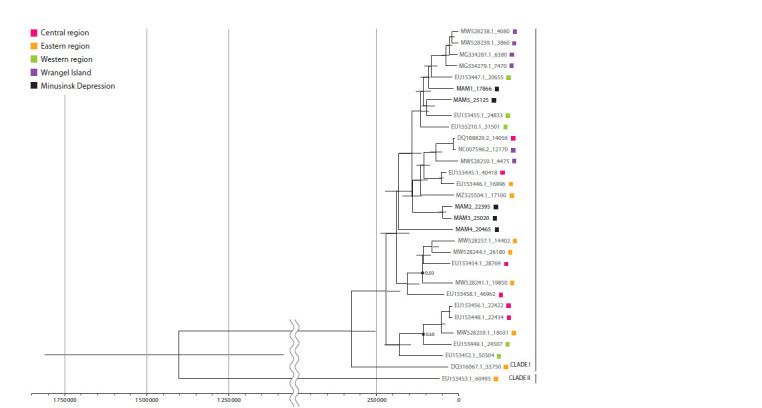 Figure 2
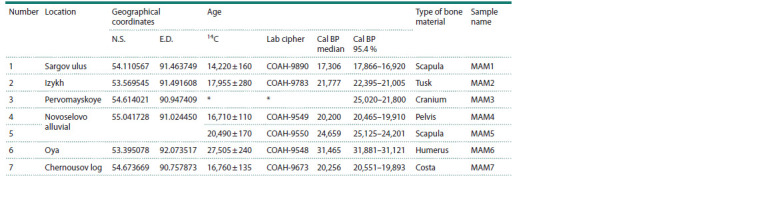 Figure 3
Peer Reviews
No public reviews on file for this paper yet. If you reviewed it on a platform where reviews are public (OpenReview, ICLR, NeurIPS, ICML), you can paste yours below so the community can read it here.
Videos
No videos yet. Explain this paper in a talk, walkthrough, or lecture? Add one.
Taxonomy
TopicsPleistocene-Era Hominins and Archaeology · Yersinia bacterium, plague, ectoparasites research · Archaeology and ancient environmental studies