4-Methoxypicolinic Acid N-Oxide: One of the Shortest Hydrogen Bonds Known Characterized by Neutron Diffraction, Inelastic Neutron Scattering, Infrared Spectroscopy, and Periodic DFT Calculations
Jernej Stare, Jože Grdadolnik, Sax Mason, Alberto Albinati, Juergen Eckert

TL;DR
This study identifies one of the shortest hydrogen bonds in a compound called 4-methoxypicolinic acid N-oxide using advanced techniques like neutron diffraction and infrared spectroscopy.
Contribution
The paper presents the characterization of an exceptionally short and asymmetric hydrogen bond using multiple experimental and computational methods.
Findings
The H-bond in MPANO has a donor-acceptor separation of 2.403 Å, making it one of the shortest known.
The IR spectrum shows a broad and red-shifted OH stretching band, indicating anharmonicity and coupling.
Periodic DFT calculations align well with diffraction data but overestimate the hydrogen stretching frequency.
Abstract
The present work focuses on the case of an extremely short intramolecular O–H···O hydrogen bond (H-bond) found in 4-methoxypicolinic acid N-oxide (MPANO). The donor···acceptor separation of 2.403 Å makes the H-bond in MPANO one of the shortest H-bonds known. We elucidated the structure and dynamics of the H-bond by two neutron-based techniques, namely, single-crystal diffraction and inelastic scattering (INS) vibrational spectroscopy. We also utilized conventional infrared (IR) spectroscopy as well as quantum chemical computations on isolated and periodic models. Both the protiated and deuterated variants of MPANO were investigated by INS and IR. All the methods used unequivocally confirm the existence of an extremely short, asymmetric H-bond, with the proton located near yet off the midpoint. The main relevant feature of the IR spectrum is an extremely broad, complex, and red-shifted…
Genes, proteins, chemicals, diseases, species, mutations and cell lines named across the full text — each resolved to its canonical identifier and authoritative record.
Click any figure to enlarge with its caption.
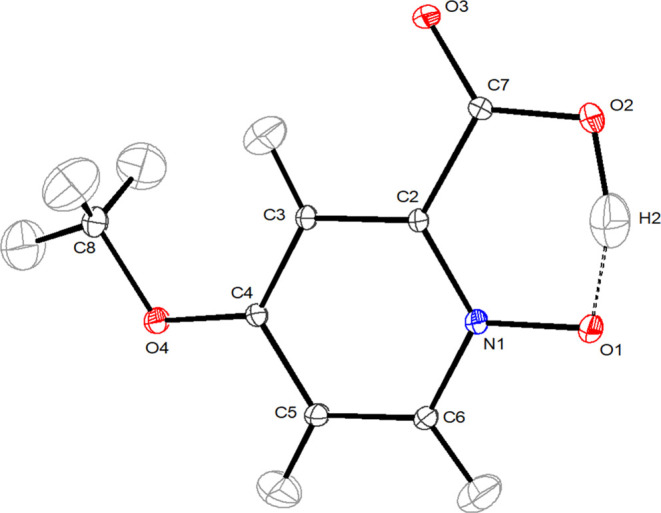 Figure 1
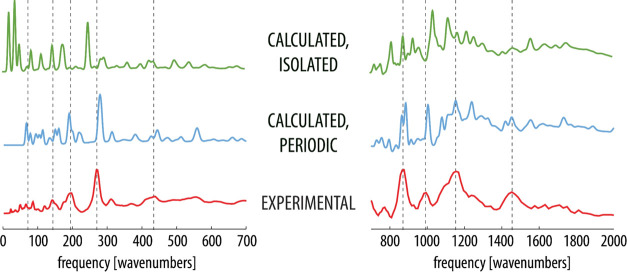 Figure 2
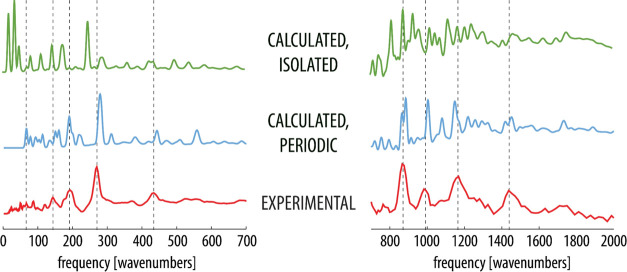 Figure 3
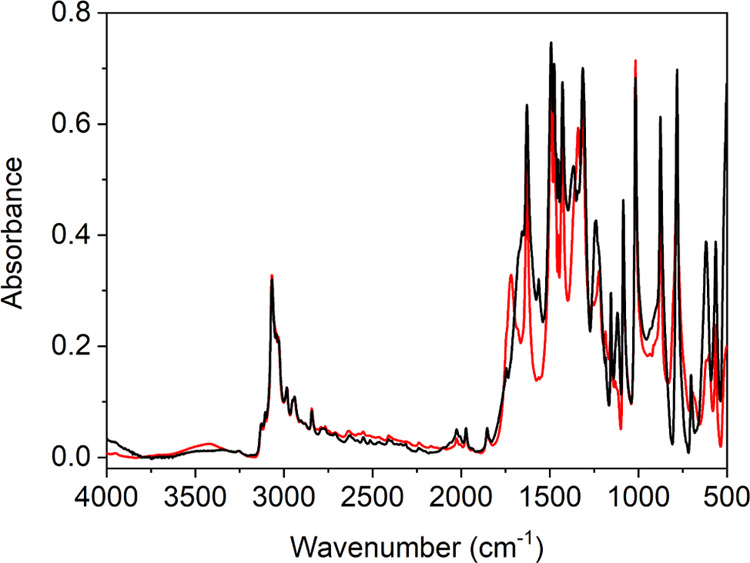 Figure 4
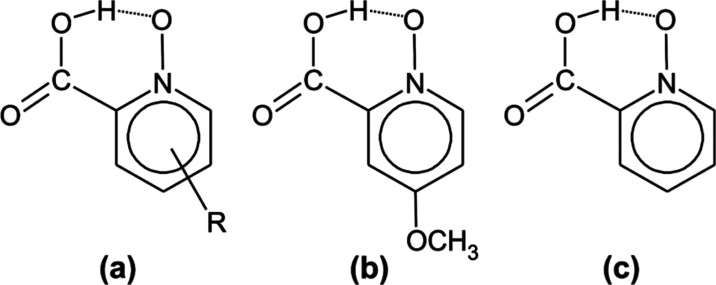 Figure 5
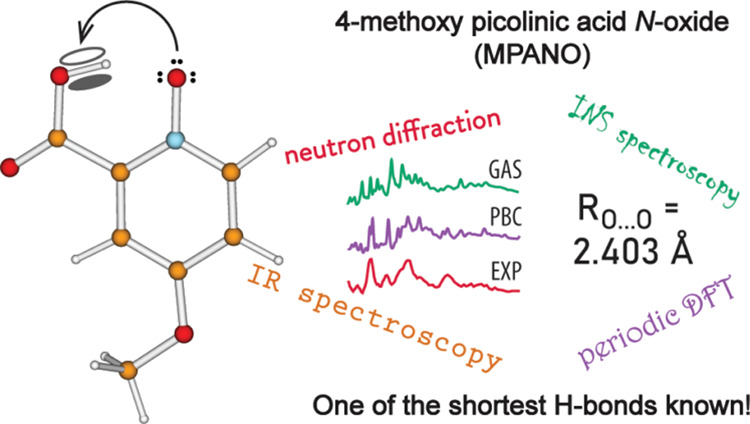 Figure 6
Peer Reviews
No public reviews on file for this paper yet. If you reviewed it on a platform where reviews are public (OpenReview, ICLR, NeurIPS, ICML), you can paste yours below so the community can read it here.
Videos
No videos yet. Explain this paper in a talk, walkthrough, or lecture? Add one.
Taxonomy
TopicsCrystallography and molecular interactions · Chemical Thermodynamics and Molecular Structure · Crystallization and Solubility Studies