Niche-dependent forest and savanna fragmentation in Tropical South America during the Last Glacial Maximum
Douglas I. Kelley, Hiromitsu Sato, Michaela Ecker, Chantelle A. Burton, João M. G. Capurucho, John Bates

TL;DR
This study investigates how forests and savannas in Tropical South America fragmented during the Last Glacial Maximum, using climate and vegetation models.
Contribution
The paper introduces a bias-corrected Dynamic Vegetation Model to test forest and savanna connectivity during the Last Glacial Maximum.
Findings
Forest fragments and savanna connectivity existed in Amazonia during the Last Glacial Maximum.
Drier ecosystems may have merged into continuous savanna/grasslands in Northern Llanos, Caatinga, and Cerrado.
An ecotonal biome may have acted as a corridor for generalist species and a barrier for specialists.
Abstract
The refugia hypothesis, often used to explain Amazonia’s high biodiversity, initially received ample support but has garnered increasing criticism over time. Palynological, phylogenetic, and vegetation model reconstruction studies have been invoked to support the opposing arguments of extensive fragmentation versus a stable Amazonian Forest during Pleistocene glacial maxima. Here, we test the past existence of forest fragments and savanna connectivity by bias-correcting vegetation distributions from a Dynamic Vegetation Model (DVM) driven by paleoclimate simulations for South America during the Last Glacial Maximum (LGM). We find evidence for fragmented forests akin to refugia with extensive tropical humid forests to the west and forest islands in central/southern Amazonia. Drier ecosystems of Northern Llanos, Caatinga and Cerrado may have merged into continuous savanna/grasslands that…
Genes, proteins, chemicals, diseases, species, mutations and cell lines named across the full text — each resolved to its canonical identifier and authoritative record.
Click any figure to enlarge with its caption.
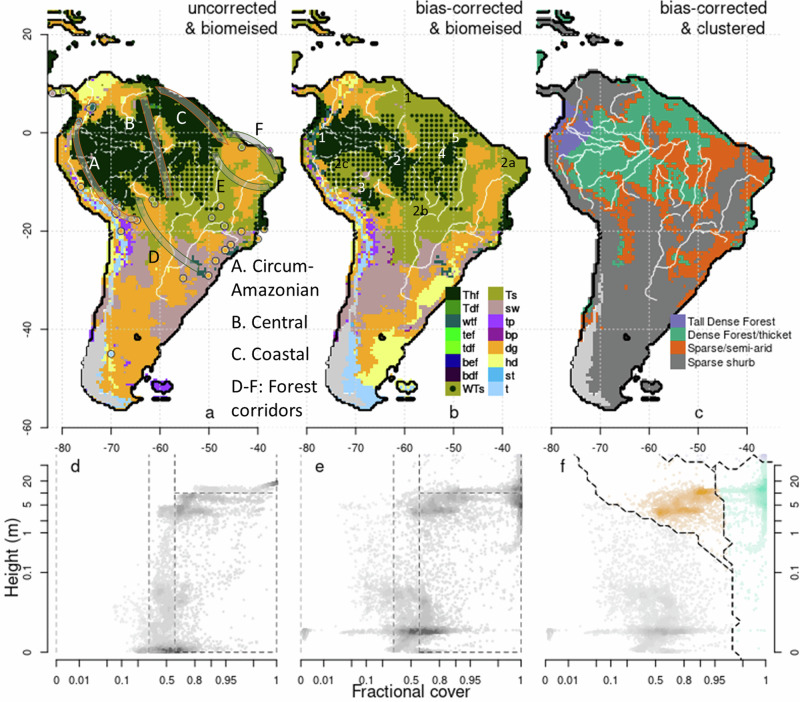 Figure 1
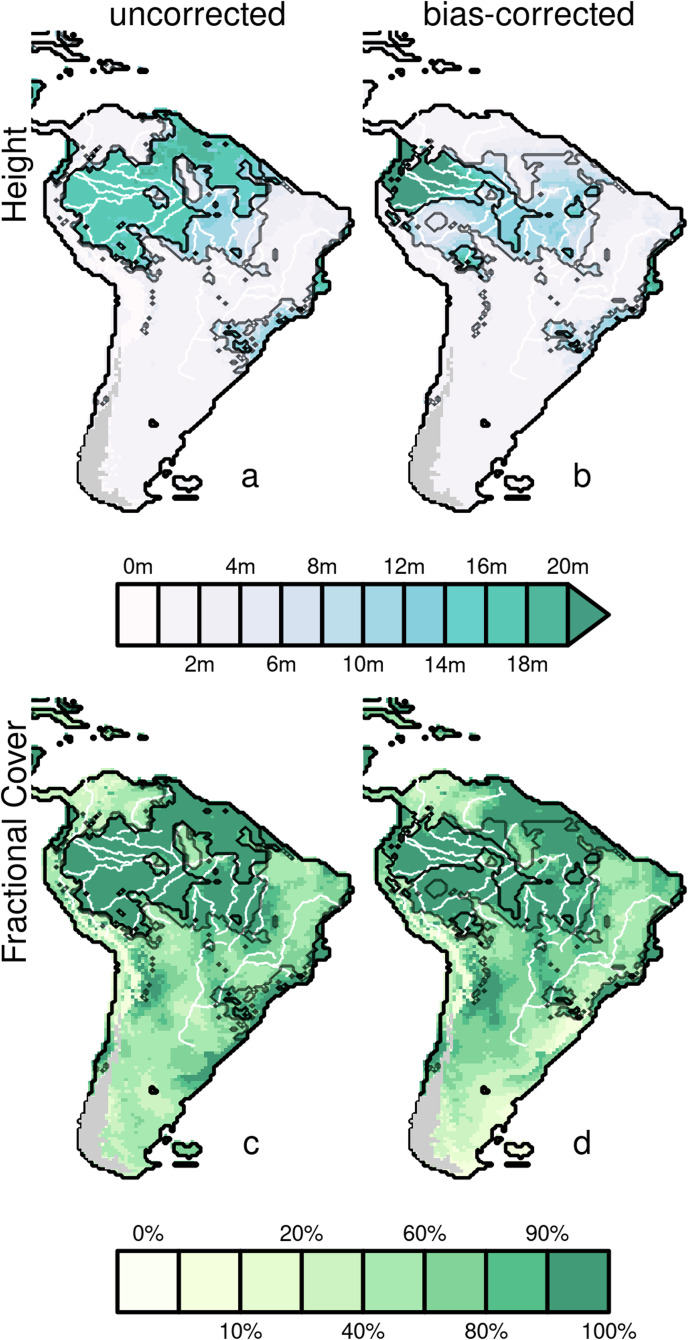 Figure 2
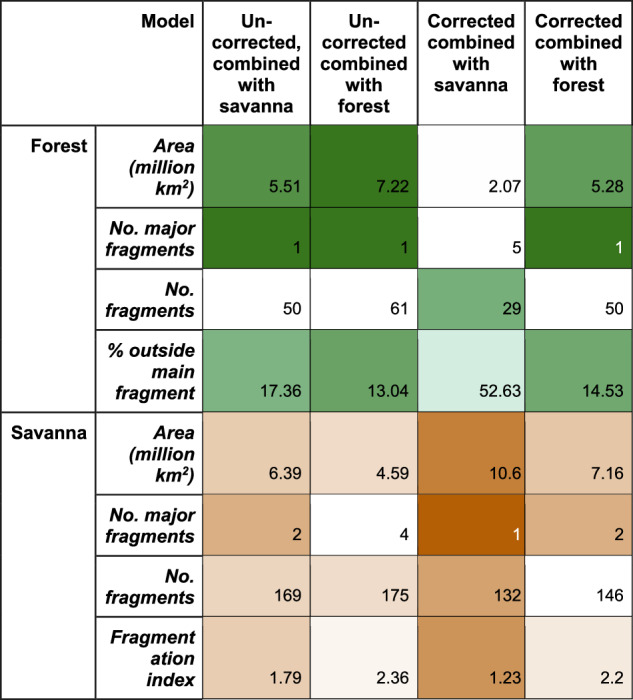 Figure 3
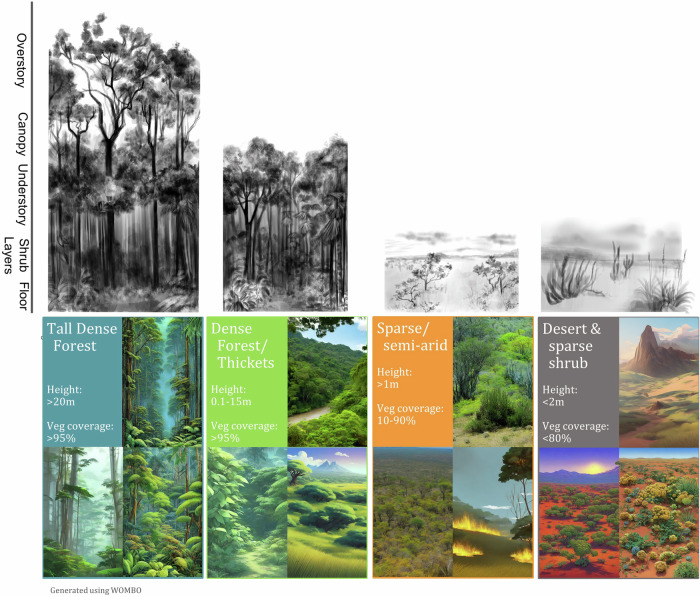 Figure 4
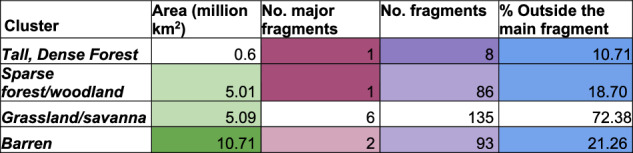 Figure 5
Peer Reviews
No public reviews on file for this paper yet. If you reviewed it on a platform where reviews are public (OpenReview, ICLR, NeurIPS, ICML), you can paste yours below so the community can read it here.
Videos
No videos yet. Explain this paper in a talk, walkthrough, or lecture? Add one.
Taxonomy
TopicsRenaissance Literature and Culture