FOS mapping reveals two complementary circuits for spatial navigation in mouse
Edyta Balcerek, Urszula Włodkowska, Rafał Czajkowski

TL;DR
Mice use two brain regions, the hippocampus and retrosplenial cortex, to navigate using visual cues in a changing environment.
Contribution
The study identifies two complementary brain circuits for spatial navigation based on distal visual information in mice.
Findings
Mice can learn to navigate using only changing visual context in a figure-8 maze.
Training protocols alter navigation strategies and brain region activation patterns.
c-FOS mapping shows opposing engagement of hippocampus and retrosplenial cortex after different training regimens.
Abstract
Here, we show that during continuous navigation in a dynamic external environment, mice are capable of developing a foraging strategy based exclusively on changing distal (allothetic) information and that this process may involve two alternative components of the spatial memory circuit: the hippocampus and retrosplenial cortex. To this end, we designed a novel custom apparatus and implemented a behavioral protocol based on the figure-8-maze paradigm with two goal locations associated with distinct contexts. We assessed whether mice are able to learn to retrieve a sequence of rewards guided exclusively by the changing context. We found out that training mice in the apparatus leads to change in strategy from the internal tendency to alternate into navigation based exclusively on visual information. This effect could be achieved using two different training protocols: prolonged alternation…
Genes, proteins, chemicals, diseases, species, mutations and cell lines named across the full text — each resolved to its canonical identifier and authoritative record.
Click any figure to enlarge with its caption.
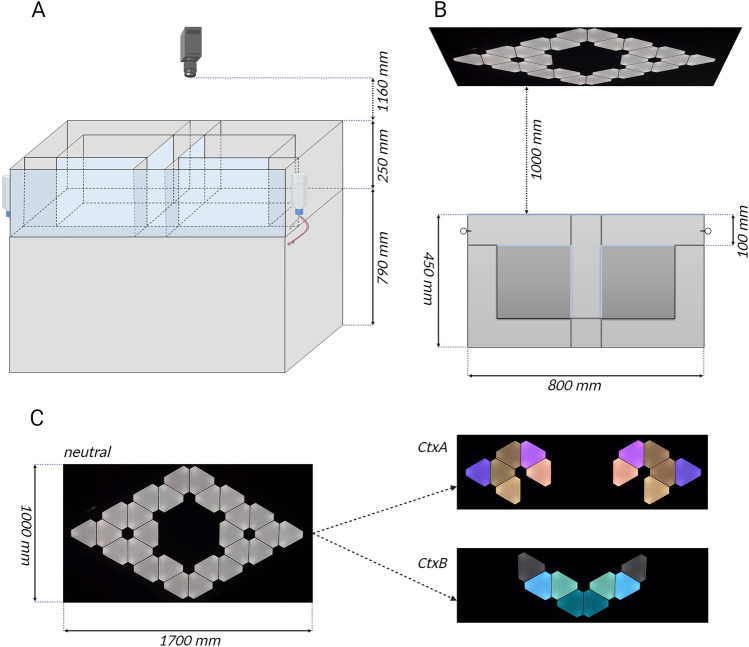 Figure 1
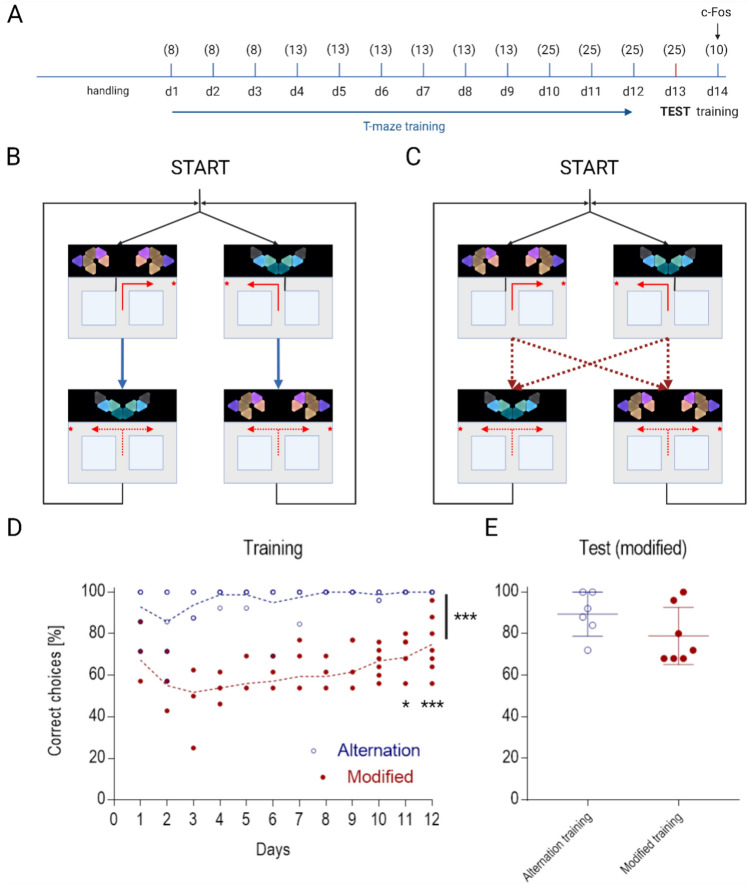 Figure 2
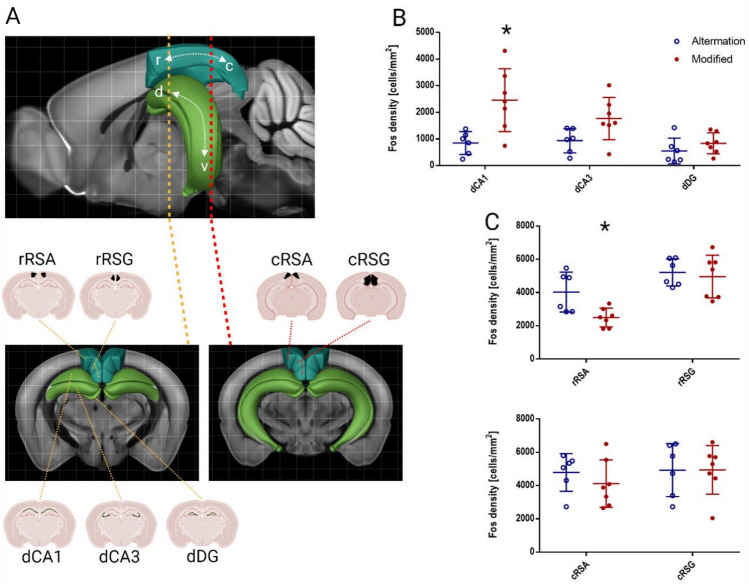 Figure 3
Peer Reviews
No public reviews on file for this paper yet. If you reviewed it on a platform where reviews are public (OpenReview, ICLR, NeurIPS, ICML), you can paste yours below so the community can read it here.
Videos
No videos yet. Explain this paper in a talk, walkthrough, or lecture? Add one.
Taxonomy
TopicsMemory and Neural Mechanisms · Neuroscience and Neuropharmacology Research · Sleep and Wakefulness Research