Assessment of the effect of the SLC5A2 gene on eGFR: a Mendelian randomization study of drug targets for the nephroprotective effect of sodium-glucose cotransporter protein 2 inhibition
Gailing Liu

TL;DR
This study uses genetic data to show that the SLC5A2 gene affects kidney function, supporting the protective effects of SGLT2 inhibitors on the kidneys.
Contribution
The study provides novel genetic evidence linking SLC5A2 gene activity to eGFR decline and supports the nephroprotective role of SGLT2 inhibitors.
Findings
SLC5A2 gene-regulated HbA1c levels are negatively correlated with eGFR in multi-ancestry and European populations.
Genetic inhibition of SLC5A2 is associated with higher eGFR, supporting the renoprotective effect of SGLT2 inhibitors.
Results were validated using GWAS data from the CKDGen consortium, reinforcing the causal relationship.
Abstract
Sodium-glucose cotransporter protein 2 (SGLT2) inhibitors have been shown to have renoprotective effects in clinical studies. For further validation in terms of genetic variation, drug-targeted Mendelian randomization (MR) was used to investigate the causal role of SGLT2 inhibition on eGFR effects. Genetic variants representing SGLT2 inhibition were selected as instrumental variables. Drug target Mendelian randomization analysis was used to investigate the relationship between SGLT2 inhibitors and eGFR. The IVW method was used as the primary analysis method. As a sensitivity analysis, GWAS pooled data from another CKDGen consortium was used to validate the findings. MR results showed that hemoglobin A1c (HbA1c) levels, regulated by the SLC5A2 gene, were negatively correlated with eGFR (IVW β -0.038, 95% CI -0.061 to -0.015, P = 0.001 for multi-ancestry populations; IVW β -0.053, 95%…
Genes, proteins, chemicals, diseases, species, mutations and cell lines named across the full text — each resolved to its canonical identifier and authoritative record.
Click any figure to enlarge with its caption.
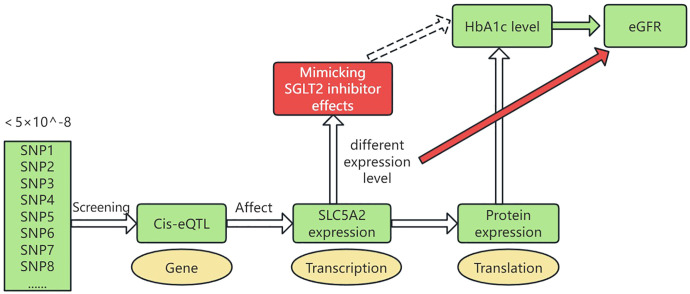 Figure 1
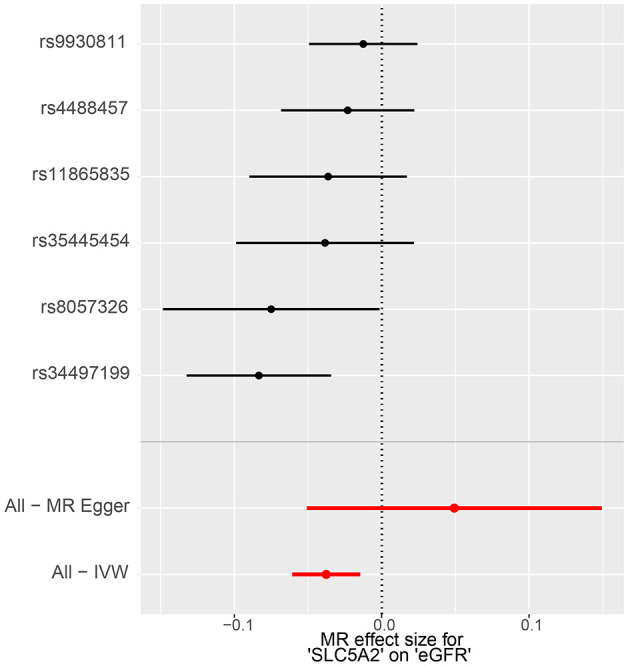 Figure 2
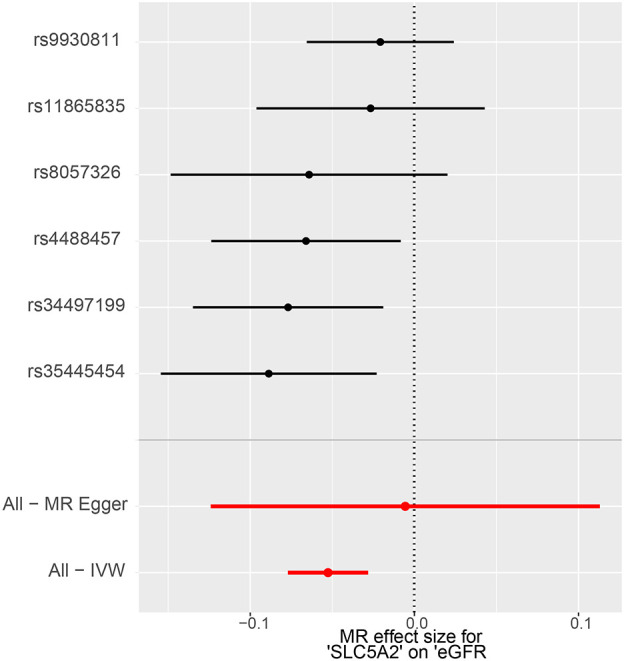 Figure 3
Peer Reviews
No public reviews on file for this paper yet. If you reviewed it on a platform where reviews are public (OpenReview, ICLR, NeurIPS, ICML), you can paste yours below so the community can read it here.
Videos
No videos yet. Explain this paper in a talk, walkthrough, or lecture? Add one.
Taxonomy
TopicsDiabetes Treatment and Management · Pancreatic function and diabetes · Drug Transport and Resistance Mechanisms