Clinical analysis of atlanto-occipital decompression in the management of chiari malformation with multi-segmental syringomyelia
Yaning Sun, Jiangshun Fang, Shengjuan Wang, Jimei Luan, Na Wang, Lige Lv, Chaojun Xin, Pengyuan Luo, Yanke Yue, Zhenghai Cheng, Zhiguo Yang, Liuyin Chen

TL;DR
This study shows that a specific surgery called atlanto-occipital decompression is safe and effective for treating a brain and spinal cord condition in children.
Contribution
The study provides clinical evidence for the effectiveness of AOD in treating pediatric patients with Chiari malformation and multi-segmental syringomyelia.
Findings
All 21 patients showed significant improvement in symptoms and syringomyelia shrinkage after surgery.
Postoperative MRI showed that cerebellar tonsillar herniation was corrected and the spinal canal angle improved significantly.
Only 5 children experienced cerebrospinal fluid leakage, with no serious complications or deaths.
Abstract
Chiari malformation type I with syringomyelia (CM-I-S) is a very common disease in neurosurgery. There are also various surgical methods. But it is controversial. There are few reports about children, especially the treatment of multi-segmental beaded syringomyelia. The purpose of this study was to explore the clinical effects of atlanto-occipital decompression (AOD) in the management of Chiari malformation type I (CM-I) with multi-segmental beaded syringomyelia (MSBS) in pediatric patients. This retrospective study were pediatric patients with CM-I combined with MSBS who were treated in our hospital from January 2015 to December 2023. The patients who received the AOD treatment were screened according to inclusion and exclusion criteria. Outcomes were assessed by comparison of pre- and postoperative clinical, Chicago Chiari Outcome Scale (CCOS), the diameter and volume of the…
Genes, proteins, chemicals, diseases, species, mutations and cell lines named across the full text — each resolved to its canonical identifier and authoritative record.
Click any figure to enlarge with its caption.
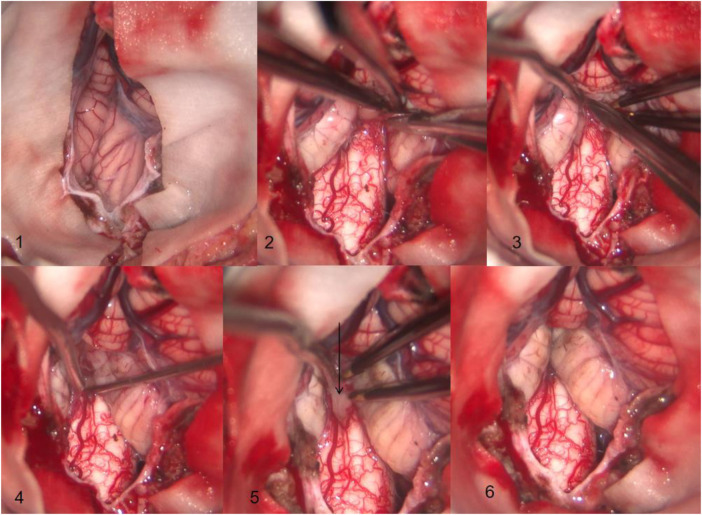 Figure 1
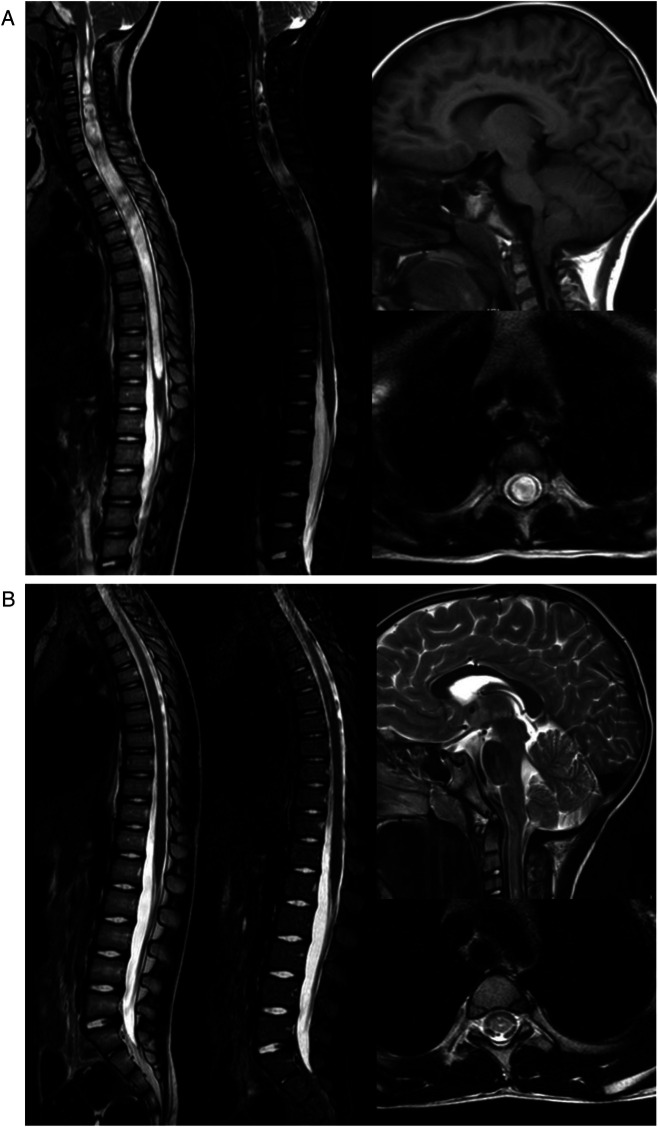 Figure 2
Peer Reviews
No public reviews on file for this paper yet. If you reviewed it on a platform where reviews are public (OpenReview, ICLR, NeurIPS, ICML), you can paste yours below so the community can read it here.
Videos
No videos yet. Explain this paper in a talk, walkthrough, or lecture? Add one.
Taxonomy
TopicsSpinal Dysraphism and Malformations · Cerebrospinal fluid and hydrocephalus · Spinal Cord Injury Research