Sparse and Expandable Network for Google's Pathways
Charles X. Ling, Ganyu Wang, Boyu Wang

TL;DR
This paper introduces SEN, a new AI architecture that improves multi-task learning by handling multiple tasks efficiently and avoiding interference.
Contribution
The novel SEN model enables sparse and expandable learning for multi-modal tasks in AI systems.
Findings
SEN effectively manages task interference and forgetting in multi-task learning.
The model integrates data from various modalities while maintaining sparsity.
SEN provides an efficient solution for lifelong learning in AI systems.
Abstract
Recently, Google introduced Pathways as its next-generation AI architecture. Pathways must address three critical challenges: learning one general model for several continuous tasks, ensuring tasks can leverage each other without forgetting old tasks, and learning from multi-modal data such as images and audio. Additionally, Pathways must maintain sparsity in both learning and deployment. Current lifelong multi-task learning approaches are inadequate in addressing these challenges. To address these challenges, we propose SEN, a Sparse and Expandable Network. SEN is designed to handle multiple tasks concurrently by maintaining sparsity and enabling expansion when new tasks are introduced. The network leverages multi-modal data, integrating information from different sources while preventing interference between tasks. The proposed SEN model demonstrates significant improvements in…
Genes, proteins, chemicals, diseases, species, mutations and cell lines named across the full text — each resolved to its canonical identifier and authoritative record.
Click any figure to enlarge with its caption.
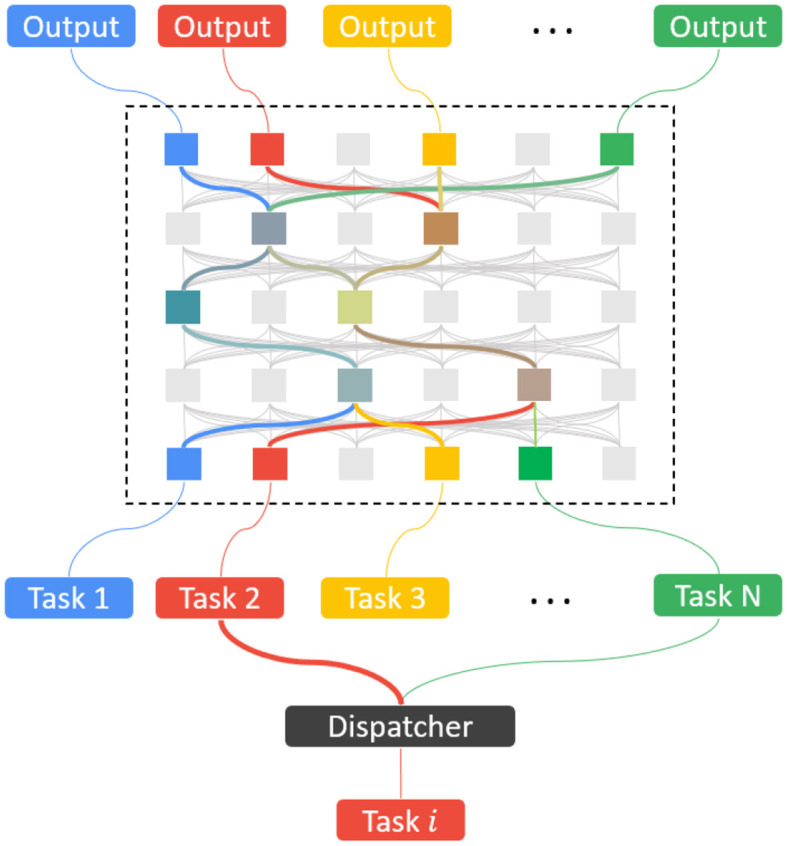 Figure 1
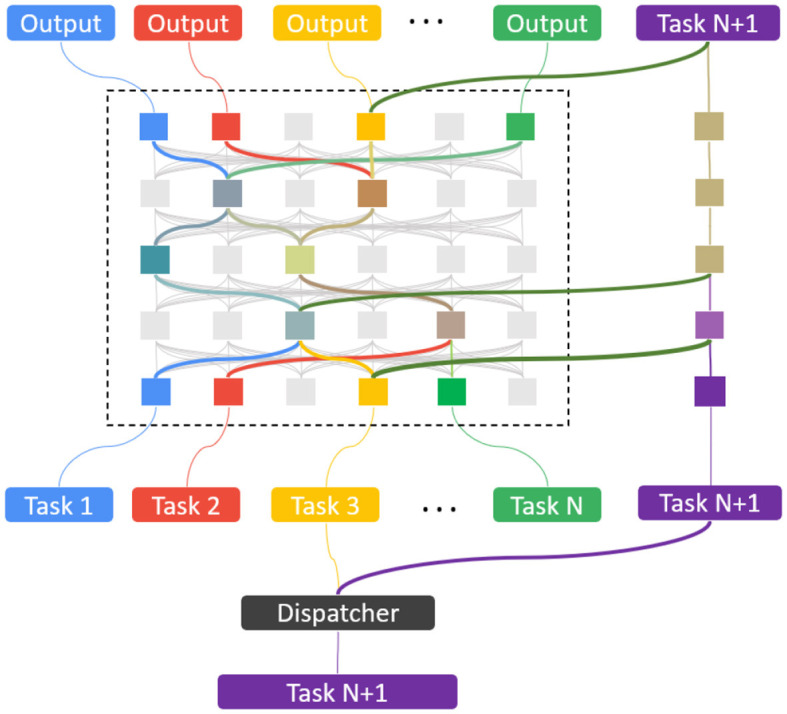 Figure 2
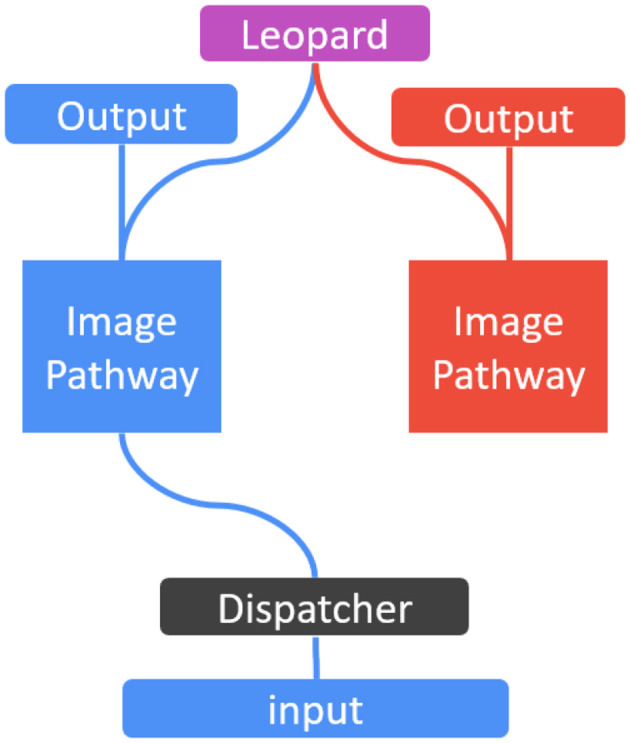 Figure 3
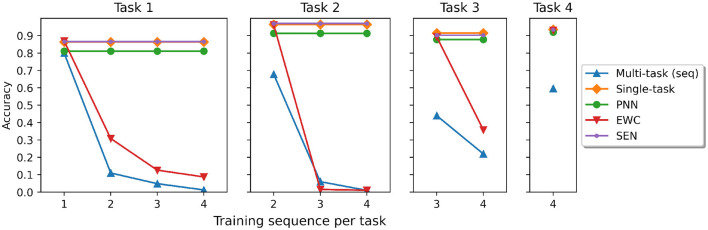 Figure 4
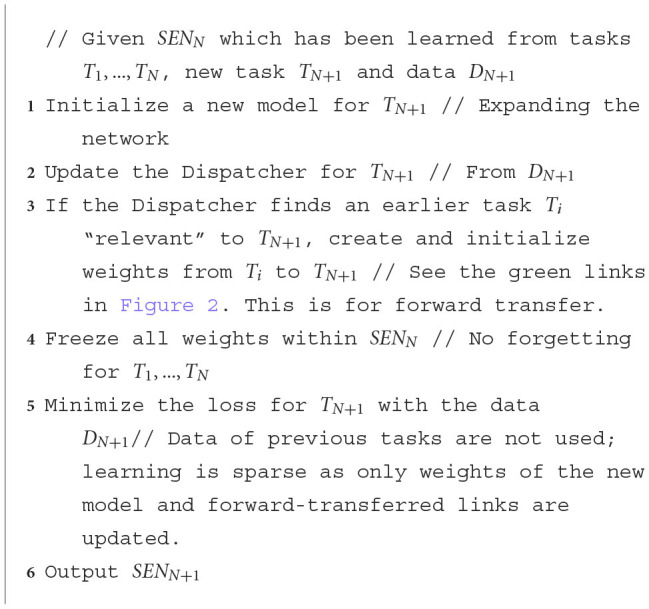 Figure 5
Peer Reviews
No public reviews on file for this paper yet. If you reviewed it on a platform where reviews are public (OpenReview, ICLR, NeurIPS, ICML), you can paste yours below so the community can read it here.
Videos
No videos yet. Explain this paper in a talk, walkthrough, or lecture? Add one.
Taxonomy
TopicsDomain Adaptation and Few-Shot Learning · Multimodal Machine Learning Applications · Machine Learning and Data Classification