The left-lateralized N170 for visual specialization in advanced L2 Chinese learners
Yuxin Hao, Jiawen Guo, Hong Zhu, Bing Bai

TL;DR
Advanced Indonesian speakers learning Chinese show early visual processing of Chinese characters similar to native speakers, with brain activity patterns indicating visual specialization.
Contribution
This study reveals that advanced L2 Chinese learners show left-lateralized N170 ERP patterns, indicating early visual specialization for Chinese characters.
Findings
Advanced L2 Chinese learners show significant left-lateralized N170 ERP for Chinese characters.
Visual processing of Chinese characters in L2 learners is comparable to native speakers at early stages.
First language influences remain evident in the right hemisphere activation of L2 learners.
Abstract
Visual word recognition is crucial for improving reading skills in second language learners (L2Ls). It is unclear whether L2Ls who are native speakers of languages that use alphabetic scripts can recognize Chinese characters at an early stage of visual processing and if their visual specialization can reach a level of word recognition comparable to that of native Chinese speakers. This study aims to uncover the visual specialization mechanism of Chinese L2Ls. A delayed-color matching task was carried out with participants who were Chinese first language speakers (L1Ss) and advanced Chinese L2Ls with Indonesian as their first language. The results of the event-related potentials (ERPs) indicated that L2Ls exhibited significant visual specialization with a predominant distribution of the left-lateralized N170, along with some activation in the right hemisphere. These findings suggest that…
Genes, proteins, chemicals, diseases, species, mutations and cell lines named across the full text — each resolved to its canonical identifier and authoritative record.
Click any figure to enlarge with its caption.
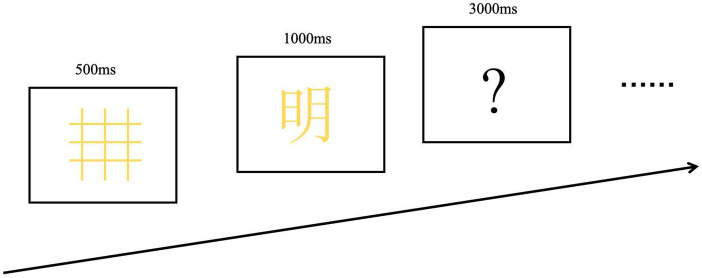 Figure 1
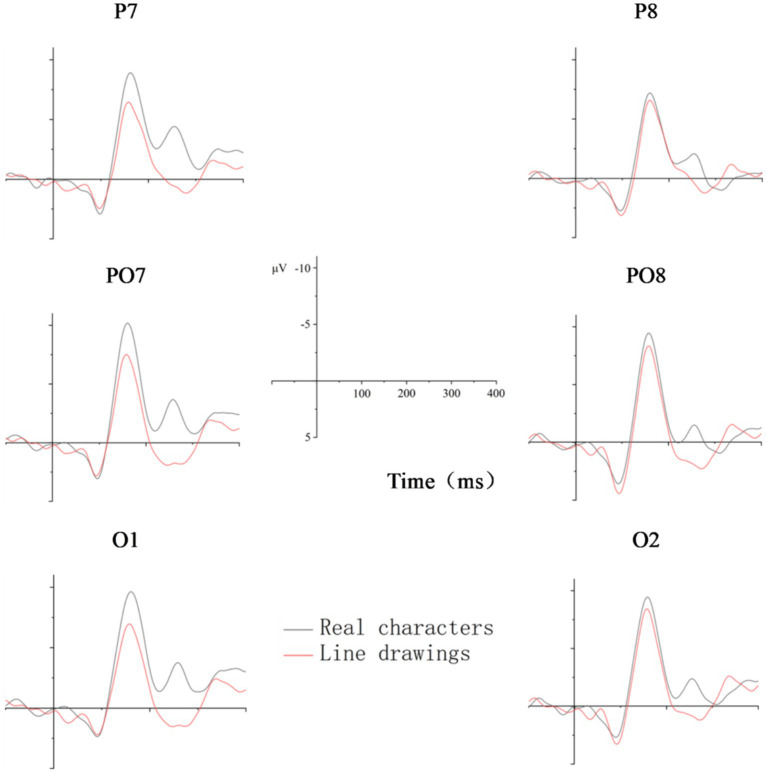 Figure 2
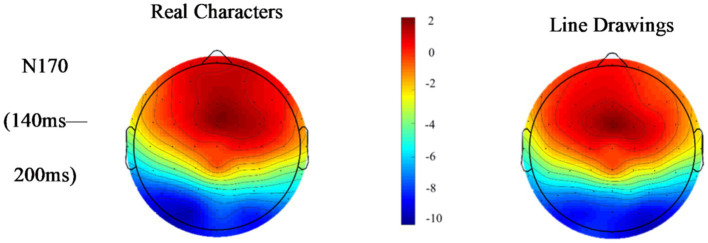 Figure 3
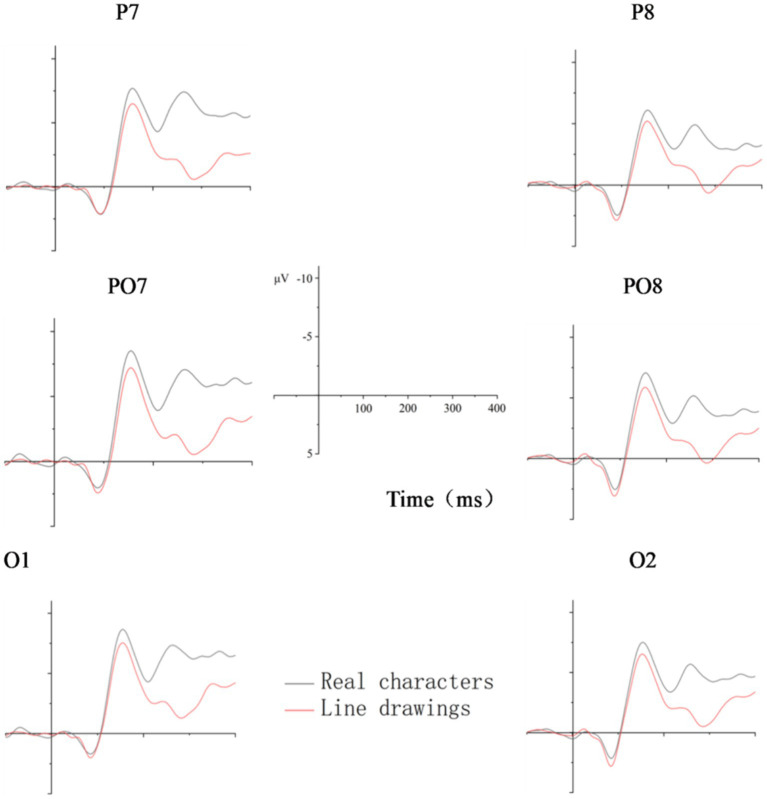 Figure 4
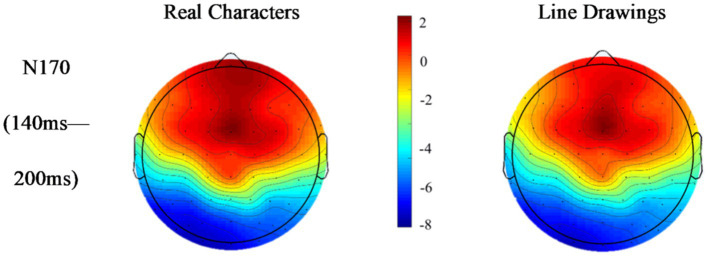 Figure 5
 Figure 6
 Figure 7
 Figure 8
 Figure 9
 Figure 10
 Figure 11
 Figure 12
 Figure 13
Peer Reviews
No public reviews on file for this paper yet. If you reviewed it on a platform where reviews are public (OpenReview, ICLR, NeurIPS, ICML), you can paste yours below so the community can read it here.
Videos
No videos yet. Explain this paper in a talk, walkthrough, or lecture? Add one.
Taxonomy
TopicsReading and Literacy Development · Neurobiology of Language and Bilingualism · Categorization, perception, and language