The relation of lactate level and carbon dioxide pressure discrepancies between transcutaneous and arterial measurements
Aslıhan GÜRÜN KAYA, Şeyda Nur ÖZPINAR, Miraç ÖZ, Serhat EROL, Fatma ARSLAN, Aydın ÇİLEDAĞ, Akın KAYA

TL;DR
This study shows that transcutaneous CO2 monitoring becomes unreliable when patients have high lactate levels, suggesting arterial blood tests are needed in such cases.
Contribution
The study establishes a novel correlation between elevated lactate levels and increased discrepancies in CO2 measurements between transcutaneous and arterial methods.
Findings
Bland-Altman analysis revealed a significant mean bias of 5.17 mmHg in high lactate patients compared to 0.66 mmHg in normal lactate patients.
Lactate levels were independently associated with increased TcCO2-PaCO2 differences (Beta=0.875, p<0.001).
A strong positive correlation (r=0.79) was found between lactate levels and TcCO2-PaCO2 differences.
Abstract
ABSTRACT The relation of lactate level and carbon dioxide pressure discrepancies between transcutaneous and arterial measurements Introduction: Partial carbondioxide pressure of the arterial blood (PaCO2) is used to evaluate alveolar ventilation. Transcutaneous carbon dioxide pressure (TcCO2) monitoring has been developed as a non-invasive (NIV) alternative to arterial blood gas analysis (ABG). Studies have shown that decreased tissue perfusion leads to increased carbondioxide (CO2). The use of transcutaneous capnometry may be unreliable in patients with perfusion abnormalities. In this study, we aimed to evaluate the relation between TcCO2-PaCO2 and lactate level which is recognized as a marker of hypoperfusion. Materials and Methods: In this prospective cohort study in critical care patients with hypercapnic respiratory failure (PaCO2 ≥45 mmHg) who received NIV between April 2019…
Genes, proteins, chemicals, diseases, species, mutations and cell lines named across the full text — each resolved to its canonical identifier and authoritative record.
Click any figure to enlarge with its caption.
 Figure 1
 Figure 2
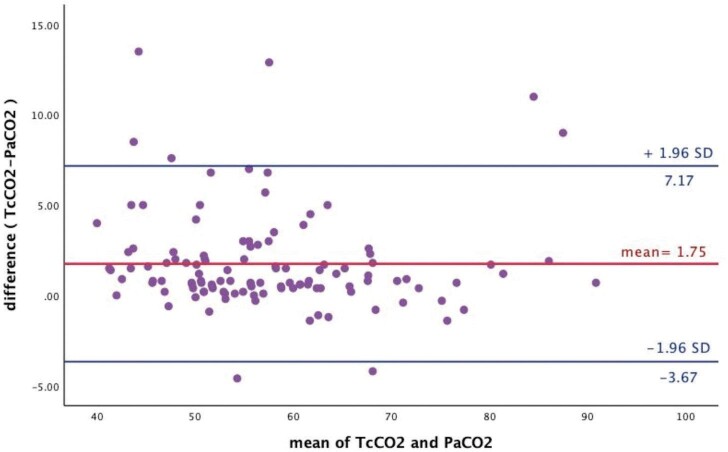 Figure 3
 Figure 4
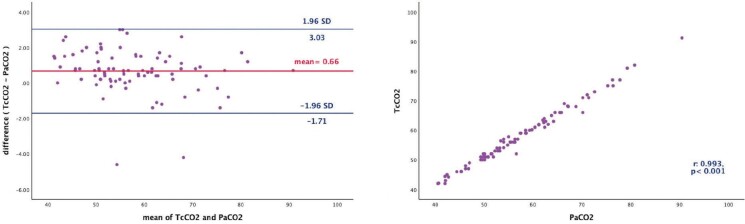 Figure 5
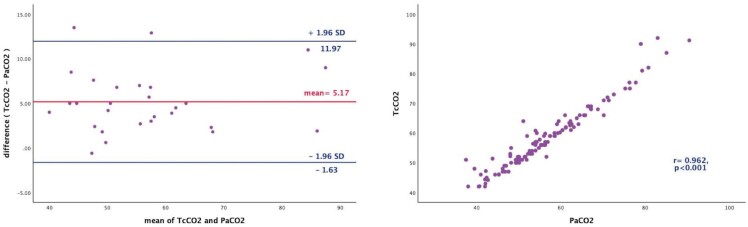 Figure 6
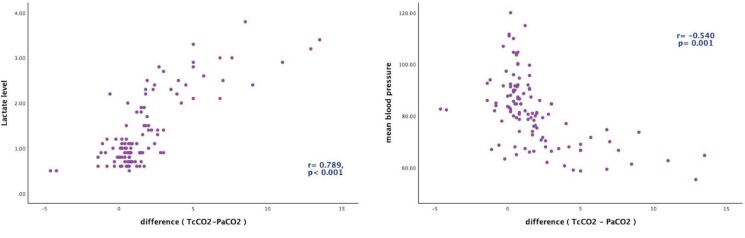 Figure 7
Peer Reviews
No public reviews on file for this paper yet. If you reviewed it on a platform where reviews are public (OpenReview, ICLR, NeurIPS, ICML), you can paste yours below so the community can read it here.
Videos
No videos yet. Explain this paper in a talk, walkthrough, or lecture? Add one.
Taxonomy
TopicsHemodynamic Monitoring and Therapy · Non-Invasive Vital Sign Monitoring · Renal function and acid-base balance