Compression of time in double-step saccades
Eckart Zimmermann

TL;DR
This study shows that time perception is affected during saccadic eye movements, with timing compression linked to motor planning rather than execution.
Contribution
The study dissociates saccade motor planning from execution to show their distinct effects on time perception.
Findings
Temporal compression peaks at saccade onset during the first saccade in a double-step paradigm.
During the second saccade, peak compression occurs 70 ms before saccade onset.
Saccade motor planning significantly influences time perception.
Abstract
Temporal intervals appear compressed at the time of saccades. Here, I asked if saccadic compression of time is related to motor planning or to saccade execution. To dissociate saccade motor planning from its execution, I used the double-step paradigm, in which subjects have to perform two horizontal saccades successively. At various times around the saccade sequence, I presented two large horizontal bars, which marked an interval lasting 100 ms. After 700 ms, a second temporal interval was presented, varying in duration across trials. Subjects were required to judge which interval appeared shorter. I found that during the first saccades in the double-step paradigm, temporal intervals were compressed. Maximum temporal compression coincided with saccade onset. Around the time of the second saccade, I found temporal compression as well, however, the time of maximum compression preceded…
Genes, proteins, chemicals, diseases, species, mutations and cell lines named across the full text — each resolved to its canonical identifier and authoritative record.
Click any figure to enlarge with its caption.
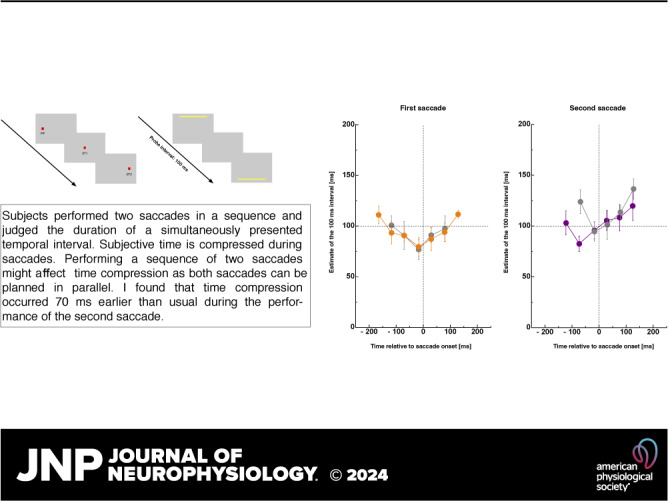 Figure 1
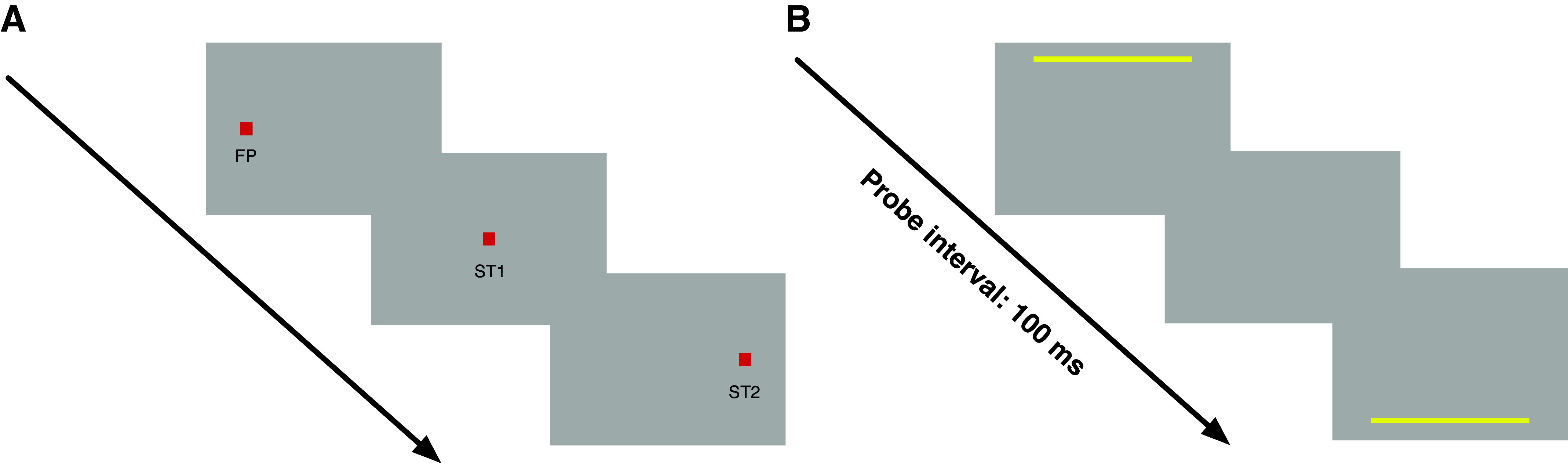 Figure 2
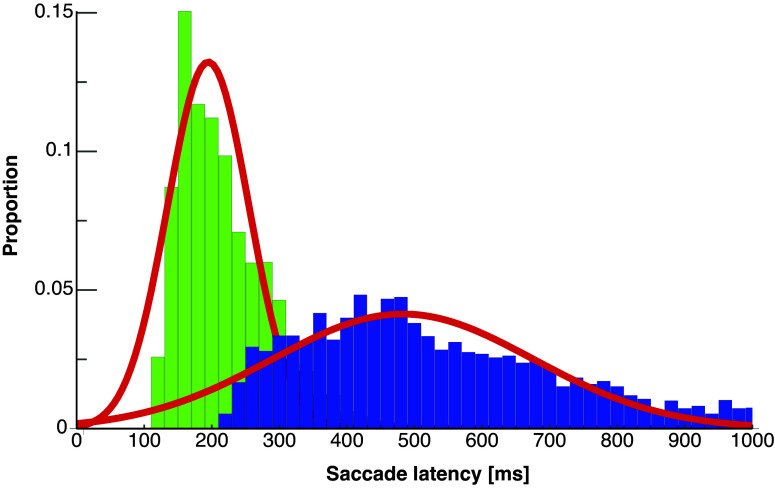 Figure 3
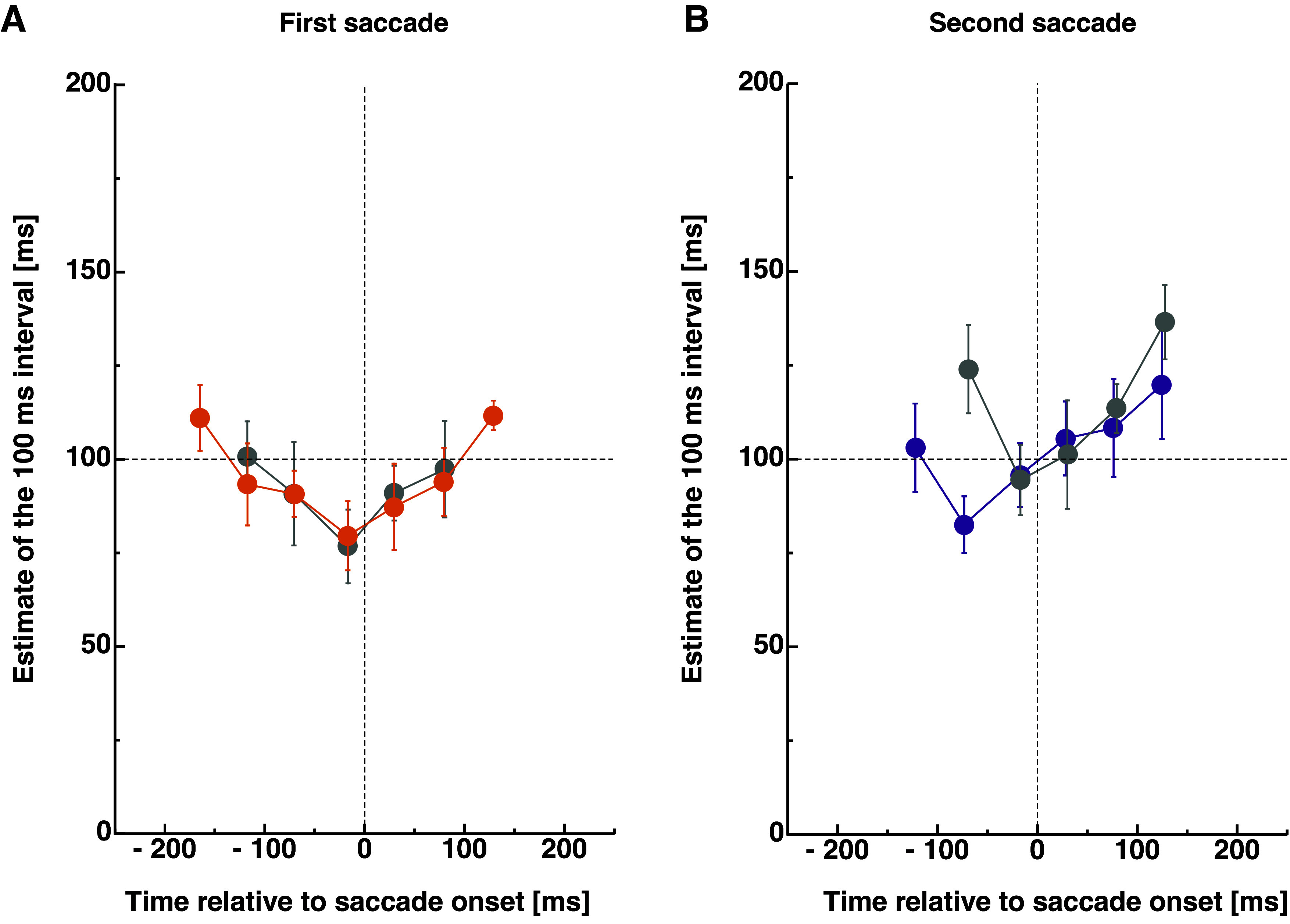 Figure 4
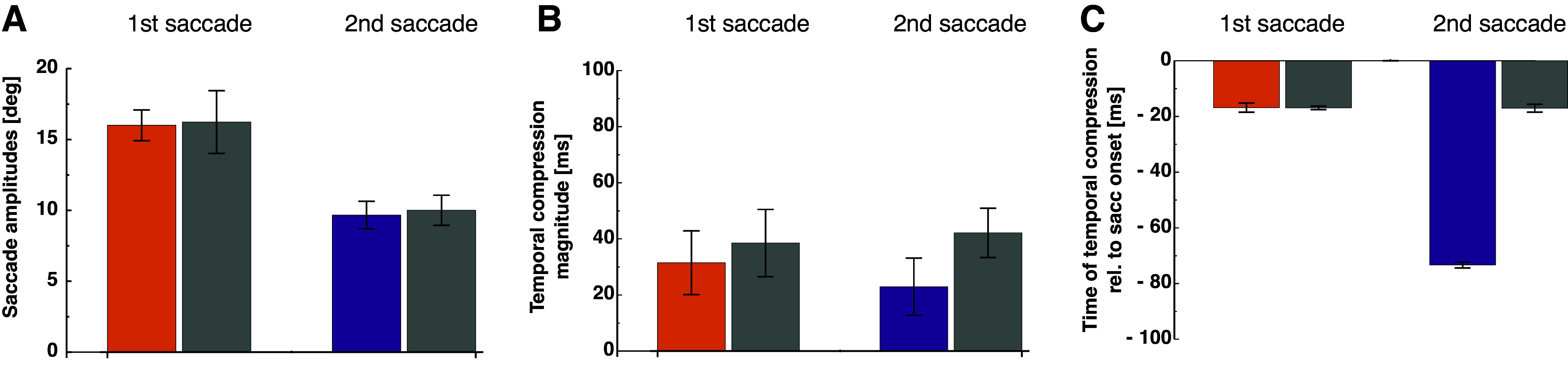 Figure 5
Peer Reviews
No public reviews on file for this paper yet. If you reviewed it on a platform where reviews are public (OpenReview, ICLR, NeurIPS, ICML), you can paste yours below so the community can read it here.
Videos
No videos yet. Explain this paper in a talk, walkthrough, or lecture? Add one.
Taxonomy
TopicsNeuroscience and Music Perception · Neural and Behavioral Psychology Studies · Neural dynamics and brain function