Imaging Findings and Management Strategy in Type II Popliteal Artery Entrapment Syndrome: A Tale of Two Cases
Resham Singh, Tej Pal, Vineeta Ojha, Sanjeev Kumar

TL;DR
This paper presents MRI findings and treatment approaches for two cases of type II popliteal artery entrapment syndrome, a condition causing leg pain during exercise.
Contribution
The novelty lies in reporting specific MRI findings and management strategies for type II PAES through case studies.
Findings
MRI was effective in diagnosing type II PAES in two patients.
Early detection allowed for surgical treatment in young individuals.
The cases highlight the importance of considering PAES in patients with leg claudication.
Abstract
Popliteal artery entrapment syndrome (PAES) is a frequently underdiagnosed condition that should be investigated in adults who experience exertional intermittent claudication in the lower limbs. If detected early, it is a surgically treatable cause of leg claudication in young individuals. PAES can be inherited or acquired through muscular hypertrophy, and the literature classifies it into six categories (I-VI) based on anatomical type. We intend to report the magnetic resonance imaging (MRI) findings of two cases with type II PAES and their management.
Genes, proteins, chemicals, diseases, species, mutations and cell lines named across the full text — each resolved to its canonical identifier and authoritative record.
Click any figure to enlarge with its caption.
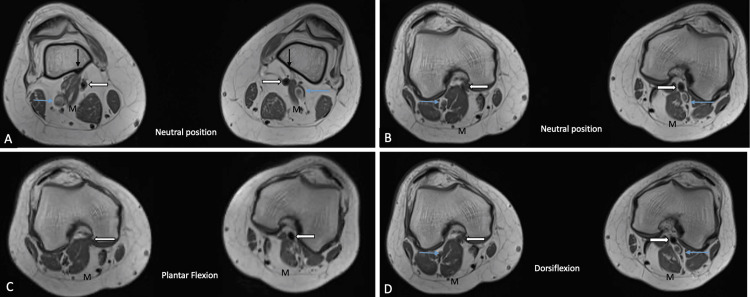 Figure 1
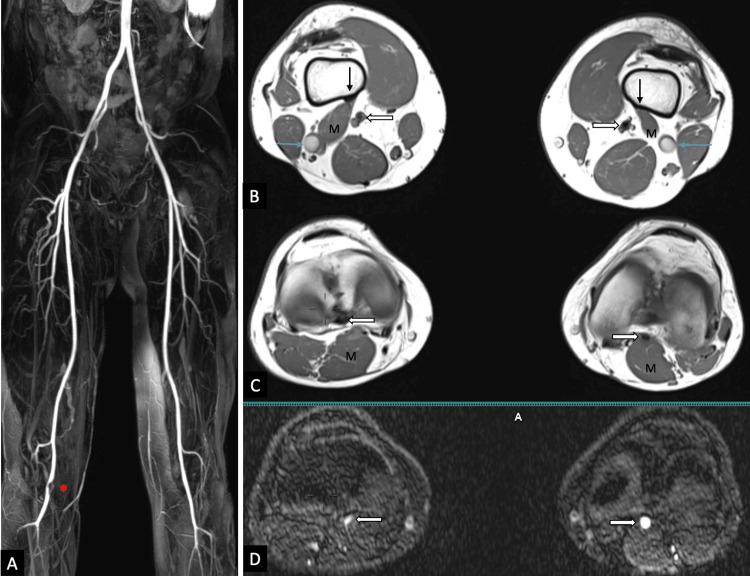 Figure 2
Peer Reviews
No public reviews on file for this paper yet. If you reviewed it on a platform where reviews are public (OpenReview, ICLR, NeurIPS, ICML), you can paste yours below so the community can read it here.
Videos
No videos yet. Explain this paper in a talk, walkthrough, or lecture? Add one.
Taxonomy
TopicsMuscle and Compartmental Disorders · Body Contouring and Surgery · Peripheral Nerve Disorders