A Locked Posterior Shoulder Dislocation: An Injury Not to Miss
El Mehdi Lahrach, Hamza Skalli, Hamza Benameur, Najib Al Idrissi, Abdeloihab Jaafar

TL;DR
A rare case of a locked posterior shoulder dislocation is presented, highlighting the importance of timely diagnosis and surgical intervention for effective recovery.
Contribution
The paper presents a rare case managed with the McLaughlin technique, emphasizing the need for clinical awareness of this injury.
Findings
The patient regained full range of motion after surgical intervention using the McLaughlin technique.
The injury was successfully managed without recurrent dislocation following the procedure.
Abstract
Locked posterior shoulder dislocations are dislocations that remain unreduced for more than three weeks. In most cases, they are associated with other injuries. We report the case of a 38-year-old male who presented with pain and total functional impotence due to a complex injury, including posterior glenohumeral dislocation, a reverse Hill-Sachs lesion, and a clavicle fracture. Because of the unsuccessful attempts at closed reduction, the patient underwent surgery. We performed the McLaughlin technique, which included the transfer of the subscapularis tendon to the reverse Hill-Sachs lesion, stabilized by bone anchors. At the last follow-up, the patient was doing well and had regained full range of motion with no recurrent dislocation. Clinicians should maintain clinical and radiological suspicion about this injury to timely manage this rare and dangerous injury.
Genes, proteins, chemicals, diseases, species, mutations and cell lines named across the full text — each resolved to its canonical identifier and authoritative record.
Click any figure to enlarge with its caption.
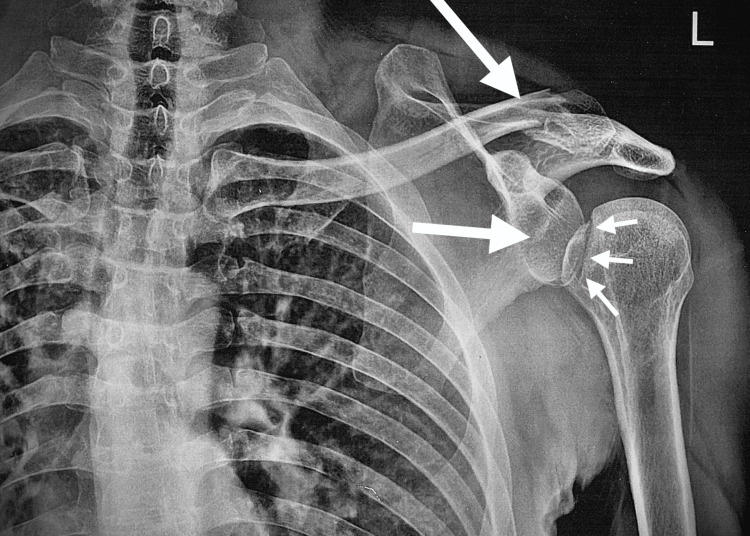 Figure 1
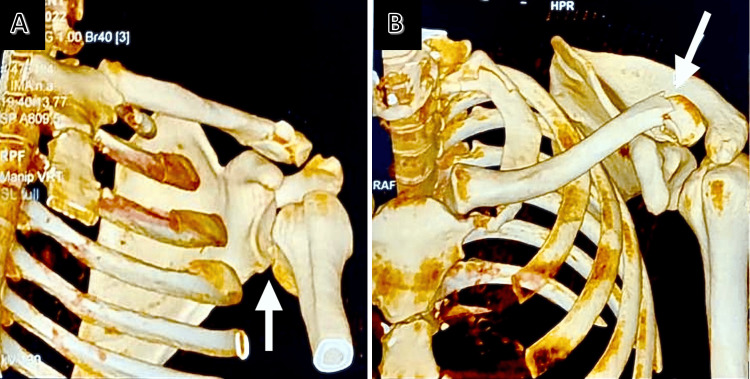 Figure 2
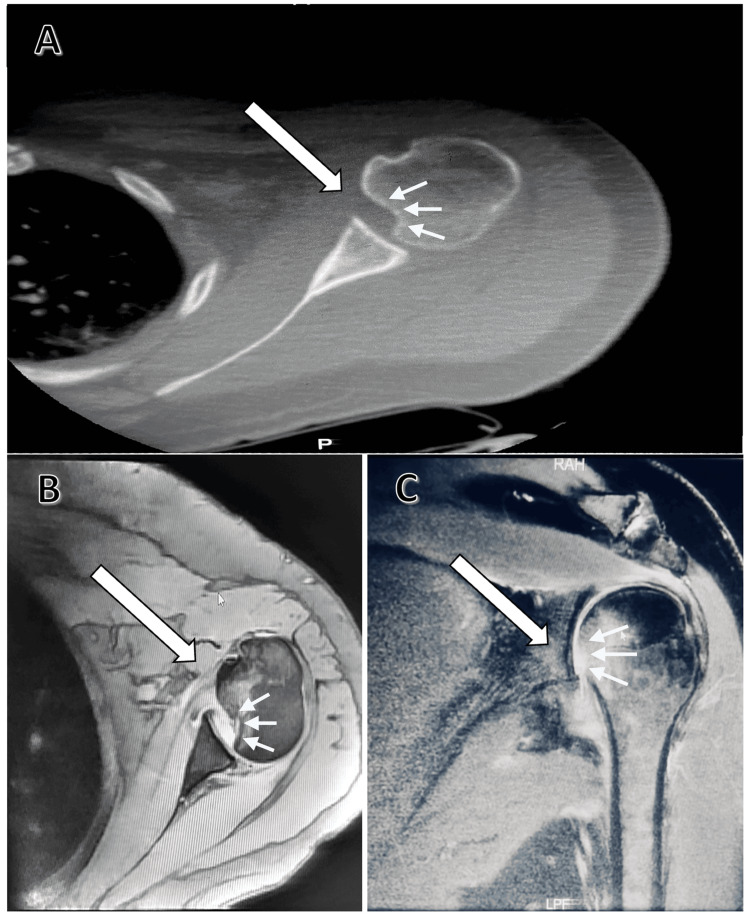 Figure 3
 Figure 4
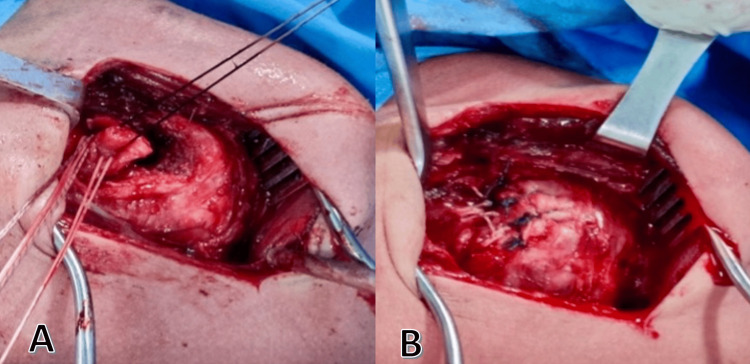 Figure 5
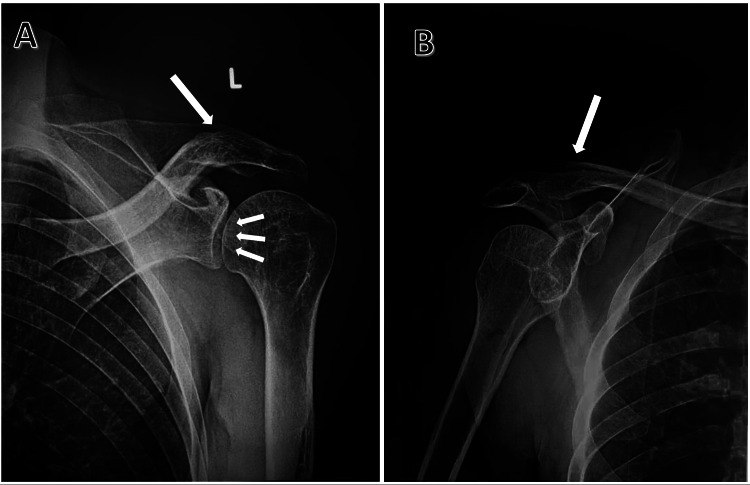 Figure 6
Peer Reviews
No public reviews on file for this paper yet. If you reviewed it on a platform where reviews are public (OpenReview, ICLR, NeurIPS, ICML), you can paste yours below so the community can read it here.
Videos
No videos yet. Explain this paper in a talk, walkthrough, or lecture? Add one.
Taxonomy
TopicsShoulder and Clavicle Injuries · Shoulder Injury and Treatment · Trauma Management and Diagnosis