Navigating Challenges: Managing Upper Gastrointestinal Bleeding From Cholecystoduodenal Fistula in an Elderly Patient
Adam Mylonakis, Maria Sotiropoulou, Lysandros Karydakis, Andreas Koutsoumpas, Andreas Panagakis, Panagiotis Sakarellos, Dimitrios Schizas, Evaggelos Felekouras, Michail Vailas

TL;DR
This paper discusses a rare case of upper gastrointestinal bleeding caused by a cholecystoduodenal fistula in an elderly patient, successfully treated with a minimally invasive endoscopic method.
Contribution
The novelty lies in the successful use of endoscopic hemostatic spray for managing a high-risk patient with a cholecystoduodenal fistula.
Findings
CDF can present as severe upper GI bleeding and should be considered in differential diagnoses.
Endoscopic hemostatic spray offers a viable alternative to surgery in high-risk patients.
CDF typically arises from chronic gallbladder inflammation and requires individualized treatment approaches.
Abstract
Cholecystoduodenal fistula (CDF) is an uncommon condition characterized by an abnormal connection between the gallbladder and the duodenum, often linked to cholelithiasis. It typically presents with nonspecific symptoms such as abdominal pain and jaundice but can occasionally result in severe upper gastrointestinal (GI) bleeding. This report describes the case of a 94-year-old female who presented with hypovolemic shock and multiple episodes of hematemesis. An upper GI endoscopy confirmed a CDF with active hemorrhage. Due to her comorbidities and poor performance status, an endoscopic approach using hemostatic spray was chosen, resulting in a favorable clinical outcome. The development of CDF is typically a result of chronic gallbladder inflammation and cholecystitis, leading to adhesion and erosion into the duodenum. Diagnosis involves imaging and endoscopic techniques, and management…
Genes, proteins, chemicals, diseases, species, mutations and cell lines named across the full text — each resolved to its canonical identifier and authoritative record.
Click any figure to enlarge with its caption.
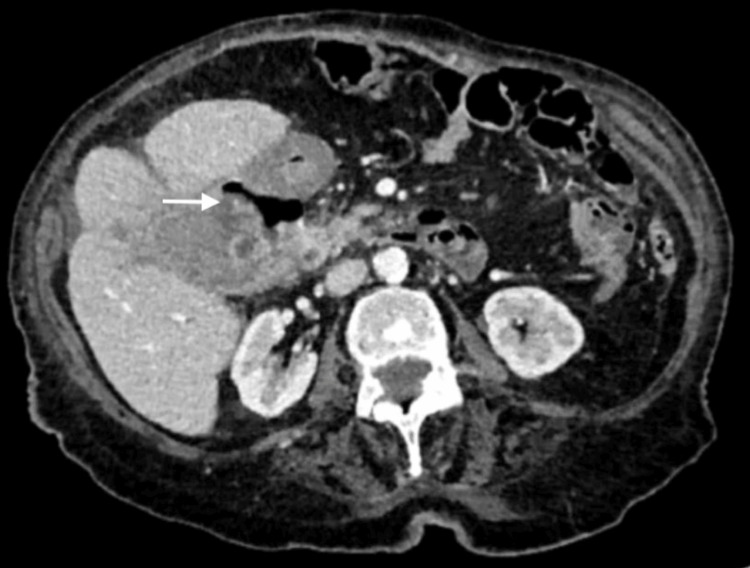 Figure 1
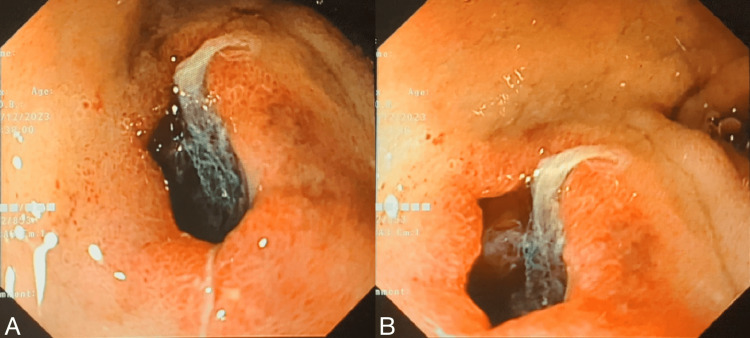 Figure 2
Peer Reviews
No public reviews on file for this paper yet. If you reviewed it on a platform where reviews are public (OpenReview, ICLR, NeurIPS, ICML), you can paste yours below so the community can read it here.
Videos
No videos yet. Explain this paper in a talk, walkthrough, or lecture? Add one.
Taxonomy
TopicsBiliary and Gastrointestinal Fistulas · Esophageal and GI Pathology · Gastrointestinal disorders and treatments