Evaluation of Neutralizing Capacity of Tixagevimab plus Cilgavimab (AZD7442) against Different SARS-CoV-2 Variants: A Case Report Study with Comparison to a Vaccinated Population
Constant Gillot, Jean-Louis Bayart, Vincent Maloteau, Jean-Michel Dogné, Jonathan Douxfils, Julien Favresse

TL;DR
This study compares the neutralizing antibody levels of AZD7442 in patients versus vaccinated individuals against various SARS-CoV-2 variants.
Contribution
The study evaluates the neutralizing capacity of AZD7442 against multiple SARS-CoV-2 variants and compares it to mRNA vaccine-induced immunity.
Findings
AZD7442 has a longer half-life of neutralizing antibodies compared to the mRNA vaccine.
Neutralizing antibody negativity time varies across SARS-CoV-2 variants, with the longest for Alpha and shortest for Beta.
AZD7442 may be suitable for short-term prophylaxis in high-risk individuals due to its prolonged antibody activity.
Abstract
AZD7442 (150 mg of tixagevimab plus 150 mg of cilgavimab) has been approved for the preexposure prophylaxis of COVID-19 and for the treatment of adults and adolescents with COVID-19 who do not require supplemental oxygen and who are at increased risk of severe COVID-19. Thus, the aim of the present study is to evaluate the neutralizing capacity of tixagevimab and cilgavimab across different SARS-CoV-2 variants in two patients who received AZD7442 for immunoprophylaxis. A cohort of subjects (n = 45) who had received the BNT162b2 mRNA COVID-19 vaccine has been included to compare these two preventive strategies. Neutralizing antibody (NAb) titers against several variants were assessed against the wild-type, alpha, beta, gamma, delta, omicron BA.5, and XBB.1.5 variants. Binding antibodies have also been measured. NAbs T1/2 for AZD7442 was 8.1 days (95% CI: 5.1–19.5 days) and was 11.8 days…
Genes, proteins, chemicals, diseases, species, mutations and cell lines named across the full text — each resolved to its canonical identifier and authoritative record.
Click any figure to enlarge with its caption.
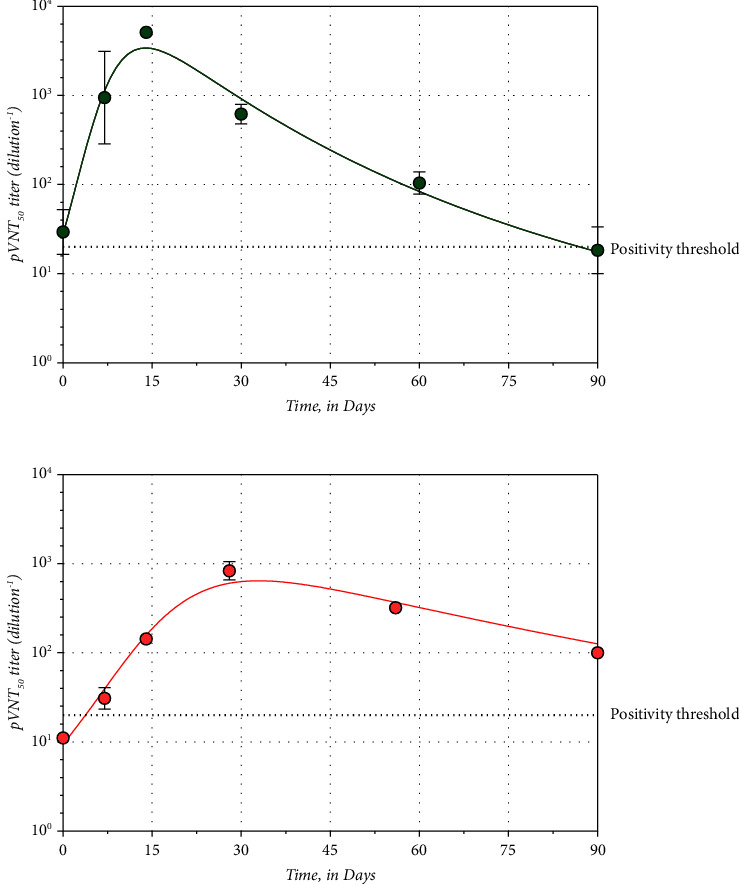 Figure 1
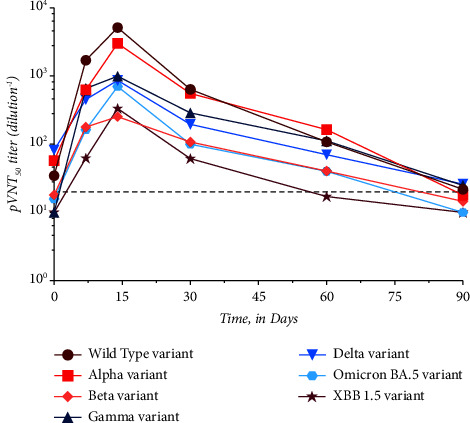 Figure 2
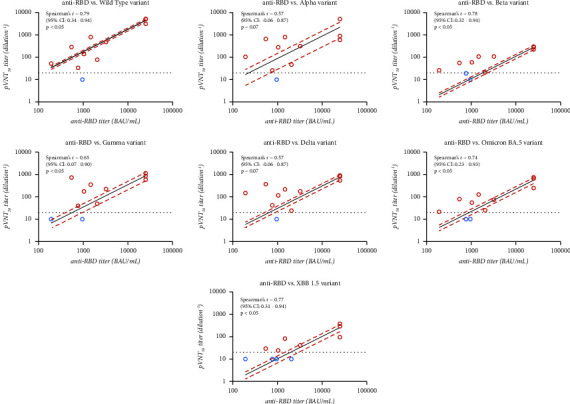 Figure 3
Peer Reviews
No public reviews on file for this paper yet. If you reviewed it on a platform where reviews are public (OpenReview, ICLR, NeurIPS, ICML), you can paste yours below so the community can read it here.
Videos
No videos yet. Explain this paper in a talk, walkthrough, or lecture? Add one.
Taxonomy
TopicsSARS-CoV-2 and COVID-19 Research · COVID-19 Clinical Research Studies · COVID-19 Impact on Reproduction