Extra-axial primary meningeal pleomorphic xanthoastrocytoma: a case report
Emna Mili, Kais Maamri, Mohamed Amine Hadj Taieb, Mohamed Boukhit, Zohra Souei, Amine Trifa, Mohamed Maher Hadhri, Mehdi Darmoul

TL;DR
This paper reports a rare case of a brain tumor that mimics a meningioma and discusses its treatment options.
Contribution
The paper presents the fourth documented case of a rare extra-axial pleomorphic xanthoastrocytoma.
Findings
The tumor presented as an extra-axial mass in a 23-year-old woman with seizures and raised intracranial pressure.
The case highlights the diagnostic challenge of distinguishing this tumor from a meningioma.
The authors review and discuss possible treatment approaches for this rare condition.
Abstract
Pleomorphic xanthoastrocytoma (PXA) is a rare low-grade glial neoplasm of the central nervous system accounting for less than 1% of all astrocytomas. Similar to other gliomas, it can rarely arise from glial nests in the meninges, manifesting as an extra-axial mass mimicking a meningioma. Extra axial PXA is an extremely rare entity. Therefore, there are no standardized guidelines. In this article, we report the fourth case, so far, of a solitary primary extra-axial PXA mimicking a meningioma in a 23-year-old woman who presented with temporal seizures and features of raised intracranial pressure. Through this case, we tried to discuss all treatment options.
Genes, proteins, chemicals, diseases, species, mutations and cell lines named across the full text — each resolved to its canonical identifier and authoritative record.
Click any figure to enlarge with its caption.
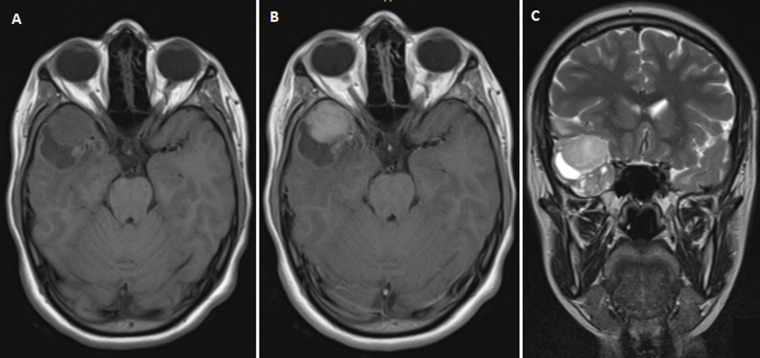 Figure 1
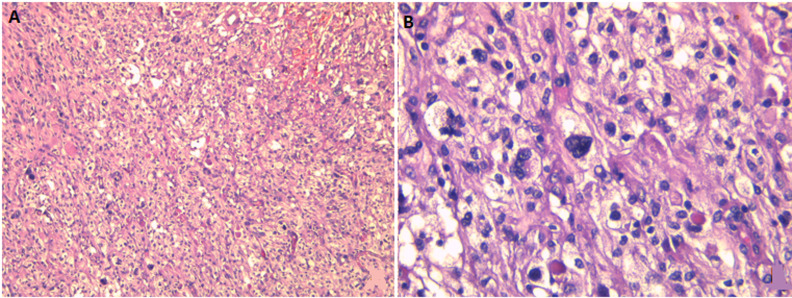 Figure 2
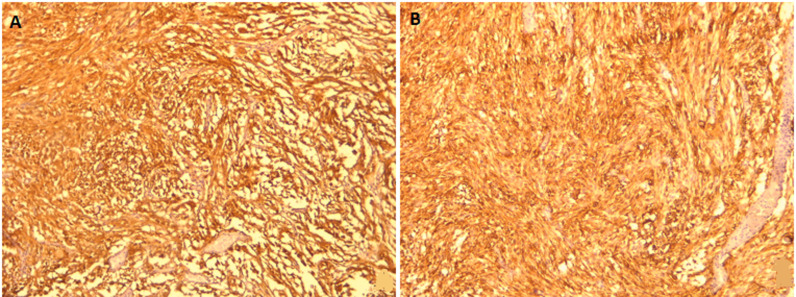 Figure 3
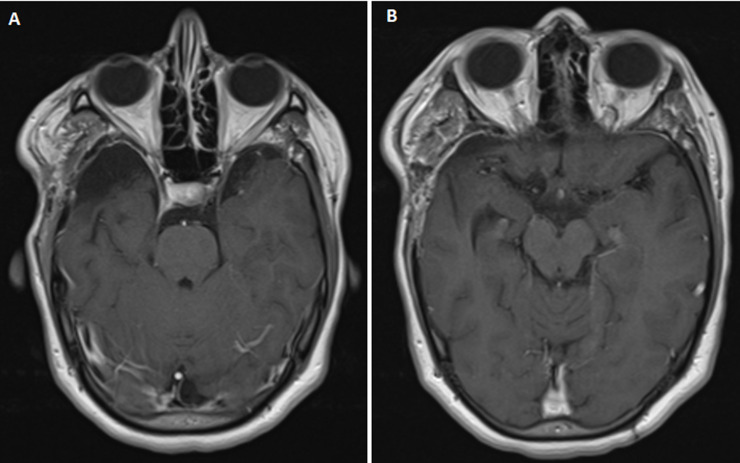 Figure 4
Peer Reviews
No public reviews on file for this paper yet. If you reviewed it on a platform where reviews are public (OpenReview, ICLR, NeurIPS, ICML), you can paste yours below so the community can read it here.
Videos
No videos yet. Explain this paper in a talk, walkthrough, or lecture? Add one.
Taxonomy
TopicsGlioma Diagnosis and Treatment · Vascular Malformations Diagnosis and Treatment · Cancer, Hypoxia, and Metabolism