Clinical Insights and Potential Benefits of Stem Cell Transplantation for Constitutional Mismatch Repair Deficiency: A Case Report of Two Siblings
Miłosz Mandryk, Joanna Owoc-Lempach, Jakub Cecot, Konrad Zarzecki, Małgorzata Piasta, Magdalena Wolska-Kolmus, Paweł Marschollek, Monika Mielcarek-Siedziuk, Bożenna Dembowska-Bagińska, Krzysztof Kałwak

TL;DR
This case report describes two siblings with CMMRD syndrome and their treatment with stem cell transplantation, highlighting its potential benefits.
Contribution
The report provides clinical insights into CMMRD syndrome and suggests stem cell transplantation as a potential treatment strategy.
Findings
Two siblings with CMMRD syndrome underwent stem cell transplantation after multiple cancer relapses.
Both patients showed café au lait macules, a common but non-specific symptom of CMMRD.
Stem cell transplantation may improve survival and reduce hematological malignancies in CMMRD patients.
Abstract
Constitutional mismatch repair deficiency (CMMRD) syndrome, caused by biallelic mutations in mismatch repair genes, is one of the most aggressive hereditary cancer syndromes. This report presents the clinical course of two brothers diagnosed with CMMRD. The first patient was diagnosed with T-cell lymphoma at the age of three and a half years, a relapse, and synchronous glioblastoma at the age of seven and a half years. After treatment with chemotherapy and neurosurgery, haematopoietic stem cell transplant (HSCT) was performed. The second patient was diagnosed with mediastinal T-cell lymphoma at the age of two and a half years and a relapse at the age of four and a half years. He also received chemotherapy and underwent HSCT. Both patients exhibited café au lait macules (CALMs), a common but non-specific feature of CMMRD, often confused with neurofibromatosis type 1 (NF1) syndrome. This…
Genes, proteins, chemicals, diseases, species, mutations and cell lines named across the full text — each resolved to its canonical identifier and authoritative record.
Click any figure to enlarge with its caption.
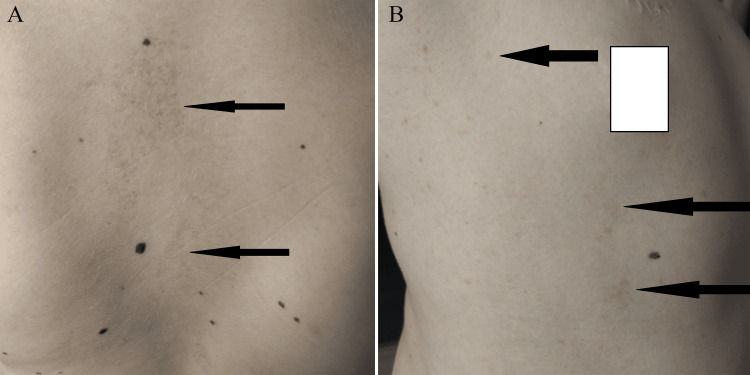 Figure 1
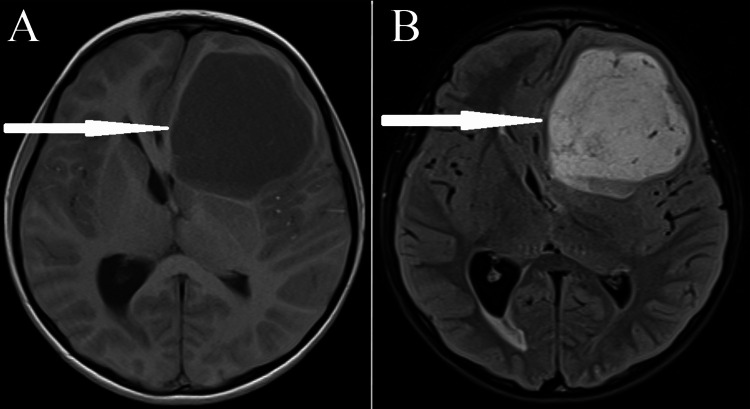 Figure 2
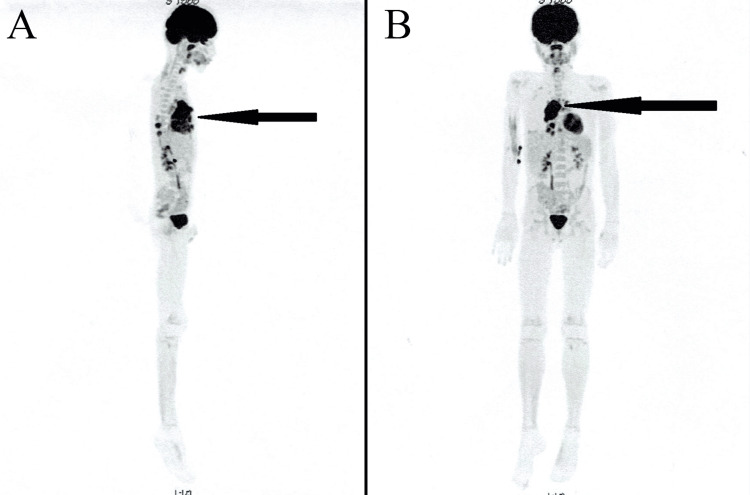 Figure 3
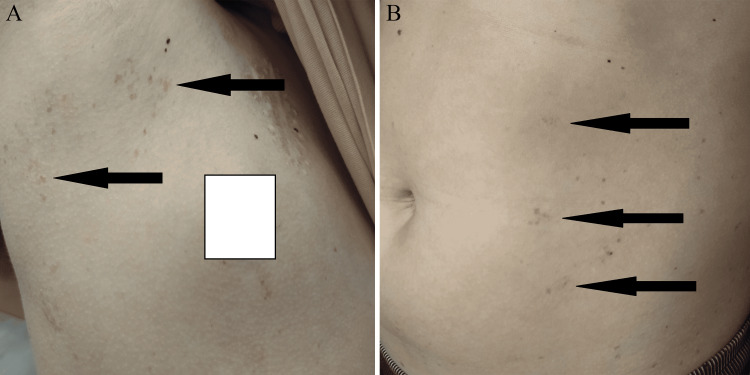 Figure 4
Peer Reviews
No public reviews on file for this paper yet. If you reviewed it on a platform where reviews are public (OpenReview, ICLR, NeurIPS, ICML), you can paste yours below so the community can read it here.
Videos
No videos yet. Explain this paper in a talk, walkthrough, or lecture? Add one.
Taxonomy
TopicsGenetic factors in colorectal cancer · Colorectal and Anal Carcinomas · Lymphoma Diagnosis and Treatment