Insurance Discrimination, Companion Animal Harm, and Domestic Violence and Abuse — Double Jeopardy in the UK
Di Turgoose, Ruth E. McKie, Paris Connelly

TL;DR
This paper explores how UK pet insurance policies may discriminate against people experiencing domestic violence by excluding coverage for companion animals in such cases.
Contribution
The study is the first to analyze pet insurance policies in the UK for discrimination against domestic violence victims and their companion animals.
Findings
UK pet insurance policies often exclude coverage for companion animals in cases of domestic violence and abuse.
The paper highlights the need for cross-reporting and multi-agency collaboration to protect both humans and animals affected by domestic violence.
Abstract
Prompted by Signal et al.’s study, this research examines UK “Pet Insurance” policies to see if and how experiencing domestic violence and abuse (DVA) in interspecies households is excluded under insurance policies terms. Situating our findings within the existing literature on human and companion animal victims of DVA, we discuss the implications for improving cross-reporting and multi-agency action to protect and prevent harm to humans and companion animal victims of DVA. In turn we identify a series of recommendations to combat discrimination in insurance, set out in our conclusion.
Genes, proteins, chemicals, diseases, species, mutations and cell lines named across the full text — each resolved to its canonical identifier and authoritative record.
Click any figure to enlarge with its caption.
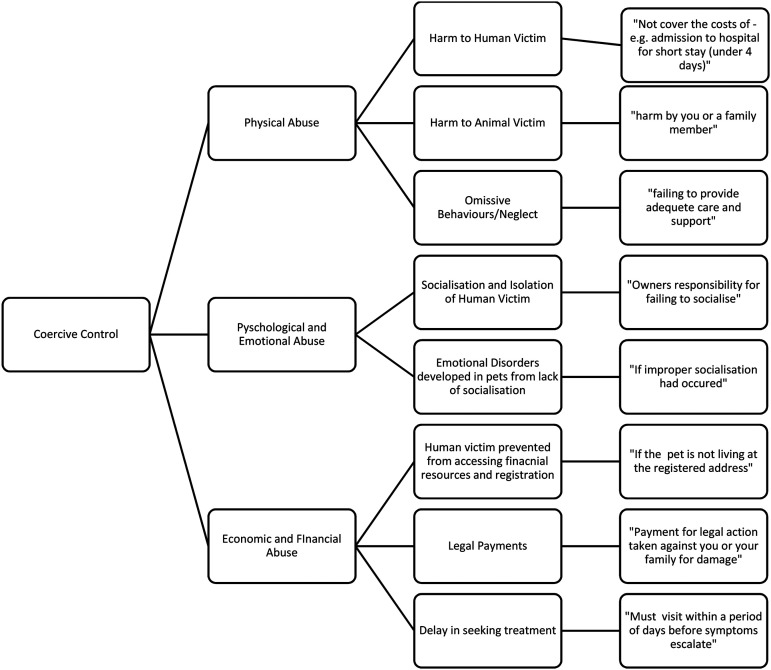 Figure 1
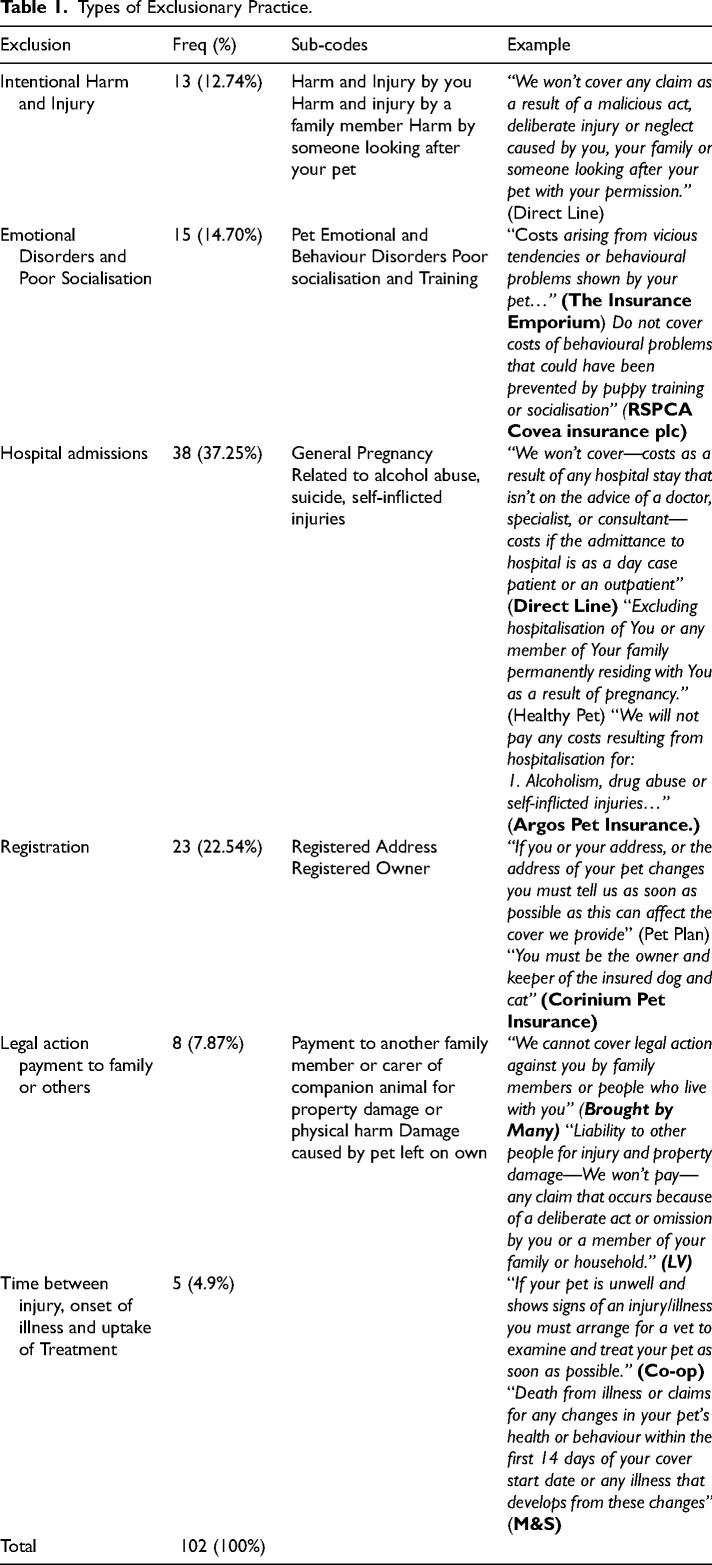 Figure 2
Peer Reviews
No public reviews on file for this paper yet. If you reviewed it on a platform where reviews are public (OpenReview, ICLR, NeurIPS, ICML), you can paste yours below so the community can read it here.
Videos
No videos yet. Explain this paper in a talk, walkthrough, or lecture? Add one.
Taxonomy
TopicsWildlife Conservation and Criminology Analyses · Sex work and related issues · Human-Animal Interaction Studies