Pregnancy-related changes in the canine serum N-glycosylation pattern studied by Rapifluor HILIC-UPLC-FLR-MS
Margareta Ramström, Martin Lavén, Ahmad Amini, Bodil Ström Holst

TL;DR
This study examines how the glycosylation patterns in dog serum change during pregnancy, revealing biochemical differences that could help understand canine reproduction and distinguish pregnancy-related inflammation from infections.
Contribution
The study introduces a method using Rapifluor HILIC-UPLC-FLR-MS to analyze canine serum N-glycans and identifies pregnancy-specific glycosylation changes.
Findings
Sialylated and galactosylated complex glycans increased significantly in pregnant dogs.
Fucosylated and agalactosylated glycans decreased significantly in pregnant dogs.
Glycosylation patterns in non-pregnant dogs remained stable across the cycle.
Abstract
Canine reproduction differs from that of many other domestic animals, and increased knowledge on biochemical changes during canine pregnancy is important for investigations of infertility or subfertility. The total glycosylation pattern, i.e., the glycome, of body fluids reflects cellular status in health and disease. The aim of the present pilot study was to investigate pregnancy-related changes of the serum N-glycome in bitches. A method based on Rapifluor HILIC-UPLC-FLR-MS was optimized and applied for analysis and quantification of N-glycans in canine serum. Serum samples from six pregnant and five non-pregnant bitches, collected at four well-defined time points, were included. The levels of sialylated and galactosylated complex glycans were significantly elevated in serum from pregnant bitches, consistent with previous reports on human pregnancy. The levels of fucosylated and…
Genes, proteins, chemicals, diseases, species, mutations and cell lines named across the full text — each resolved to its canonical identifier and authoritative record.
Click any figure to enlarge with its caption.
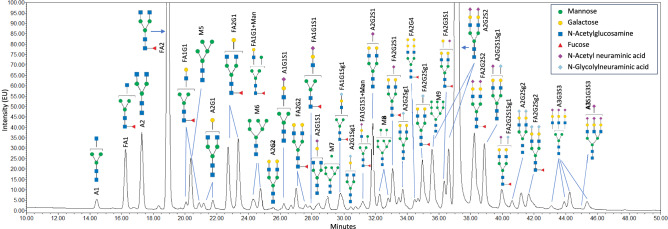 Figure 1
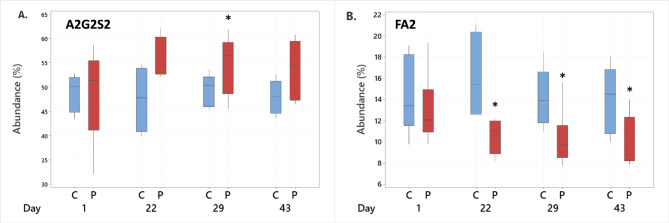 Figure 2
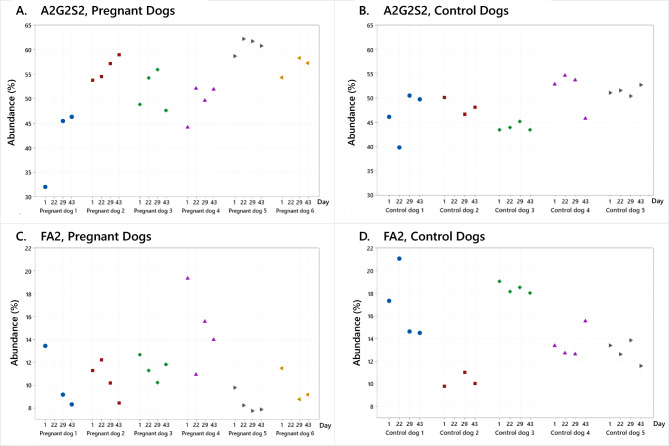 Figure 3
Peer Reviews
No public reviews on file for this paper yet. If you reviewed it on a platform where reviews are public (OpenReview, ICLR, NeurIPS, ICML), you can paste yours below so the community can read it here.
Videos
No videos yet. Explain this paper in a talk, walkthrough, or lecture? Add one.
Taxonomy
TopicsGlycosylation and Glycoproteins Research · Xenotransplantation and immune response · Monoclonal and Polyclonal Antibodies Research