Mesenteric ischemia caused by chronic occlusion of multiple mesenteric arteries: a case report
Qin-Ming Zhao, Zhong-You Xu, Hui Wang

TL;DR
This case report describes the successful treatment of a rare condition involving chronic blockage of multiple arteries in the intestines using a combination of surgical and minimally invasive techniques.
Contribution
The paper presents a novel combined approach using vascular bypass and endovascular therapy for complex chronic mesenteric ischemia.
Findings
A combination of vascular bypass and endovascular therapy effectively treated complex chronic mesenteric ischemia.
Prioritizing the opening of the superior mesenteric artery is critical for successful treatment outcomes.
Integrated surgical and interventional methods can be used to achieve optimal results in complex cases.
Abstract
Chronic mesenteric ischemia (CMI) is a rare disease that progresses with acute mesenteric ischemia, along with high mortality. How to choose the appropriate surgical method and the artery which should be opened first is the key to the treatment. In this study, we successively used vascular bypass and endovascular therapy to treat a case of complex chronic mesenteric ischemia. For mesenteric ischemic disease, the superior mesenteric artery (SMA) should be opened preferentially. Arterial bypass or interventional therapy can be used, or both can be combined, to finally achieve the purpose of treatment.
Genes, proteins, chemicals, diseases, species, mutations and cell lines named across the full text — each resolved to its canonical identifier and authoritative record.
Click any figure to enlarge with its caption.
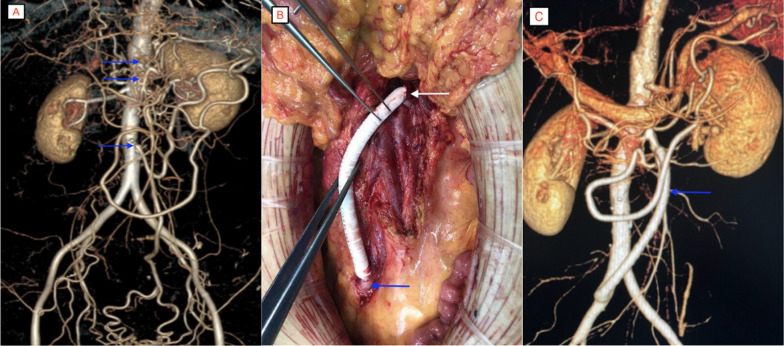 Figure 1
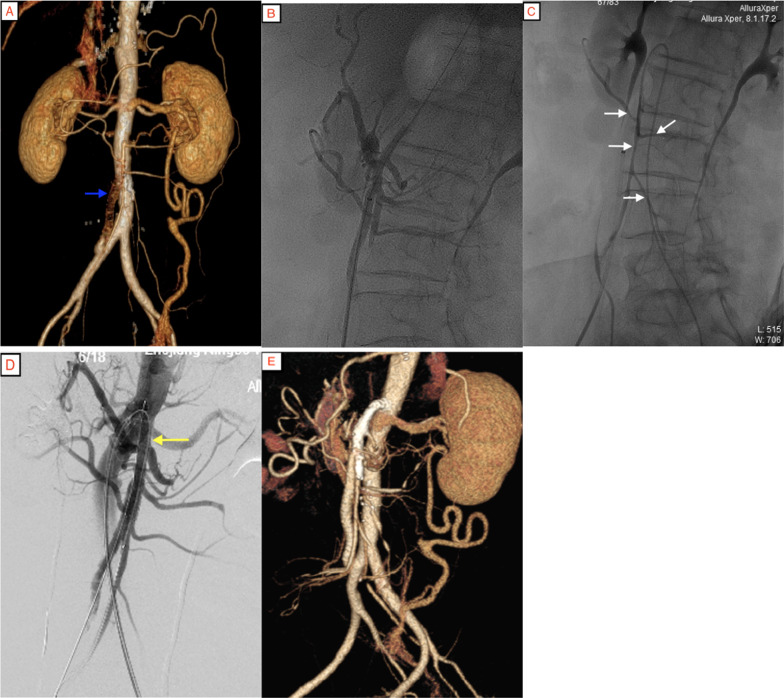 Figure 2
Peer Reviews
No public reviews on file for this paper yet. If you reviewed it on a platform where reviews are public (OpenReview, ICLR, NeurIPS, ICML), you can paste yours below so the community can read it here.
Videos
No videos yet. Explain this paper in a talk, walkthrough, or lecture? Add one.
Taxonomy
TopicsAbdominal vascular conditions and treatments · Vascular anomalies and interventions · Biliary and Gastrointestinal Fistulas