Chemotherapy and Metabolic Syndrome: A Comprehensive Review of Molecular Pathways and Clinical Outcomes
Shubam Trehan, Gurjot Singh, Adarshpreet Singh, Gaurav Bector, Aayush Jain, Priya Antil, Fnu Kalpana, Amna Farooq, Harmandeep Singh

TL;DR
This paper reviews how chemotherapy can lead to metabolic syndrome, a condition that increases risks for heart disease and diabetes, and highlights strategies to manage it.
Contribution
The paper provides a comprehensive review of molecular pathways and clinical outcomes linking chemotherapy to metabolic syndrome.
Findings
Older age, female gender, pre-existing diabetes, and obesity are significant predictors of metabolic syndrome in cancer patients.
Chemotherapy causes molecular changes like insulin resistance and chronic inflammation that contribute to metabolic syndrome.
Multidisciplinary approaches combining lifestyle and pharmacological interventions are needed for effective management.
Abstract
Cancer therapies, notably chemotherapy, have significantly improved survival rates and quality of life for many patients. However, chemotherapy's cytotoxic effects also impact normal cells, leading to adverse effects, including metabolic disturbances. This paper explores the link between chemotherapy and metabolic syndrome, a cluster of metabolic abnormalities that increase the risk of cardiovascular diseases and type 2 diabetes. Understanding the predictors, such as specific chemotherapy regimens, patient characteristics, comorbid conditions, lifestyle factors, and genetic variations, is crucial for formulating personalized care plans and preventive strategies. Research indicates that older age, female gender, pre-existing diabetes, and baseline obesity are significant predictors of metabolic syndrome in cancer patients. Chemotherapy-induced molecular changes, including insulin…
Genes, proteins, chemicals, diseases, species, mutations and cell lines named across the full text — each resolved to its canonical identifier and authoritative record.
Click any figure to enlarge with its caption.
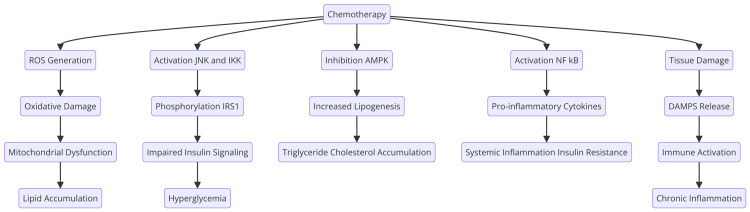 Figure 1
Peer Reviews
No public reviews on file for this paper yet. If you reviewed it on a platform where reviews are public (OpenReview, ICLR, NeurIPS, ICML), you can paste yours below so the community can read it here.
Videos
No videos yet. Explain this paper in a talk, walkthrough, or lecture? Add one.
Taxonomy
TopicsCancer Risks and Factors · Metabolism, Diabetes, and Cancer · Chemotherapy-induced cardiotoxicity and mitigation