Assessment of sociodemographic factors associated with time to self-reported COVID-19 infection among a large multi-center prospective cohort population in the southeastern United States
Andrew J. Beron, Joshua O. Yukich, Andrea A. Berry, Adolfo Correa, Joseph Keating, Matthew Bott, Thomas F. Wierzba, William S. Weintraub, DeAnna J. Friedman-Klabanoff, Morgana Mongraw-Chaffin, Michael A. Gibbs, Yhenneko J. Taylor, Patricia J. Kissinger, Devin V. Hayes

TL;DR
This study found that certain sociodemographic groups in the southeastern U.S. had higher risks of self-reported COVID-19 infection.
Contribution
The study identifies specific subgroups with higher infection risks using a large multi-center cohort and time-varying analysis.
Findings
Healthcare workers, young adults, and rural residents had higher infection risks.
Women, graduates, and smokers had lower risks of self-reported infection.
Households with school-going or public-interacting members showed increased risk.
Abstract
We aimed to investigate sociodemographic factors associated with self-reported COVID-19 infection. The study population was a prospective multicenter cohort of adult volunteers recruited from healthcare systems located in the mid-Atlantic and southern United States. Between April 2020 and October 2021, participants completed daily online questionnaires about symptoms, exposures, and risk behaviors related to COVID-19, including self-reports of positive SARS CoV-2 detection tests and COVID-19 vaccination. Analysis of time from study enrollment to self-reported COVID-19 infection used a time-varying mixed effects Cox-proportional hazards framework. Overall, 1,603 of 27,214 study participants (5.9%) reported a positive COVID-19 test during the study period. The adjusted hazard ratio demonstrated lower risk for women, those with a graduate level degree, and smokers. A higher risk was…
Genes, proteins, chemicals, diseases, species, mutations and cell lines named across the full text — each resolved to its canonical identifier and authoritative record.
Click any figure to enlarge with its caption.
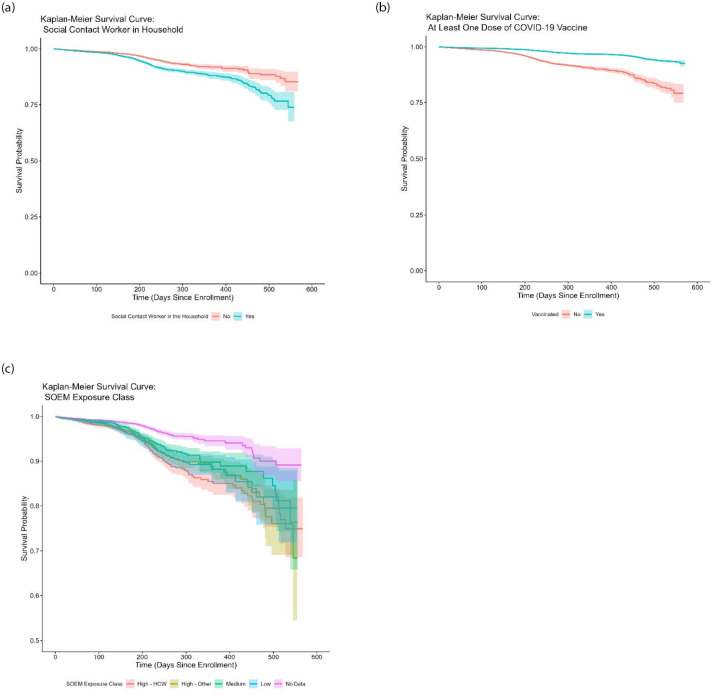 Figure 1
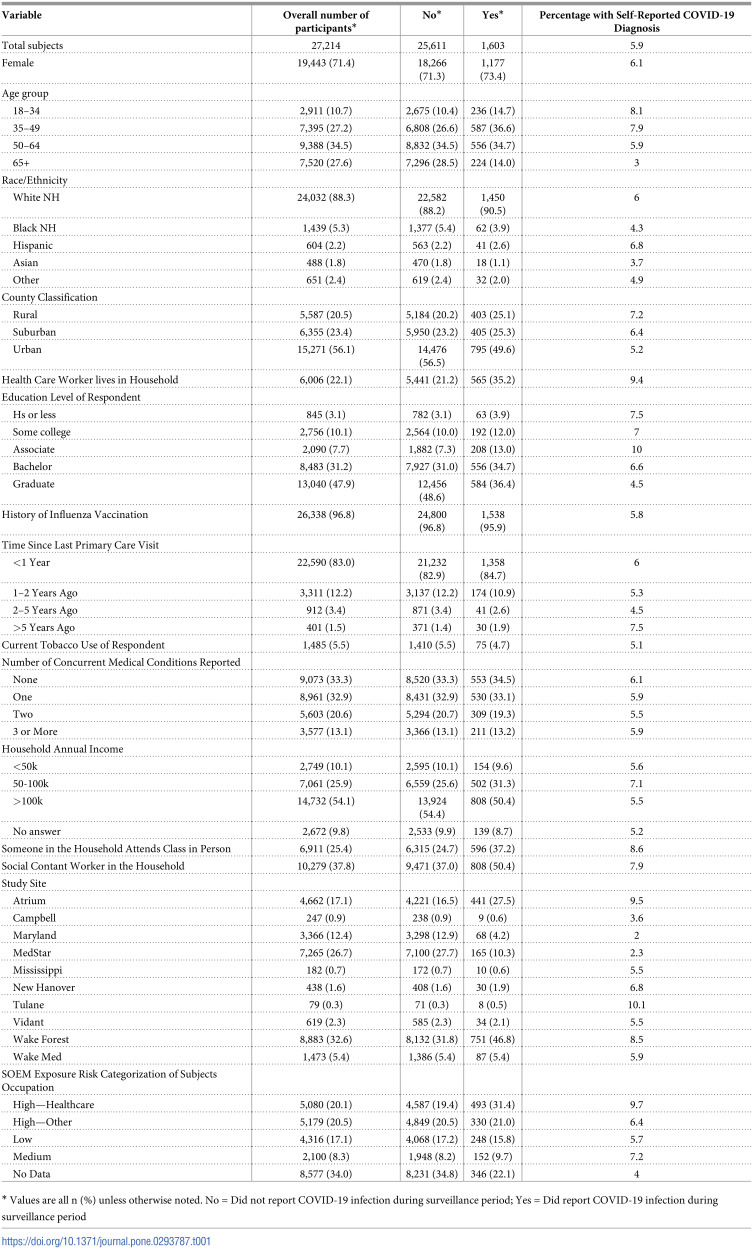 Figure 2
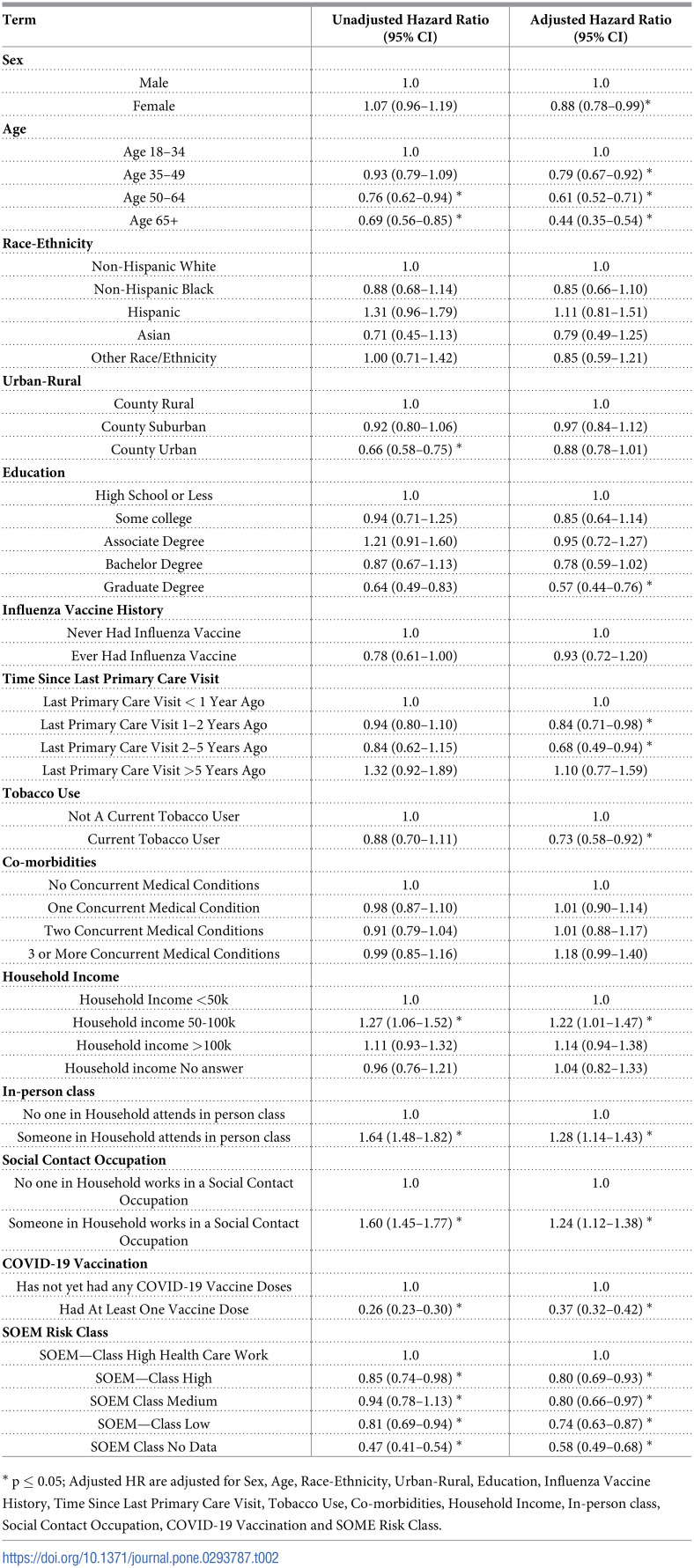 Figure 3
Peer Reviews
No public reviews on file for this paper yet. If you reviewed it on a platform where reviews are public (OpenReview, ICLR, NeurIPS, ICML), you can paste yours below so the community can read it here.
Videos
No videos yet. Explain this paper in a talk, walkthrough, or lecture? Add one.
Taxonomy
TopicsCOVID-19 and Mental Health · COVID-19 epidemiological studies · COVID-19 Clinical Research Studies