Relationships between sensory processing patterns and metabolic risk factors among community dwelling people with metabolic syndrome: A cross-sectional and correlational research design
Ilada Pomngen, Pornpen Sirisatayawong, Warunee Kumsaiyai, Anuchart Kaunnil, Tiam Srikhamjak, Bruno Alejandro Mesz, Bruno Alejandro Mesz, Bruno Alejandro Mesz, Bruno Alejandro Mesz

TL;DR
This study explores how sensory processing patterns relate to metabolic risk factors in people with metabolic syndrome, finding some significant correlations.
Contribution
The study is novel in directly examining the relationship between sensory processing patterns and metabolic risk factors in individuals with metabolic syndrome.
Findings
Fasting blood glucose was significantly correlated with tactile sense preference.
Waist circumference was associated with arousal levels in auditory and smell-taste senses.
Diastolic blood pressure was linked to vestibular sense preference.
Abstract
Metabolic Syndrome (MetS) increases the risk of other serious health problems, particularly cardiovascular diseases and stroke. Sensory processing patterns (SPPs) are internal factors shaping behaviors and emotions, both healthy and unhealthy. There is a lack of studies directly examining the relationship between the SPPs and metabolic risk factors. This study aimed to investigate SPPs and their association with metabolic risk factors in individuals with metabolic syndrome (MetS). One hundred and seventeen individuals with MetS completed questionnaires on demographic characteristics and the Thai Sensory Patterns Assessment-adult version. Data on metabolic risk factors, including fasting blood glucose, blood pressure, and waist circumference, were collected. The findings revealed high arousal levels in proprioceptive and auditory senses among the participants. The fasting blood glucose…
Genes, proteins, chemicals, diseases, species, mutations and cell lines named across the full text — each resolved to its canonical identifier and authoritative record.
Click any figure to enlarge with its caption.
 Figure 1
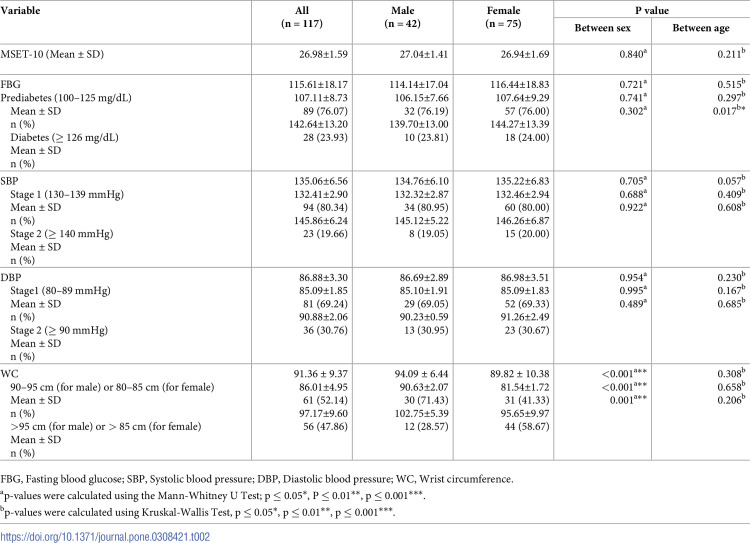 Figure 2
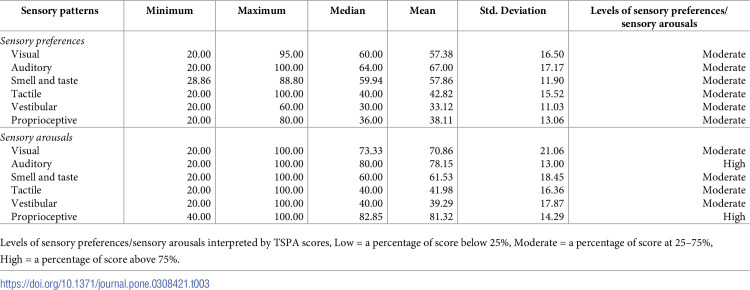 Figure 3
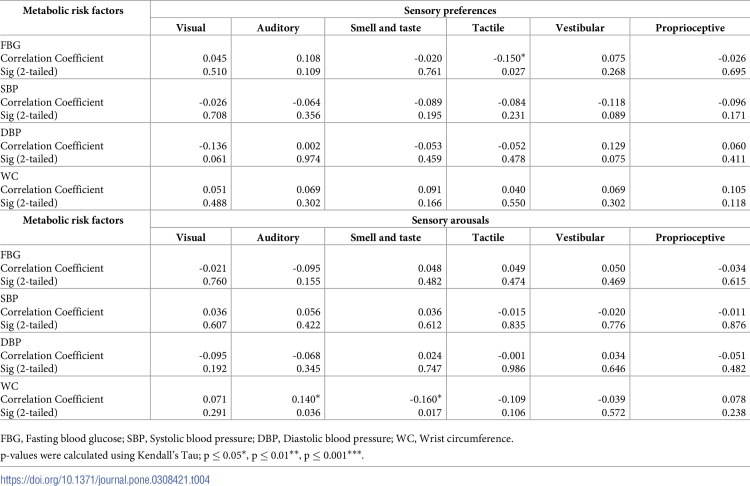 Figure 4
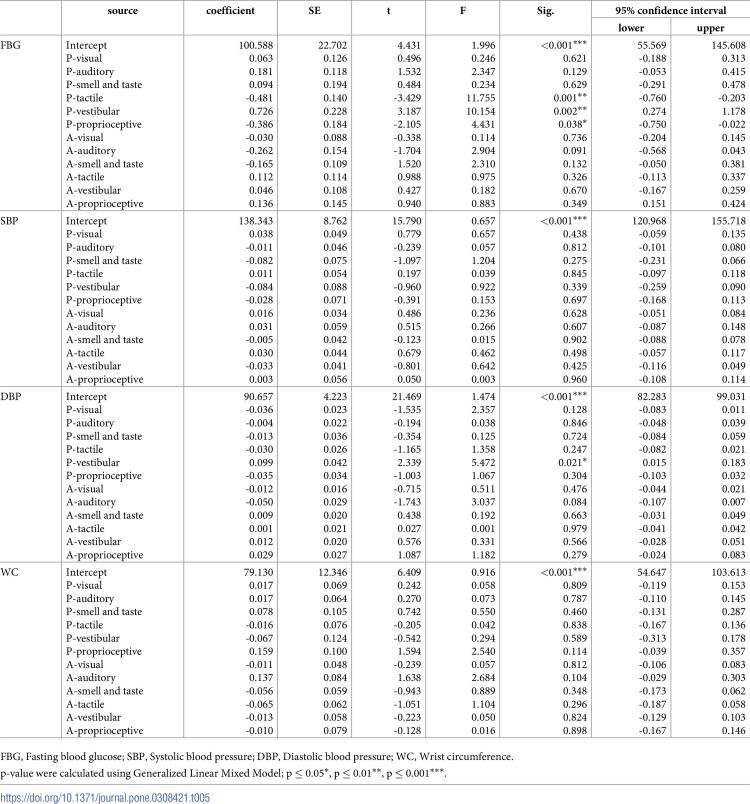 Figure 5
Peer Reviews
No public reviews on file for this paper yet. If you reviewed it on a platform where reviews are public (OpenReview, ICLR, NeurIPS, ICML), you can paste yours below so the community can read it here.
Videos
No videos yet. Explain this paper in a talk, walkthrough, or lecture? Add one.
Taxonomy
TopicsMultisensory perception and integration · Olfactory and Sensory Function Studies · Biochemical Analysis and Sensing Techniques