Peritoneal washing cytology status as a crucial prognostic determinant in patients with localized pancreatic ductal adenocarcinoma who underwent curative-intent resection following preoperative chemoradiotherapy
Takuya Yuge, Yasuhiro Murata, Daisuke Noguchi, Takahiro Ito, Aoi Hayasaki, Yusuke Iizawa, Takehiro Fujii, Akihiro Tanemura, Naohisa Kuriyama, Masashi Kishiwada, Shugo Mizuno

TL;DR
This study shows that a positive peritoneal washing cytology result after preoperative treatment is a strong predictor of worse outcomes in pancreatic cancer patients.
Contribution
The study identifies peritoneal washing cytology as an independent prognostic factor in PDAC patients after preoperative chemoradiotherapy.
Findings
CY+ patients had significantly worse overall and recurrence-free survival compared to CY− patients.
CY+ was associated with higher CA19-9 levels, tumor location in the pancreatic body or tail, and capsule invasion.
CY+ was an independent prognostic factor for worse survival outcomes in multivariate analysis.
Abstract
Prognostic implications of peritoneal washing cytology (CY) in patients with localized pancreatic ductal adenocarcinoma (PDAC) undergoing surgical resection following preoperative chemoradiotherapy (CRT) remain unclear. This study aimed to elucidate the prognostic significance and predictors of a positive CY status (CY+) after preoperative CRT. Clinical data from 141 patients with localized PDAC who underwent curative-intent resection after preoperative CRT were retrospectively analyzed to examine the association between CY+ and clinicopathological factors and survival. CY+ was observed in six patients (4.3%). The CY+ group exhibited significantly higher preoperative serum levels of CA19-9 and a substantially greater incidence of tumor location in the pancreatic body or tail, along with pathological invasion to the anterior pancreatic capsule, than the CY− group. The CY+ group had a…
Genes, proteins, chemicals, diseases, species, mutations and cell lines named across the full text — each resolved to its canonical identifier and authoritative record.
Click any figure to enlarge with its caption.
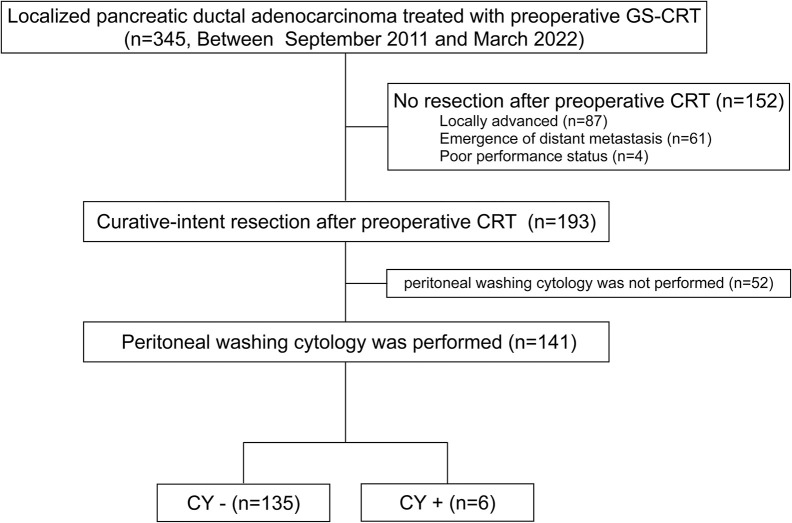 Figure 1
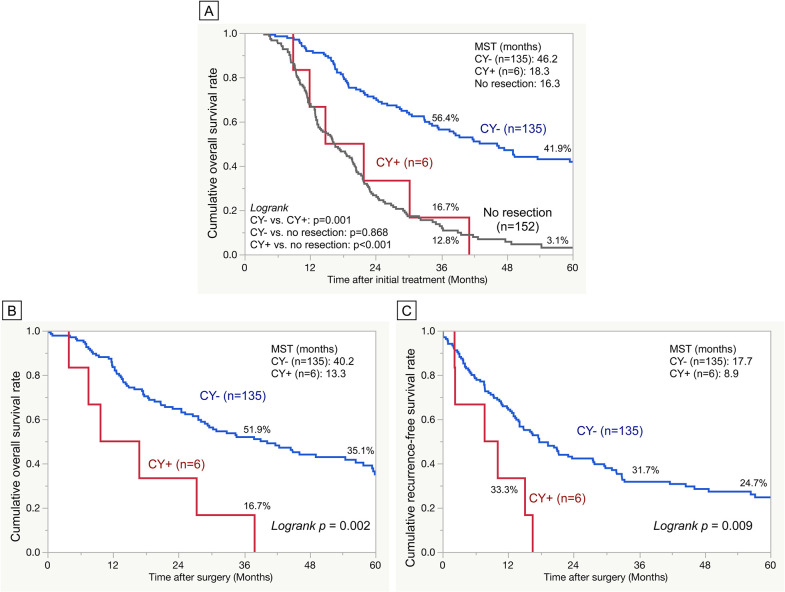 Figure 2
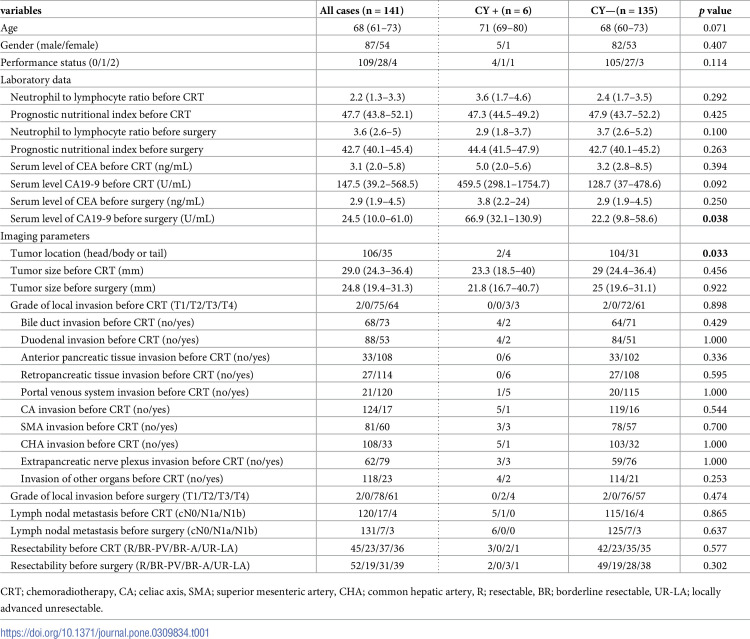 Figure 3
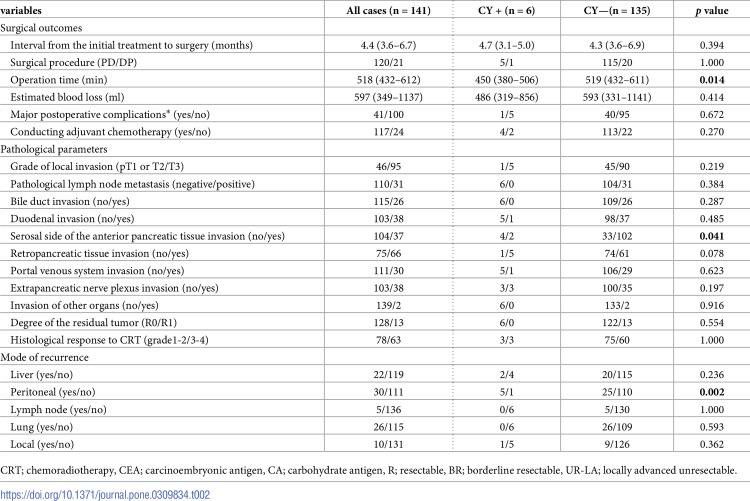 Figure 4
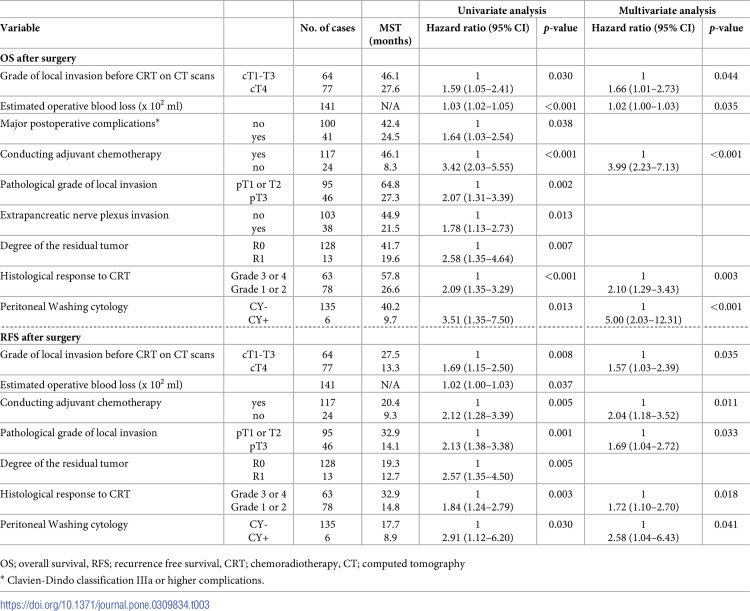 Figure 5
Peer Reviews
No public reviews on file for this paper yet. If you reviewed it on a platform where reviews are public (OpenReview, ICLR, NeurIPS, ICML), you can paste yours below so the community can read it here.
Videos
No videos yet. Explain this paper in a talk, walkthrough, or lecture? Add one.
Taxonomy
TopicsPancreatic and Hepatic Oncology Research · Neuroendocrine Tumor Research Advances · Pancreatitis Pathology and Treatment