Increased risk of cardiac arrhythmia in Hailey-Hailey disease patients
William Jebril, Philip Curman, Daniel C. Andersson, Henrik Larsson, Etty Bachar-Wikstrom, Martin Cederlöf, Jakob D. Wikstrom, Albert Rübben, Albert Rübben, Albert Rübben

TL;DR
People with Hailey-Hailey disease have a higher risk of heart arrhythmia, suggesting the condition may affect more than just the skin.
Contribution
This is the first study to show an extracutaneous comorbidity in Hailey-Hailey disease, linking it to cardiac arrhythmia.
Findings
HHD patients had a 40% higher risk of arrhythmia compared to those without HHD.
No increased risk of myocardial infarction or heart failure was observed in HHD patients.
ECG parameters, electrolytes, and cardiovascular biomarkers were similar between HHD patients and controls.
Abstract
Hailey-Hailey disease (HHD) is a rare autosomal dominant skin disease caused by mutations in the ATP2C1 gene, which encodes the secretory Ca2+/Mn2+-ATPase (SPCA1) pump in the Golgi apparatus. Although ATP2C1 is ubiquitously expressed in the body, possible extracutaneous manifestations of HHD are unknown. However, dysfunction of the Golgi apparatus not specifically coupled to ATP2C1 has been associated with heart disease. To investigate the association between HHD and common heart disease in a Swedish, population-based cohort. We conducted a population-based cohort study based on a linkage of Swedish nationwide registers to investigate the relationship between HHD and heart disease. We have been granted ethical approval from the Swedish Ethical Review Authority to conduct this study. The patients in this manuscript have given written informed consent to the publication of their case…
Genes, proteins, chemicals, diseases, species, mutations and cell lines named across the full text — each resolved to its canonical identifier and authoritative record.
Click any figure to enlarge with its caption.
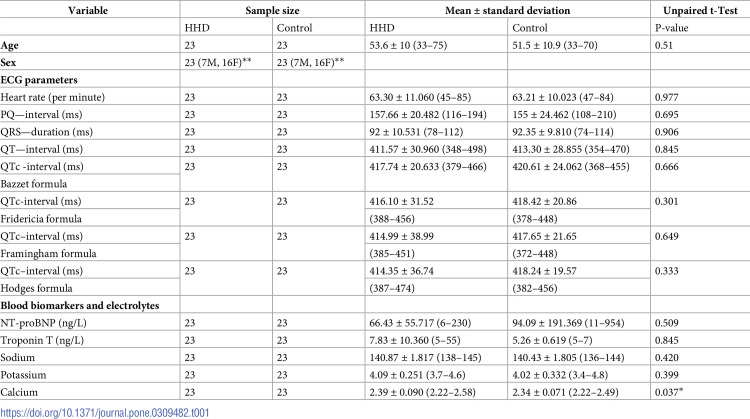 Figure 1
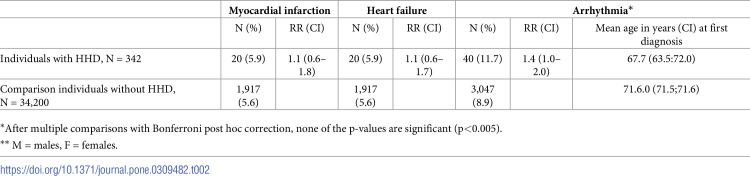 Figure 2
Peer Reviews
No public reviews on file for this paper yet. If you reviewed it on a platform where reviews are public (OpenReview, ICLR, NeurIPS, ICML), you can paste yours below so the community can read it here.
Videos
No videos yet. Explain this paper in a talk, walkthrough, or lecture? Add one.
Taxonomy
TopicsGenetic and rare skin diseases. · Cancer and Skin Lesions · Hedgehog Signaling Pathway Studies