Isolation and Characterization of the Chromatic-Acclimating, Filamentous Cyanobacterium Pseudanabaena sp. Strain SR411
Emma Hundermark, Emily Stowe

TL;DR
Scientists discovered a new type of freshwater cyanobacterium that can adjust to different light colors and described its genome.
Contribution
The isolation and genomic characterization of a novel chromatic-acclimating cyanobacterium, Pseudanabaena sp. SR411.
Findings
Pseudanabaena sp. SR411 is a filamentous, nonheterocystous cyanobacterium that acclimates to changing light wavelengths.
The organism's genome contains 5,218 coding sequences and putative homologs to CA3 regulatory proteins RcaE, RcaF, and RcaC.
The genome has a GC content of 42.2% and is 5,780,083 base pairs in size.
Abstract
We isolated Pseudanabaena sp. Strain SR411, a novel filamentous, nonheterocystous, freshwater cyanobacterium from the West Branch of the Susquehanna River in Pennsylvania. Analysis of phycobilisome protein accumulation indicates Pseudanabaena SR411 acclimates to changing light wavelengths and we classified it as a chromatic acclimating cyanobacterium type CA3. The 5,780,083 bp genome has a GC content of 42.2% in which we identified 5,218 coding sequences and 58 RNA sequences. The genome includes putative homologs to the CA3 regulatory proteins RcaE, RcaF and RcaC.
Genes, proteins, chemicals, diseases, species, mutations and cell lines named across the full text — each resolved to its canonical identifier and authoritative record.
Click any figure to enlarge with its caption.
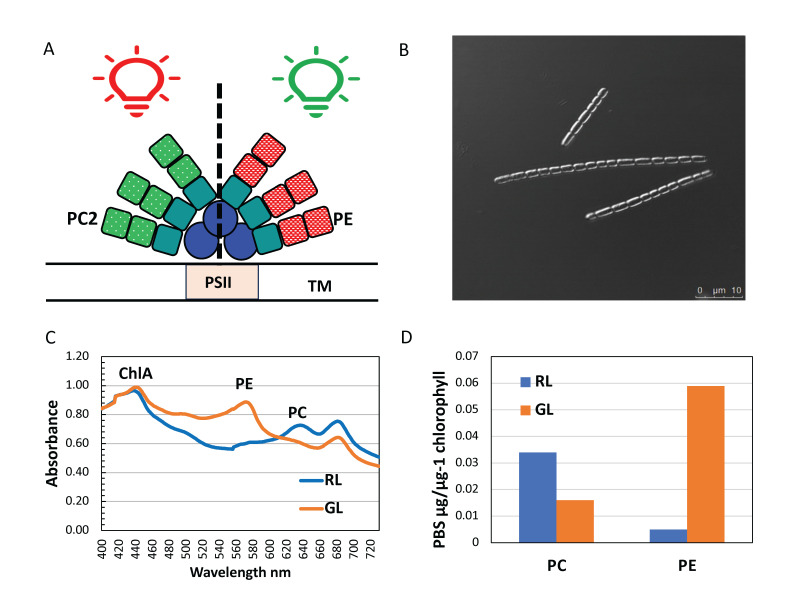 Figure 1
Peer Reviews
No public reviews on file for this paper yet. If you reviewed it on a platform where reviews are public (OpenReview, ICLR, NeurIPS, ICML), you can paste yours below so the community can read it here.
Videos
No videos yet. Explain this paper in a talk, walkthrough, or lecture? Add one.
Taxonomy
TopicsAlgal biology and biofuel production