The genus Eutreptiella (Euglenophyceae/Euglenozoa) across its global distribution range
Sinuhé Hernández Márquez, María Eugenia Zamudio‐Resendiz, Montserrat Murrieta‐Alarcón, María Luisa Núñez Resendiz, Kurt M. Dreckmann, Abel Sentíes

TL;DR
This paper reviews the genus Eutreptiella, focusing on its ecological roles, biotechnological potential, and genetic variability across global marine ecosystems.
Contribution
The paper provides a comprehensive overview of Eutreptiella's taxonomic, ecological, and biotechnological significance, highlighting its genetic variability and potential misidentifications.
Findings
Eutreptiella species show high phenotypic plasticity and adapt to diverse environmental conditions.
Genetic studies reveal complex regulatory mechanisms and potential for biofuel and nutraceutical production.
Eutreptiella blooms impact local ecosystems and interact with bacteria to enhance growth and metabolism.
Abstract
The genus Eutreptiella (Euglenophyceae/Euglenozoa) comprises unicellular organisms known for their photosynthetic capacity and significant role in marine ecosystems. This review highlights the taxonomic, ecological, and biotechnological characteristics of Eutreptiella species, emphasizing their morphological and genomic adaptations. Eutreptiella species exhibit high phenotypic plasticity, enabling adaptation to various environmental conditions, from nutrient‐rich waters to high‐salinity conditions. They play a crucial role in primary production and nutrient cycling in marine ecosystems. Genetic and transcriptomic studies have revealed their complex regulatory mechanisms and potential for biofuel and nutraceutical production. Eutreptiella blooms significantly impact local ecosystems, influencing nutrient availability and community dynamics. Additionally, interactions with associated…
Genes, proteins, chemicals, diseases, species, mutations and cell lines named across the full text — each resolved to its canonical identifier and authoritative record.
Click any figure to enlarge with its caption.
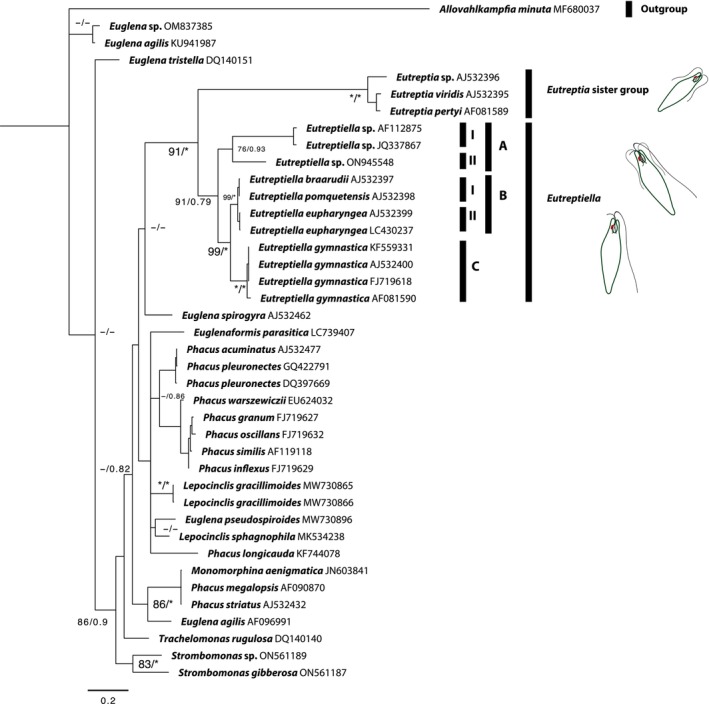 Figure 1
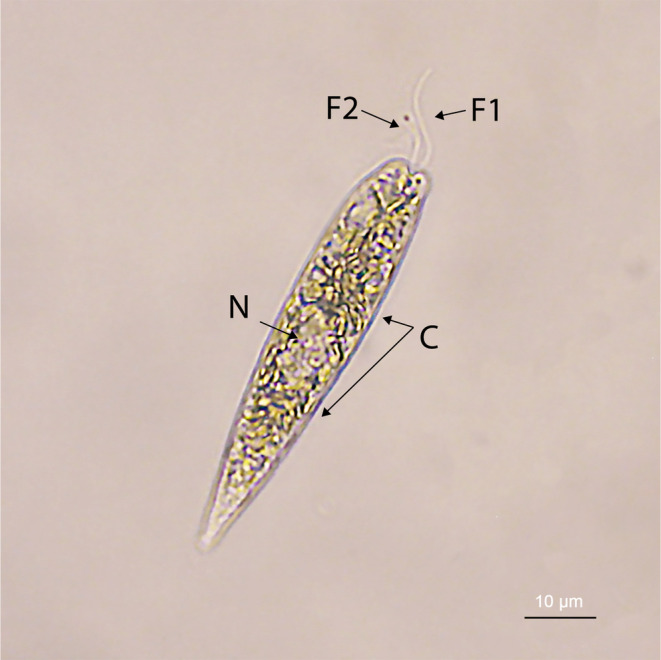 Figure 2
 Figure 3
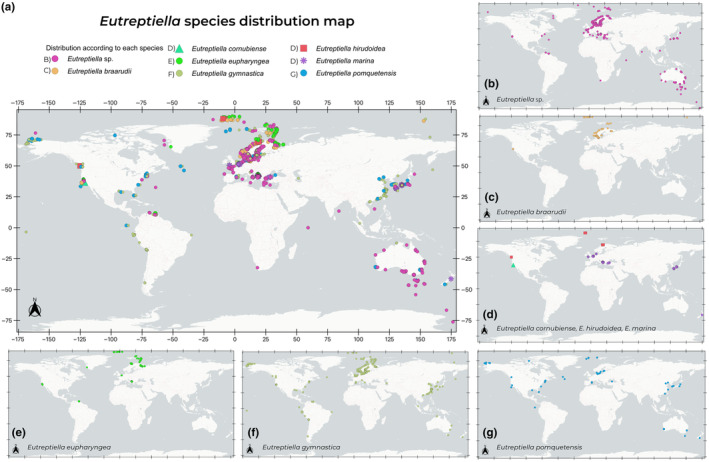 Figure 4
Peer Reviews
No public reviews on file for this paper yet. If you reviewed it on a platform where reviews are public (OpenReview, ICLR, NeurIPS, ICML), you can paste yours below so the community can read it here.
Videos
No videos yet. Explain this paper in a talk, walkthrough, or lecture? Add one.
Taxonomy
TopicsProtist diversity and phylogeny · Microbial Community Ecology and Physiology · Genomics and Phylogenetic Studies