Discrimination training affects stimulus generalization in mice during Pavlovian eyeblink conditioning
Francesca Romana Fiocchi, Nikki E. S. van Dorp, Stephanie Dijkhuizen, Maurits van den Berg, Aaron Wong, Chris I. De Zeeuw, Henk-Jan Boele

TL;DR
This study shows that how mice are trained to distinguish between sounds affects how they generalize their learned eyeblink responses to new sounds.
Contribution
The study reveals that differential training increases generalization of eyelid responses based on stimulus differences.
Findings
Generalization of eyelid responses correlates with the difference between trained stimuli.
Generalization effects were observed in response probability and amplitude but not timing.
Differential training leads to more specific generalization compared to non-differential training.
Abstract
The delicate balance between discrimination and generalization of responses is crucial for survival in our ever-changing environment. In particular, it is important to understand how stimulus discrimination affects the level of stimulus generalization. For example, when we use non-differential training for Pavlovian eyeblink conditioning to investigate generalization of cerebellar-related eyelid motor responses, we find generalization effects on amount, amplitude and timing of the conditioned responses. However, it is unknown what the generalization effects are following differential training. We trained mice to close their eyelids to a 10 kHz tone with an air-puff as the reinforcing stimulus (CS+), while alternatingly exposing them to a tone frequency of either 4 kHz, 9 kHz or 9.5 kHz without the air-puff (CS−) during the training blocks. We tested the generalization effects during the…
Genes, proteins, chemicals, diseases, species, mutations and cell lines named across the full text — each resolved to its canonical identifier and authoritative record.
Click any figure to enlarge with its caption.
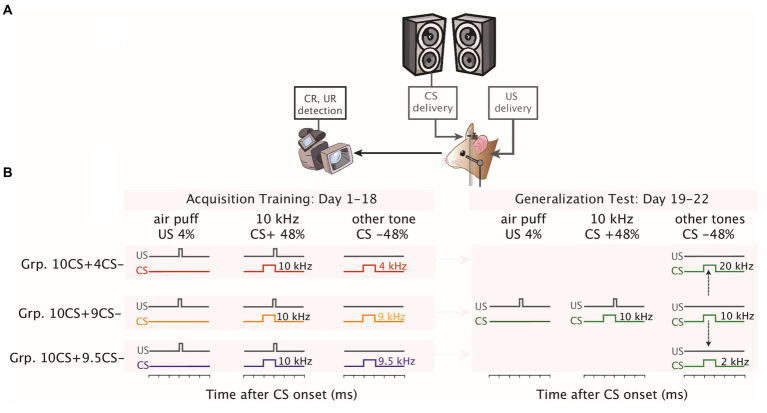 Figure 1
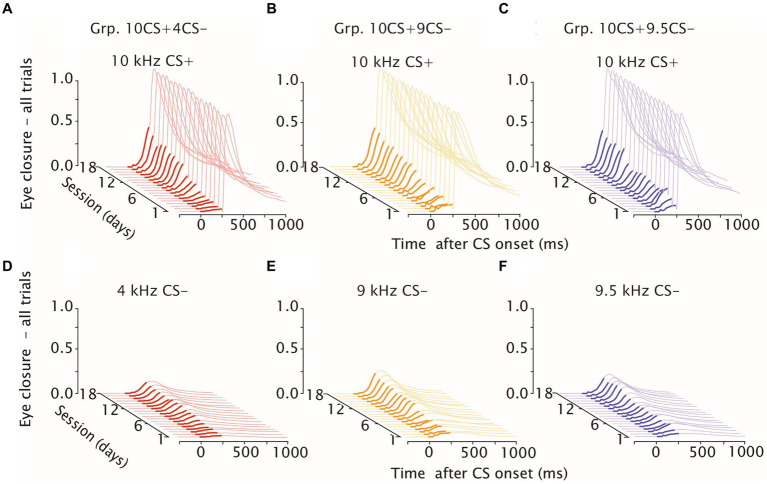 Figure 2
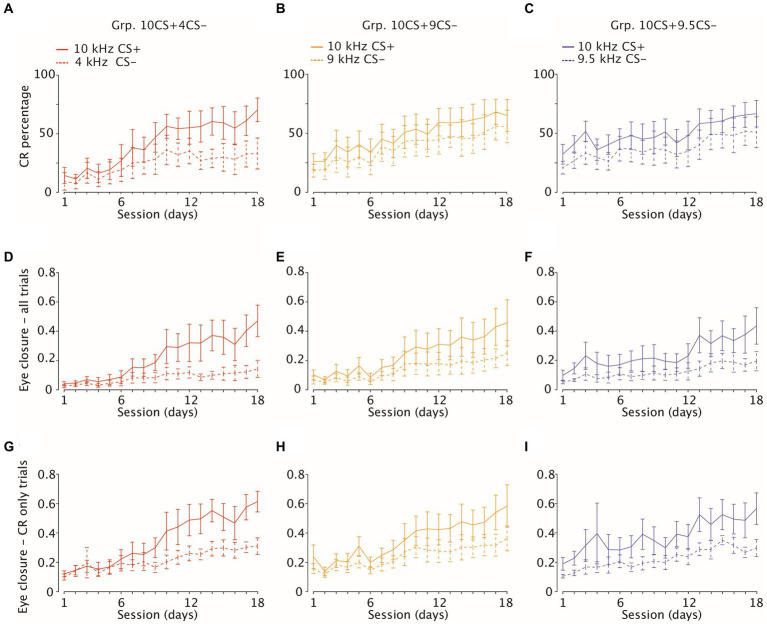 Figure 3
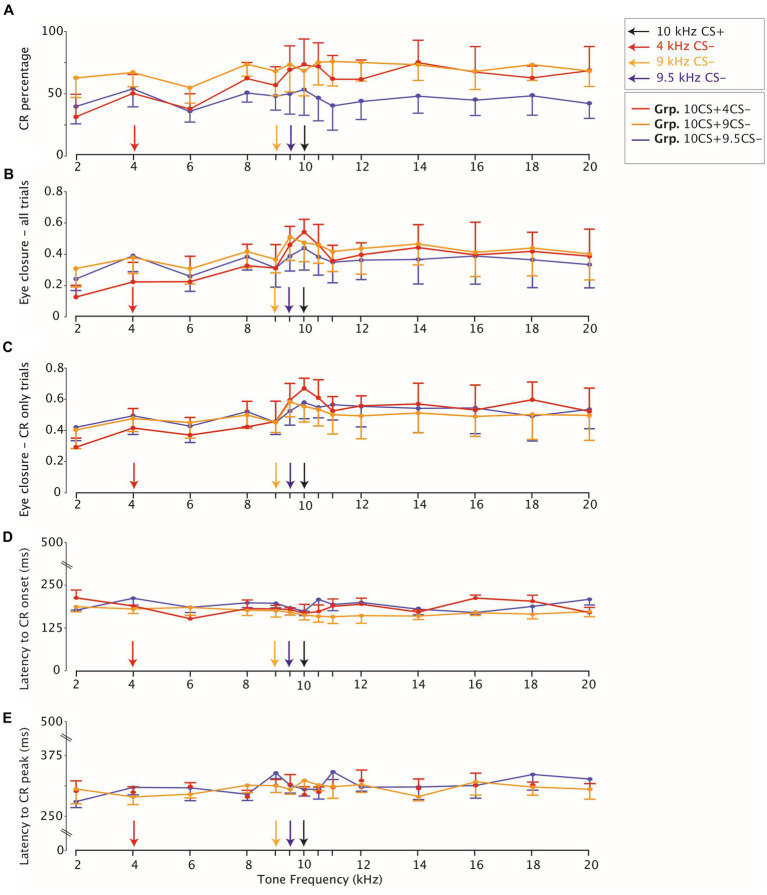 Figure 4
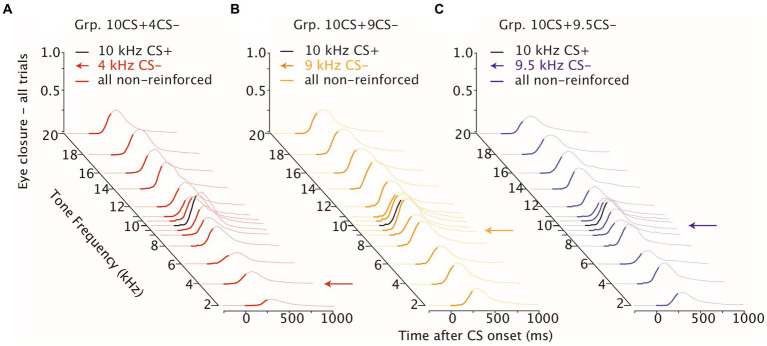 Figure 5
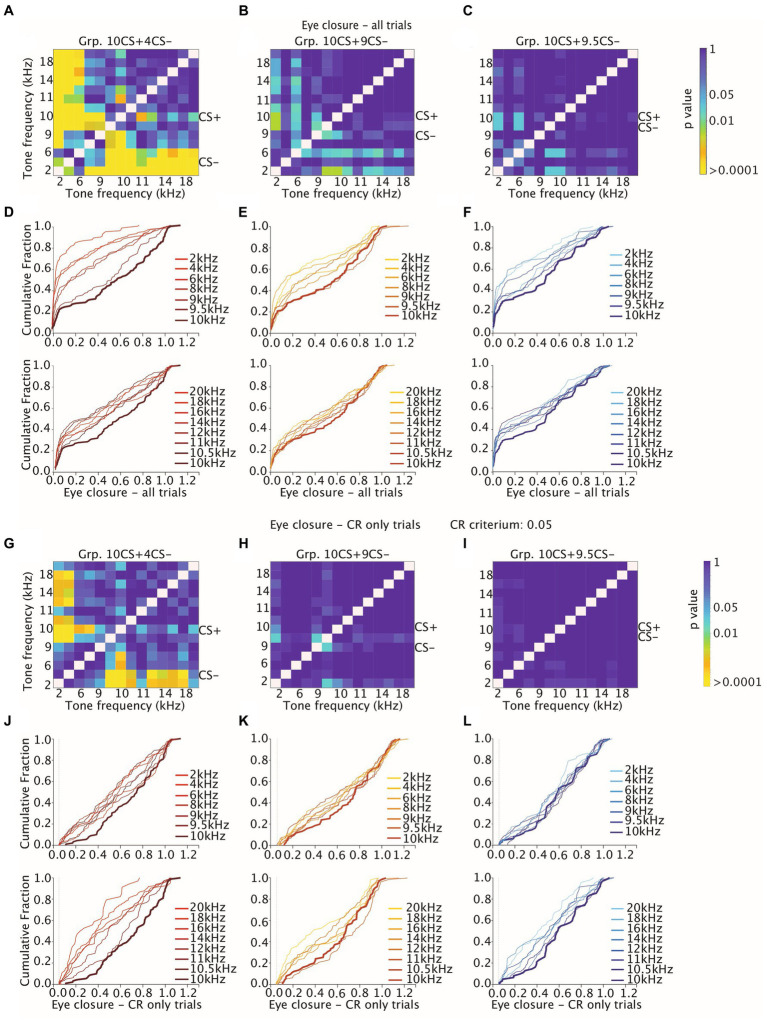 Figure 6
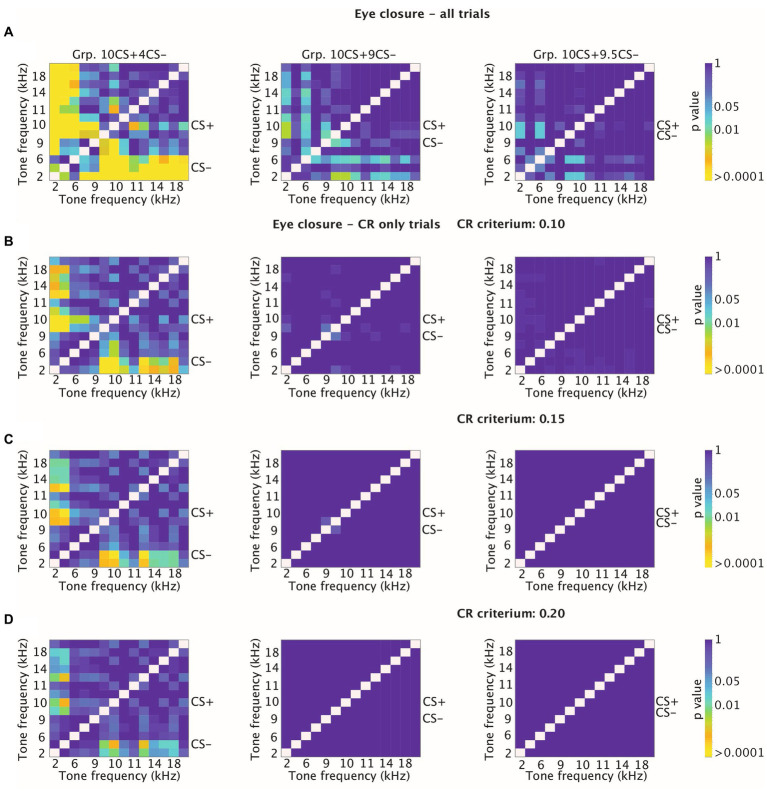 Figure 7
Peer Reviews
No public reviews on file for this paper yet. If you reviewed it on a platform where reviews are public (OpenReview, ICLR, NeurIPS, ICML), you can paste yours below so the community can read it here.
Videos
No videos yet. Explain this paper in a talk, walkthrough, or lecture? Add one.
Taxonomy
TopicsVestibular and auditory disorders · Neuroscience and Neuropharmacology Research · Glaucoma and retinal disorders