Cord Blood 25-Hydroxyvitamin D Level is Correlated with a Risk for Atopic Dermatitis: Systematic Review and Meta-Analysis
Dedianto Hidajat, Abiyyu Didar Haq, Cut Warnaini, Hamsu Kadriyan

TL;DR
Low vitamin D levels in maternal cord blood are linked to a higher risk of atopic dermatitis in children, according to a meta-analysis of observational studies.
Contribution
This study provides a meta-analysis showing a significant correlation between cord blood 25[OH]D levels and atopic dermatitis risk.
Findings
Cord blood 25[OH]D levels below 50 nmol/L are associated with a 60% higher risk of atopic dermatitis.
The meta-analysis found a significant odds ratio (OR = 1.60) for AD development with low 25[OH]D levels.
Variability in study methods highlights the need for standardized diagnostic and measurement approaches.
Abstract
Although Indonesia is located in an equatorial region with adequate year-round sun exposure, the prevalence of 25-hydroxyvitamin D (25[OH]D) deficiency is as high as 90%. Mothers are especially vulnerable to deficiencies due to changes in their gastrointestinal system. Previous studies have reported a correlation between the 25[OH]D status of mothers with atopic dermatitis (AD) and their offspring. However, studies investigating maternal cord blood 25[OH]D levels and the incidence of AD have yielded controversial results due to its variability. As such, this systematic review and meta-analysis aimed to evaluate the correlation between maternal cord blood 25[OH]D levels and the risk for AD. In accordance with Preferred Reporting System for Systematic Reviews and Meta-Analyses (PRISMA) guidelines, the PubMed, Cochrane Library and ScienceDirect databases were searched for relevant…
Genes, proteins, chemicals, diseases, species, mutations and cell lines named across the full text — each resolved to its canonical identifier and authoritative record.
Click any figure to enlarge with its caption.
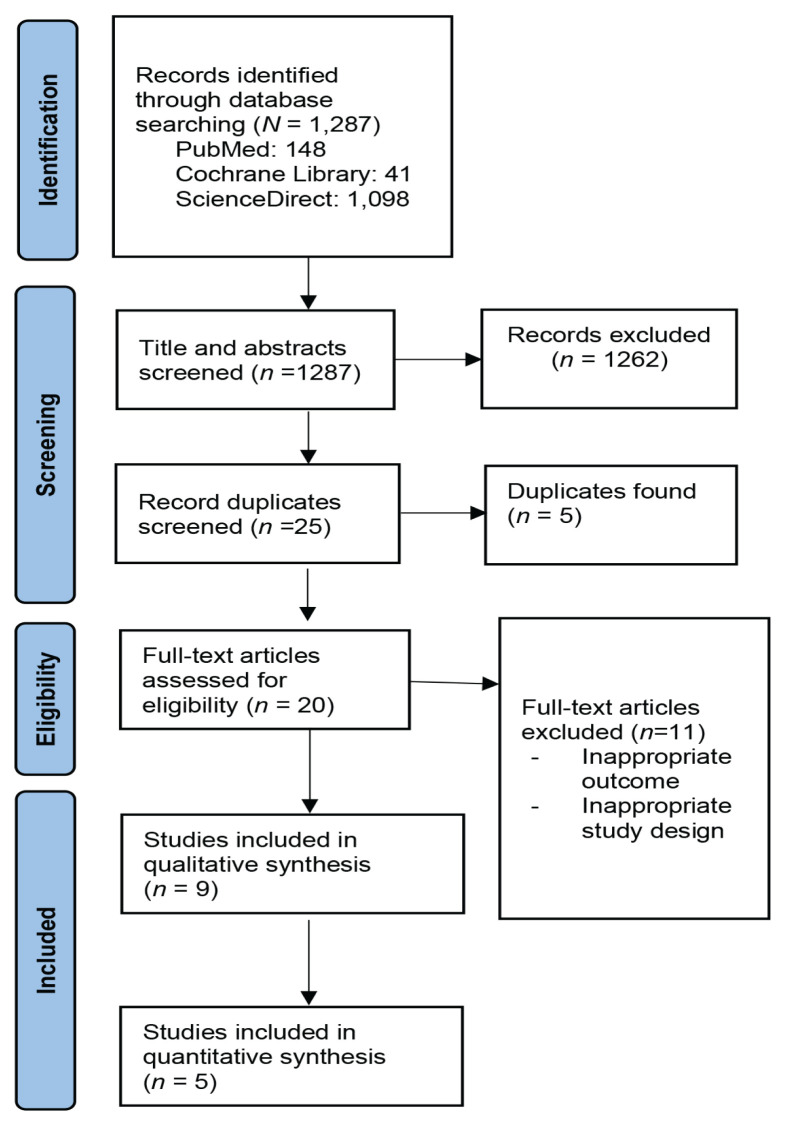 Figure 1
 Figure 2
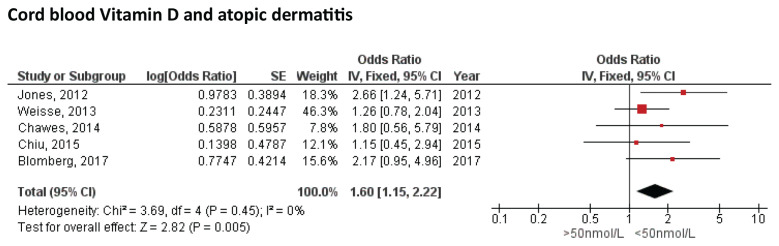 Figure 3
Peer Reviews
No public reviews on file for this paper yet. If you reviewed it on a platform where reviews are public (OpenReview, ICLR, NeurIPS, ICML), you can paste yours below so the community can read it here.
Videos
No videos yet. Explain this paper in a talk, walkthrough, or lecture? Add one.
Taxonomy
TopicsDermatology and Skin Diseases · Food Allergy and Anaphylaxis Research · Eating Disorders and Behaviors