The effect of excessive trabeculation on cardiac rotation—A multimodal imaging study
Kinga Grebur, Balázs Mester, Márton Horváth, Kristóf Farkas-Sütő, Zsófia Gregor, Anna Réka Kiss, Attila Tóth, Attila Kovács, Alexandra Fábián, Bálint Károly Lakatos, Bálint András Fekete, Katalin Csonka, Csaba Bödör, Béla Merkely, Hajnalka Vágó, Andrea Szűcs, Yashendra Sethi

TL;DR
This study explores how heart rotation differs in people with a heart condition called LVNC compared to healthy individuals, using advanced imaging techniques.
Contribution
The study identifies subclinical mechanical differences in LVNC patients with normal heart function using multimodal imaging and genetic subgroups.
Findings
LVNC subjects showed reduced apical rotation and a higher rate of negative apical rotation compared to controls.
Genetic subgroups differed in the direction of apical rotation, with P and VUS subgroups showing diverse rotational patterns.
CMR-FT and Echo-ST methods showed moderate agreement in rotation direction but not in rotational degrees.
Abstract
Cardiac rotational parameters in primary symptomatic left ventricular noncompaction (LVNC) with preserved left ventricular ejection fraction (LVEF) are not well understood. We aimed to analyze cardiac rotation measured with cardiac magnetic resonance feature-tracking (CMR-FT) and speckle-tracking echocardiography (Echo-ST) in LVNC morphology subjects with preserved LVEF and different genotypes and healthy controls. Our retrospective study included 54 LVNC subjects with preserved LVEF and 54 control individuals. We evaluated functional and rotational parameters with CMR in the total study population and with echocardiography in 39 LVNC and 40 C individuals. All LVNC subjects were genotyped with a 174-gene next-generation sequencing panel and grouped into the subgroups: benign (B), variant of uncertain significance (VUS), and pathogenic (P). In comparison with controls, LVNC subjects…
Genes, proteins, chemicals, diseases, species, mutations and cell lines named across the full text — each resolved to its canonical identifier and authoritative record.
Click any figure to enlarge with its caption.
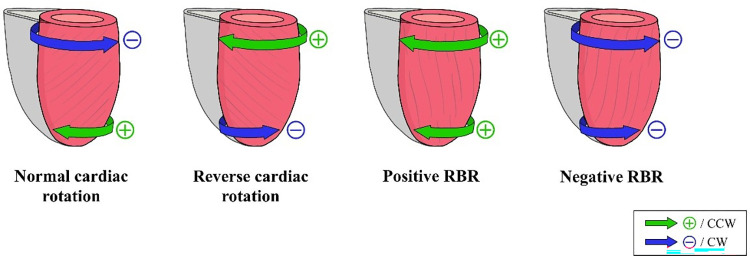 Figure 1
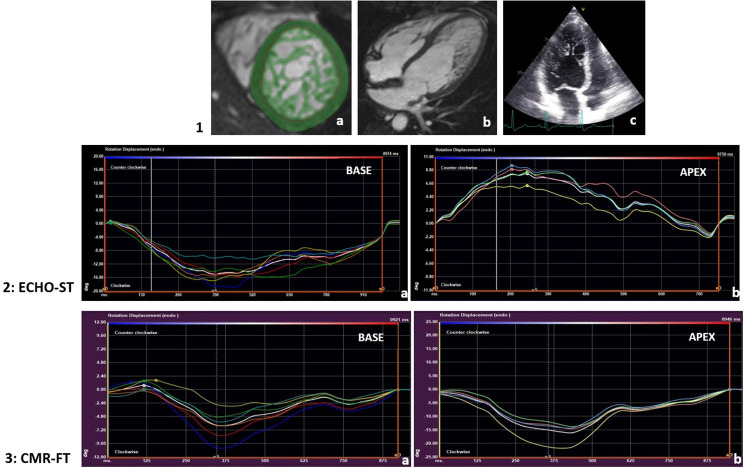 Figure 2
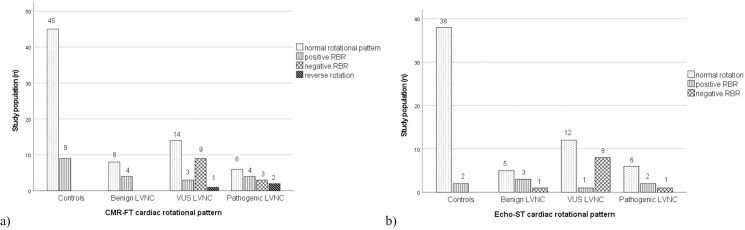 Figure 3
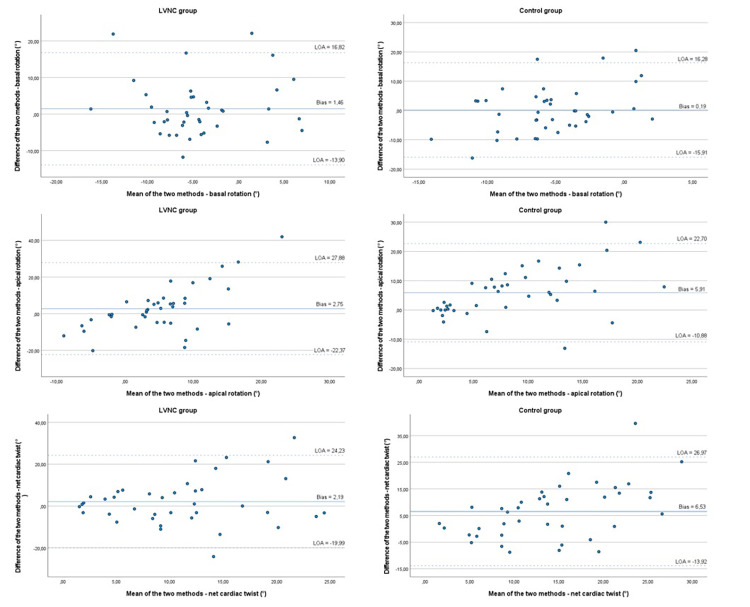 Figure 4
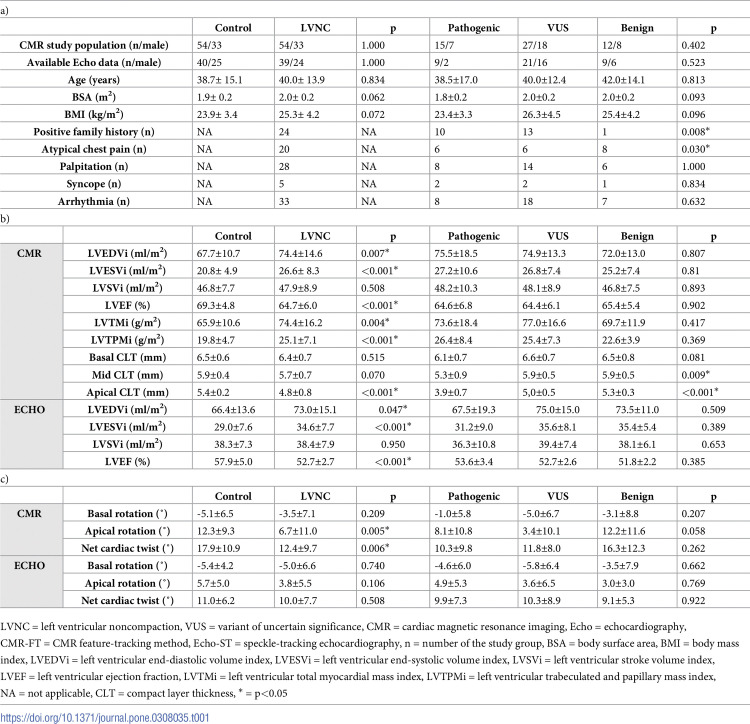 Figure 5
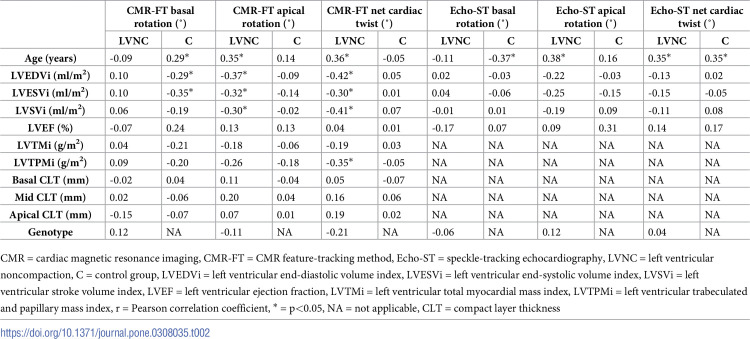 Figure 6
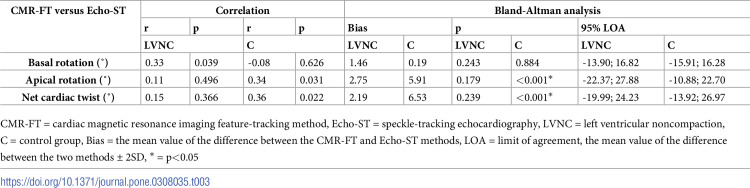 Figure 7
Peer Reviews
No public reviews on file for this paper yet. If you reviewed it on a platform where reviews are public (OpenReview, ICLR, NeurIPS, ICML), you can paste yours below so the community can read it here.
Videos
No videos yet. Explain this paper in a talk, walkthrough, or lecture? Add one.
Taxonomy
TopicsCardiomyopathy and Myosin Studies · Congenital heart defects research · Neurogenetic and Muscular Disorders Research