Comparison of an oral mixed meal plus arginine and intravenous glucose, GLP-1 plus arginine to unmask residual islet function in longstanding type 1 diabetes
Bas S. Uitbeijerse, Michiel F. Nijhoff, Eelco J. P. de Koning

TL;DR
This study shows that residual beta cells in long-term type 1 diabetes patients can respond to various stimuli, suggesting potential for clinical benefit.
Contribution
The study introduces an oral mixed meal plus arginine as an effective alternative to traditional methods for detecting residual beta cell function.
Findings
C-peptide levels increased significantly during hyperglycemia and GLP-1 + arginine phases.
An oral mixed meal plus arginine identified residual beta cell function as effectively as a glucose clamp.
Glucagon secretion was inhibited during the glucose clamp regardless of beta cell function.
Abstract
Residual beta cells are present in most patients with longstanding type 1 diabetes but it is unknown whether these beta cells react normally to different stimuli. Moreover a defect in proinsulin conversion and abnormal alpha cell response are also part of the islet dysfunction. A three-phase [euglycemia, hyperglycemia, and hyperglycemia + glucagon-like peptide 1 (GLP-1)] clamp was performed in patients with longstanding type 1 diabetes. Intravenous arginine boluses were administered at the end of each phase. On another day, a mixed meal stimulation test with a subsequent intravenous arginine bolus was performed. C-peptide was detectable in a subgroup of subjects at baseline (2/15) or only after stimulation (3/15). When detectable, C-peptide increased 2.9-fold [95% CI: 1.2–7.1] during the hyperglycemia phase and 14.1-fold [95% CI: 3.1–65.2] during the hyperglycemia + GLP-1 phase, and…
Genes, proteins, chemicals, diseases, species, mutations and cell lines named across the full text — each resolved to its canonical identifier and authoritative record.
Click any figure to enlarge with its caption.
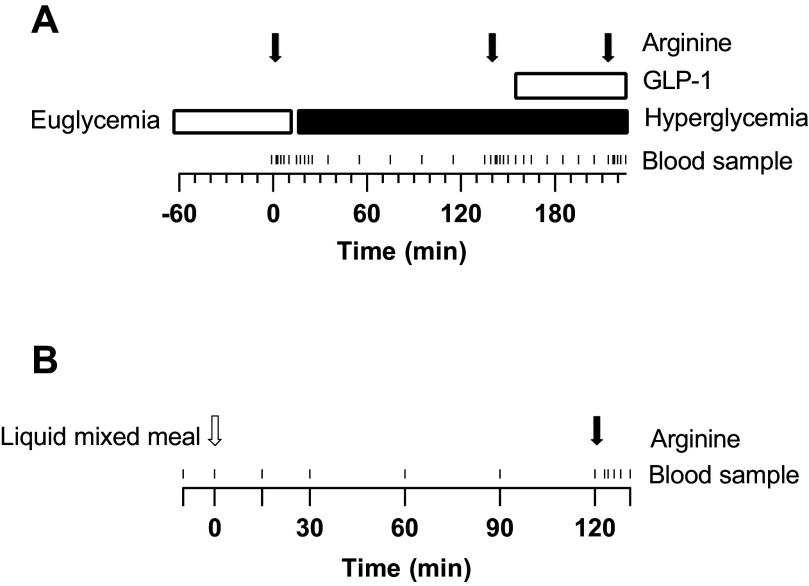 Figure 1
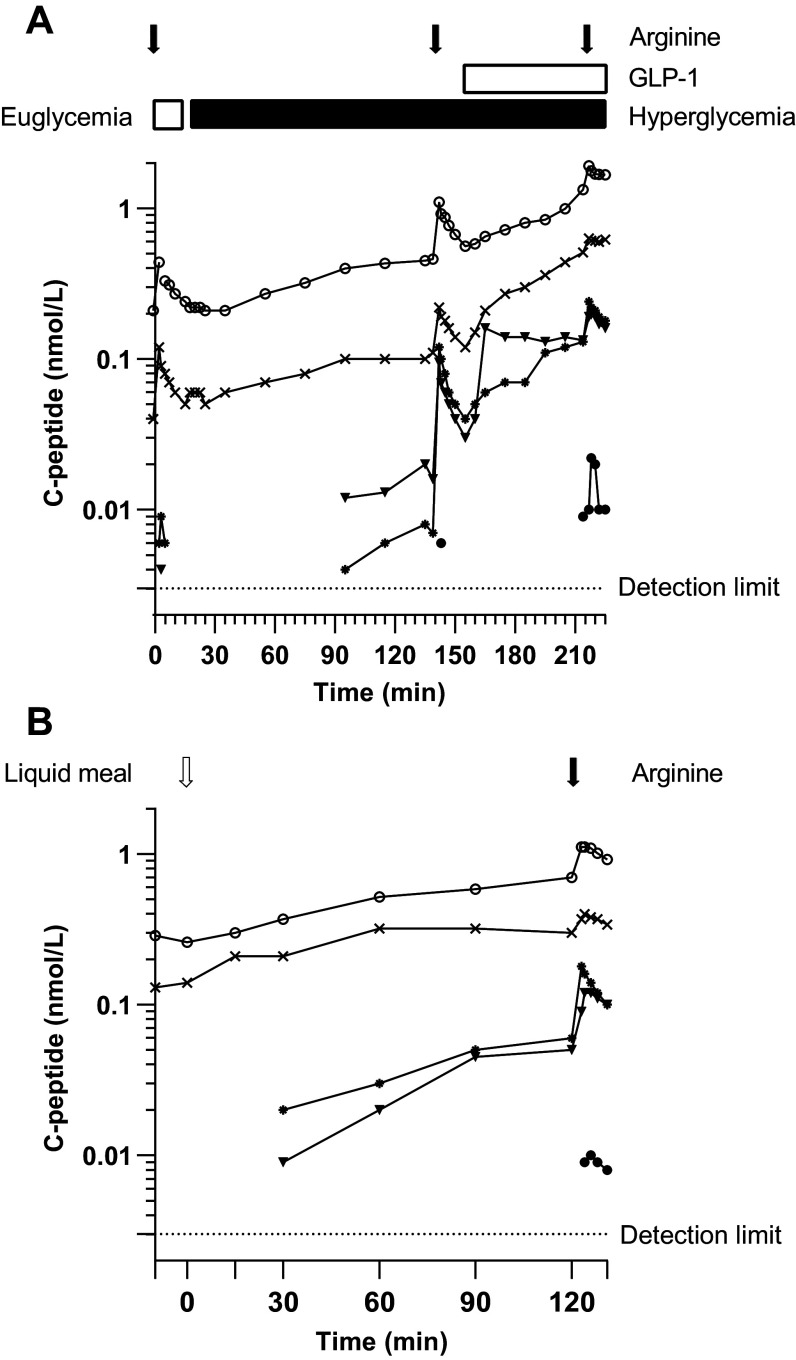 Figure 2
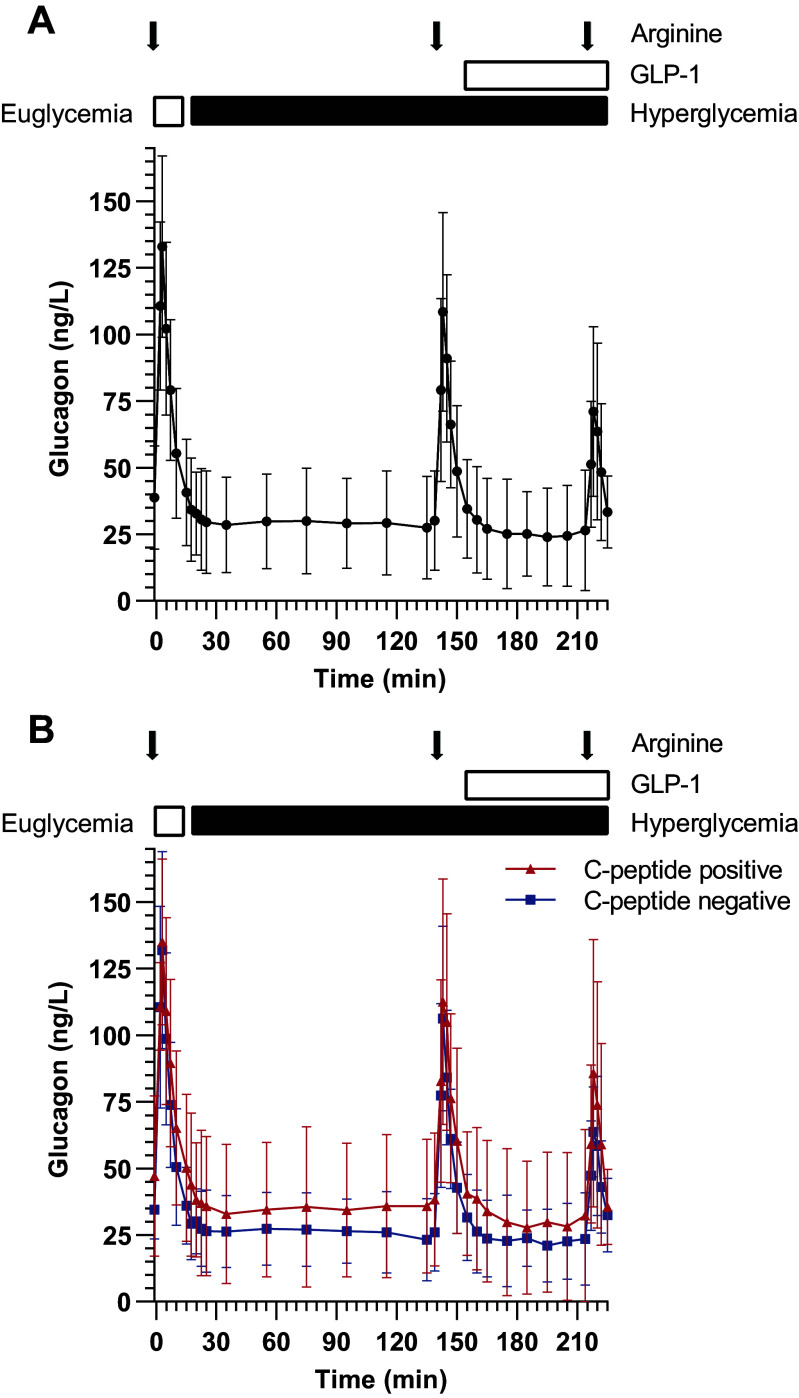 Figure 3
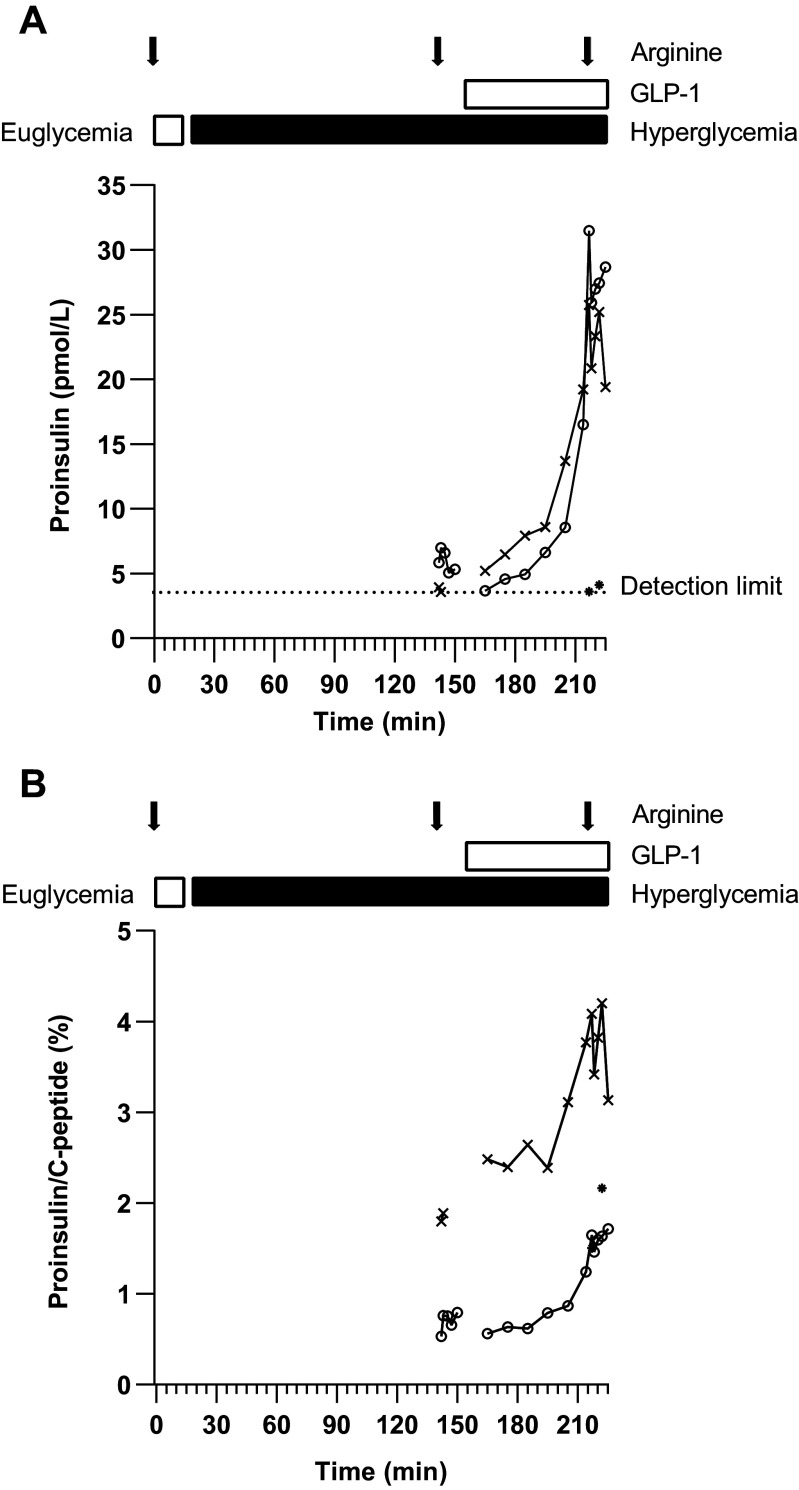 Figure 4
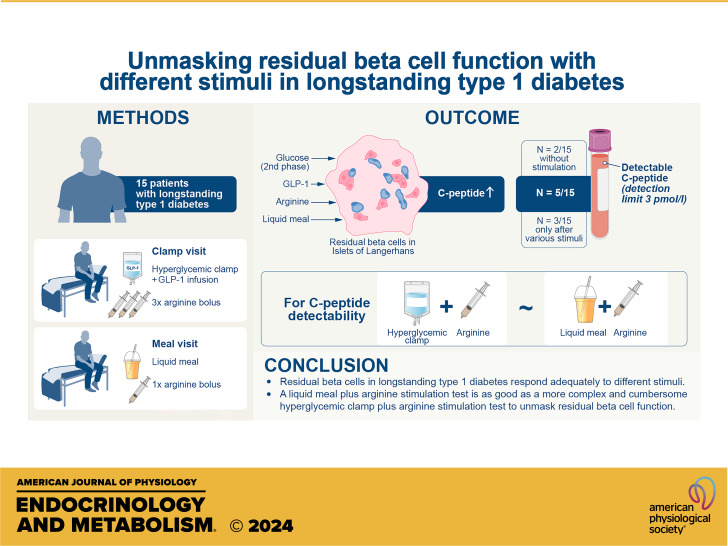 Figure 5
Peer Reviews
No public reviews on file for this paper yet. If you reviewed it on a platform where reviews are public (OpenReview, ICLR, NeurIPS, ICML), you can paste yours below so the community can read it here.
Videos
No videos yet. Explain this paper in a talk, walkthrough, or lecture? Add one.
Taxonomy
TopicsPancreatic function and diabetes · Diabetes Management and Research · Diabetes and associated disorders