The complete mitochondrial genome of aglaeactis castelnaudii (bourcier & mulsant, 1848) (apodiformes: trochilidae: aglaeactis) and phylogenetic analysis
Guangshuai Liu, Jincheng Liu, Xinyue Zhang, Xiaodong Gao

TL;DR
This study sequenced the complete mitochondrial genome of the White-tufted Sunbeam bird and used it to explore its evolutionary relationships with other hummingbird species.
Contribution
The study provides the first complete mitochondrial genome of Aglaeactis castelnaudii and reveals its closer phylogenetic relationship with Coeligena.
Findings
The mitogenome of Aglaeactis castelnaudii is 16,872 base pairs long and includes typical mitochondrial genes.
Phylogenetic analysis shows Aglaeactis is more closely related to Coeligena than to other Trochilidae genera.
The mitogenome data supports species identification and conservation genetic studies.
Abstract
In this study, we employed high-throughput sequencing data to assemble the mitochondrial genome (mitogenome) of the White-tufted Sunbeam (Aglaeactis castelnaudii). The total length of the mitogenome was found to be 16,872 base pairs (bp), containing 13 protein-coding genes (PCGs), 22 transfer RNA genes, 2 ribosomal RNA genes, and 1 control region. The nucleotide composition was as follows: A 30.6%, T 24.0%, C 31.2%, and G 14.2%, resulting in a GC content of 45.4%. Phylogenetic analysis, utilizing the concatenation of the 13 mitochondrial PCGs, indicated a closer evolutionary relationship between the genus Aglaeactis and the genus Coeligena compared to other genera within the family Trochilidae investigated in this study. The mitogenome of A. castelnaudii not only contributes to species identification but also provides valuable insights for phylogenetic and conservation genetic analyses…
Genes, proteins, chemicals, diseases, species, mutations and cell lines named across the full text — each resolved to its canonical identifier and authoritative record.
Click any figure to enlarge with its caption.
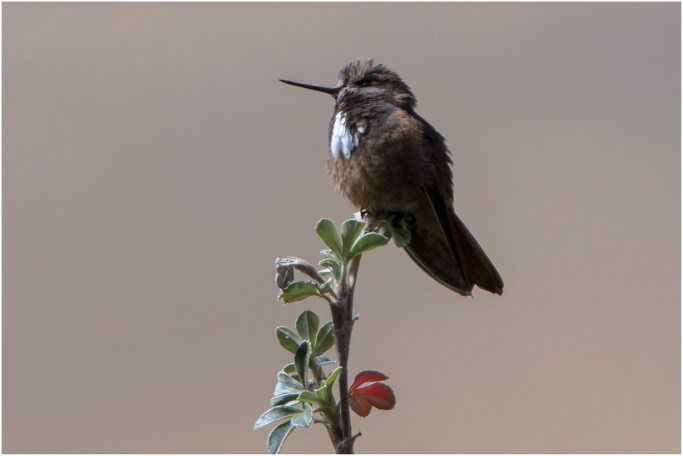 Figure 1
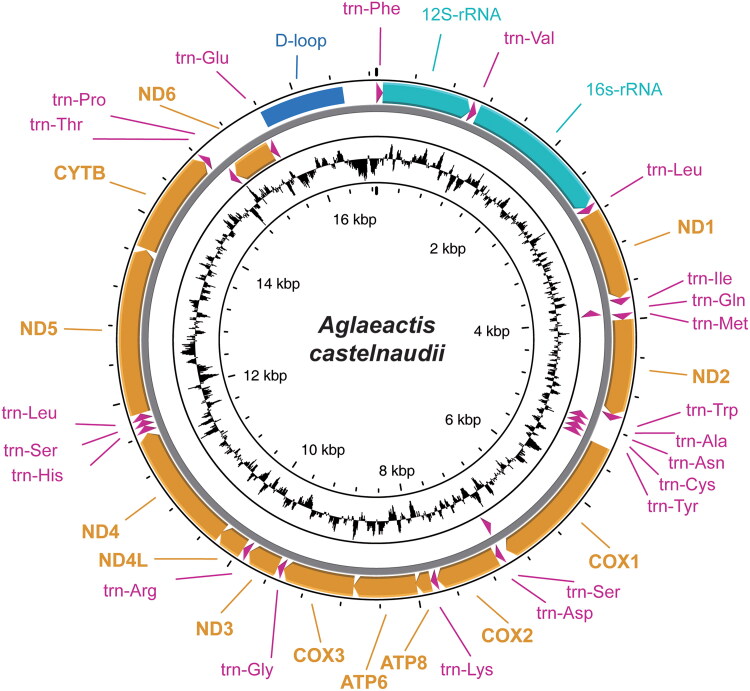 Figure 2
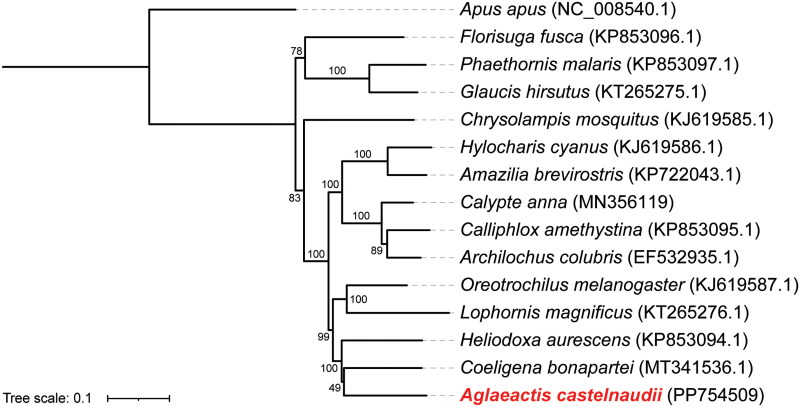 Figure 3
Peer Reviews
No public reviews on file for this paper yet. If you reviewed it on a platform where reviews are public (OpenReview, ICLR, NeurIPS, ICML), you can paste yours below so the community can read it here.
Videos
No videos yet. Explain this paper in a talk, walkthrough, or lecture? Add one.
Taxonomy
TopicsGenomics and Phylogenetic Studies · Genetic diversity and population structure · Identification and Quantification in Food