The role of respiratory function tests in infants with stridor: diagnosis at glance and follow-up
Silvia Bloise, Raffaella Nenna, Laura Petrarca, Maria Giulia Conti, Greta Di Mattia, Luigi Matera, Enrica Mancino, Domenico Paolo La Regina, Riccardo Lubrano, Enea Bonci, Corrado Moretti, Fabio Midulla

TL;DR
This study shows that respiratory function tests can help diagnose and monitor infants with stridor, offering a noninvasive alternative to traditional methods.
Contribution
The study demonstrates the effectiveness of PFR in diagnosing and tracking infants with stridor, particularly its strong agreement with endoscopy.
Findings
Infants with stridor showed increased inspiratory and expiratory times compared to healthy controls.
PFR showed excellent agreement with endoscopic findings (k = 0.885).
Respiratory parameters improved over time in line with infant growth.
Abstract
Recently, the development of advanced, noninvasive methods has allowed the study of respiratory function even in uncooperative infants. To date, there is still little data on the application of this technique in infants with suspected airway obstruction. The aims of our study were: - To evaluate the role of respiratory function testing (PFR) in the diagnosis and follow-up of infants with stridor - To evaluate the differences between patients with inspiratory stridor and expiratory stridor. - To evaluate the concordance between PFR and endoscopy. We enrolled infants aged < 1 year with a diagnosis of inspiratory and/or expiratory chronic stridor and a group of healthy controls. For each patient we performed PFR at diagnosis (T0) and for cases at follow-up, at 3 months (T1), 6 months (T2), 12 months (T3). At T0, all patients were classified according to a clinical score, and at…
Genes, proteins, chemicals, diseases, species, mutations and cell lines named across the full text — each resolved to its canonical identifier and authoritative record.
Click any figure to enlarge with its caption.
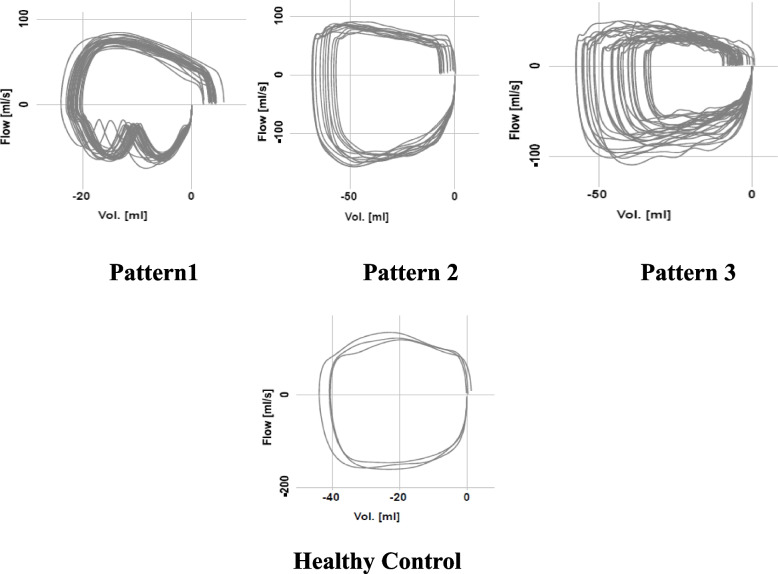 Figure 1
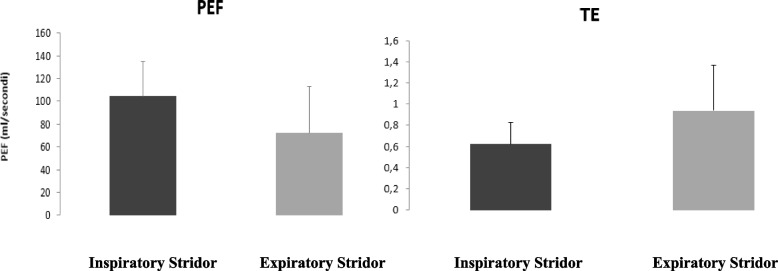 Figure 2
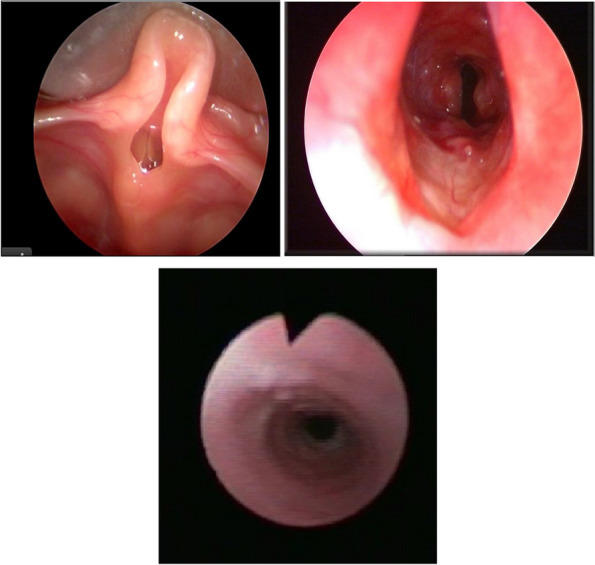 Figure 3
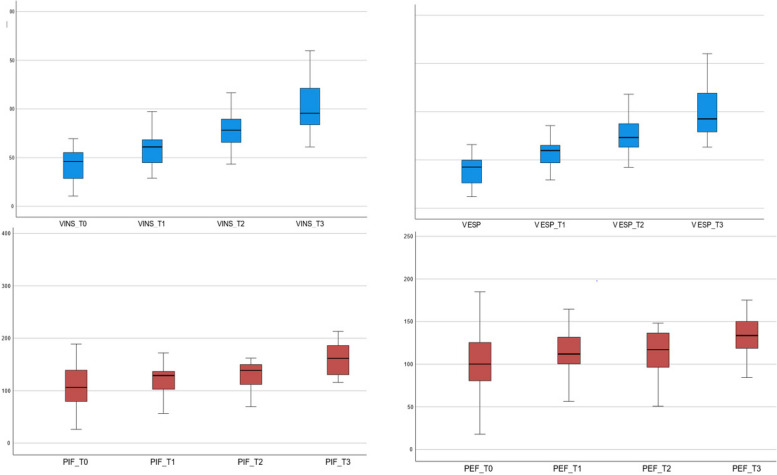 Figure 4
Peer Reviews
No public reviews on file for this paper yet. If you reviewed it on a platform where reviews are public (OpenReview, ICLR, NeurIPS, ICML), you can paste yours below so the community can read it here.
Videos
No videos yet. Explain this paper in a talk, walkthrough, or lecture? Add one.
Taxonomy
TopicsTracheal and airway disorders · Neonatal Respiratory Health Research · Congenital Diaphragmatic Hernia Studies