Effects of verbatim repetition of the headline message on the proceed button on click-through rates in online retail
Florian Kutzner, Florian K. G. Ermark, Julian Fornoff, Michaela Wänke

TL;DR
Repeating the headline message exactly on a proceed button increases online shopping conversion rates by over 10%.
Contribution
Demonstrates that verbatim repetition of messages improves conversion rates through processing fluency.
Findings
Verbatim repetition of header messages on buttons increased conversion rates by over 10 percentage points.
Gist repetitions and new messages performed worse than verbatim repetitions.
Processing fluency principles can be effectively applied to consumer behavior in online retail.
Abstract
For online retailers, increasing click-through rates and reducing dropout rates are critical to success. In this study, we examine the effect of verbatim repetition of the website's headline message on the proceed button, based on research on processing fluency. In our field study involving 956 online platform visitors, we found that verbatim repetitions of the header message on the proceed button resulted in an increase in the conversion rate by more than 10 percentage points compared to gist repetitions and new messages. Our findings highlight the importance of simple verbatim features and demonstrate the successful application of processing fluency research to impact consumer behavior.
Genes, proteins, chemicals, diseases, species, mutations and cell lines named across the full text — each resolved to its canonical identifier and authoritative record.
Click any figure to enlarge with its caption.
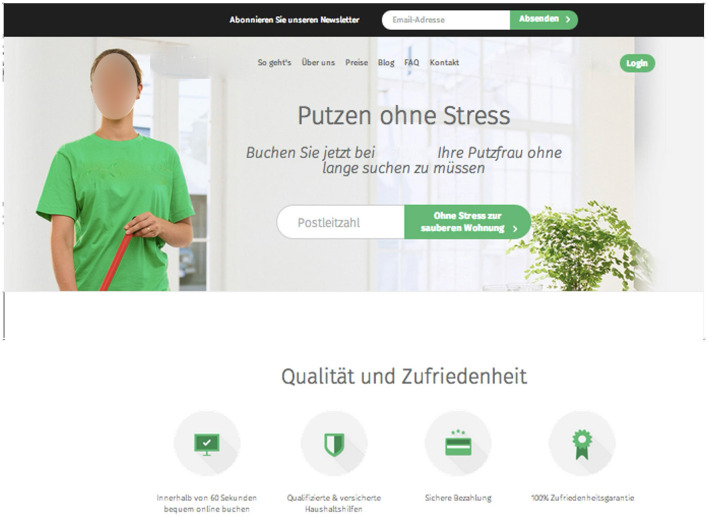 Figure 1
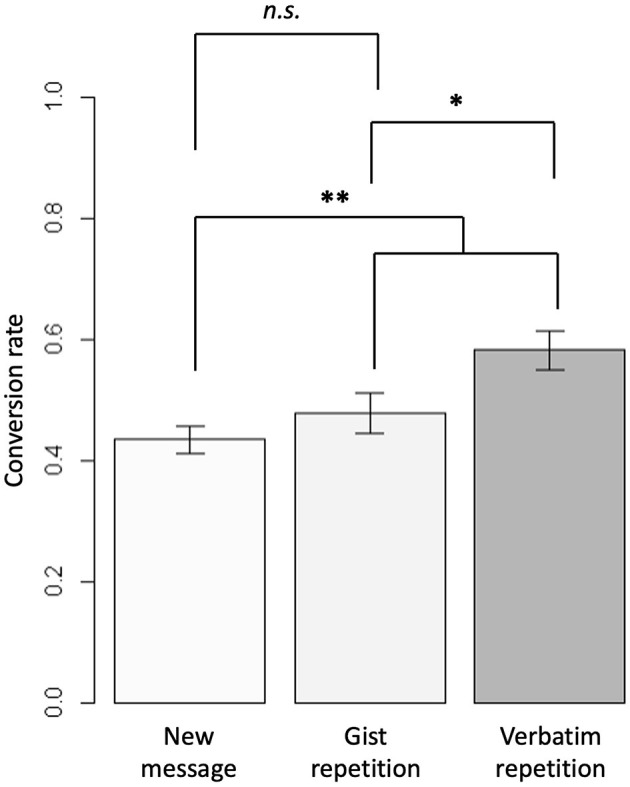 Figure 2
Peer Reviews
No public reviews on file for this paper yet. If you reviewed it on a platform where reviews are public (OpenReview, ICLR, NeurIPS, ICML), you can paste yours below so the community can read it here.
Videos
No videos yet. Explain this paper in a talk, walkthrough, or lecture? Add one.
Taxonomy
TopicsDigital Marketing and Social Media · Technology Adoption and User Behaviour · Consumer Behavior in Brand Consumption and Identification