Allosteric Communication of the Dimerization and the Catalytic Domain in Photoreceptor Guanylate Cyclase
Manisha Kumari Shahu, Fabian Schuhmann, Siu Ying Wong, Ilia A. Solov’yov, Karl-Wilhelm Koch

TL;DR
This study explores how calcium ions regulate the activity of a key enzyme in vision, revealing an allosteric communication pathway between distant parts of the enzyme.
Contribution
The paper identifies a novel allosteric communication mechanism in GC-E involving conserved amino acid positions.
Findings
Ca2+ inhibits the V902L mutant of GC-E by replacing Mg2+ in the catalytic center.
Mutation at position 804 reduces catalytic efficiency without affecting the main activation mechanism.
Allosteric communication connects the α-helical and catalytic domains in GC-E.
Abstract
Phototransduction in vertebrate photoreceptor cells is controlled by Ca2+-dependent feedback loops involving the membrane-bound guanylate cyclase GC-E that synthesizes the second messenger guanosine-3′,5′-cyclic monophosphate. Intracellular Ca2+-sensor proteins named guanylate cyclase-activating proteins (GCAPs) regulate the activity of GC-E by switching from a Ca2+-bound inhibiting state to a Ca2+-free/Mg2+-bound activating state. The gene GUCY2D encodes for human GC-E, and mutations in GUCY2D are often associated with an imbalance of Ca2+ and cGMP homeostasis causing retinal disorders. Here, we investigate the Ca2+-dependent inhibition of the constitutively active GC-E mutant V902L. The inhibition is not mediated by GCAP variants but by Ca2+ replacing Mg2+ in the catalytic center. Distant from the cyclase catalytic domain is an α-helical domain containing a highly conserved…
Genes, proteins, chemicals, diseases, species, mutations and cell lines named across the full text — each resolved to its canonical identifier and authoritative record.
Click any figure to enlarge with its caption.
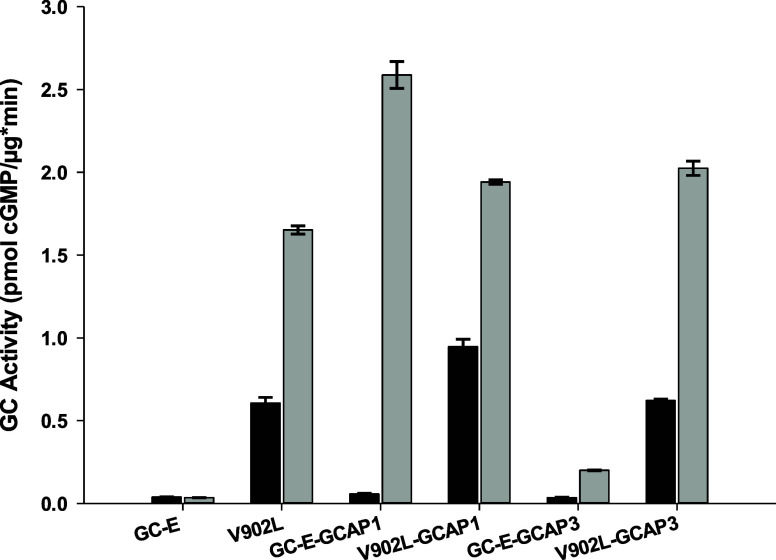 Figure 1
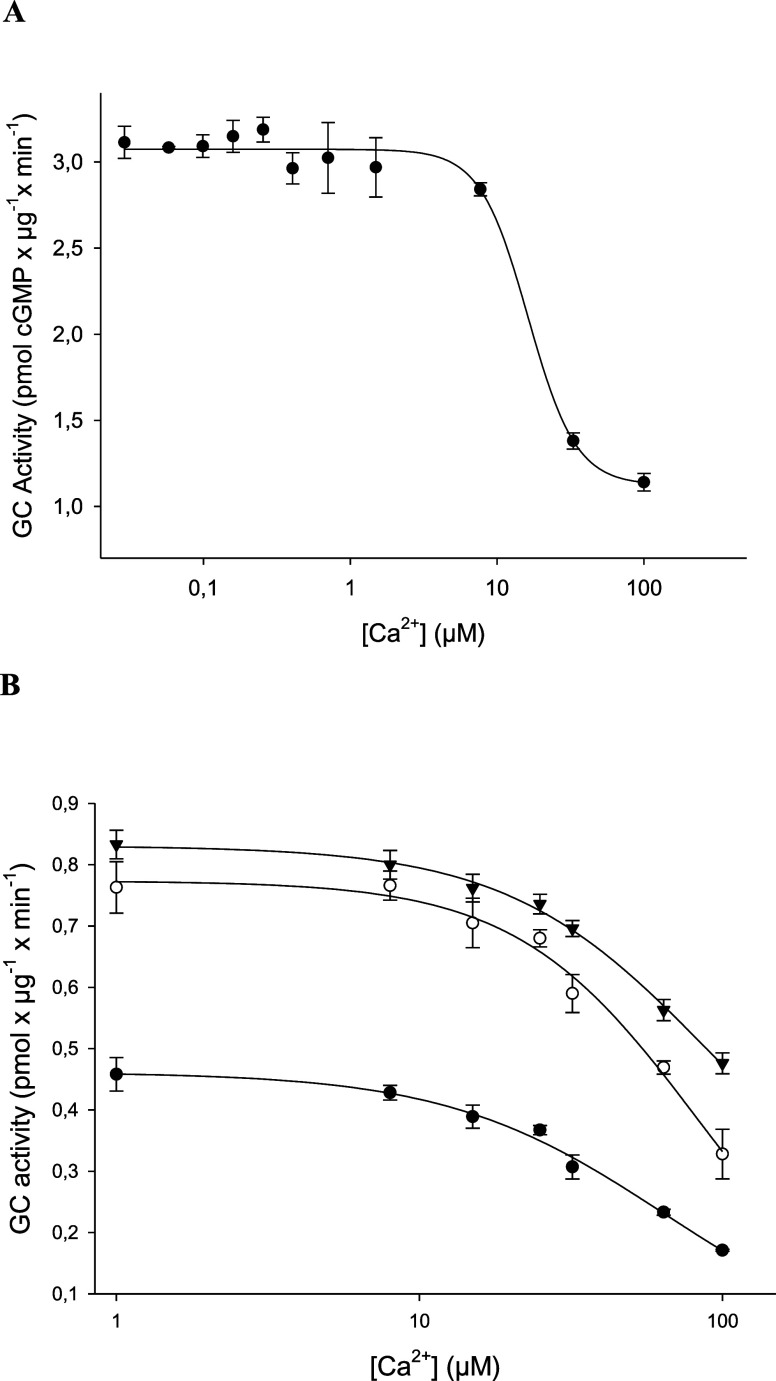 Figure 2
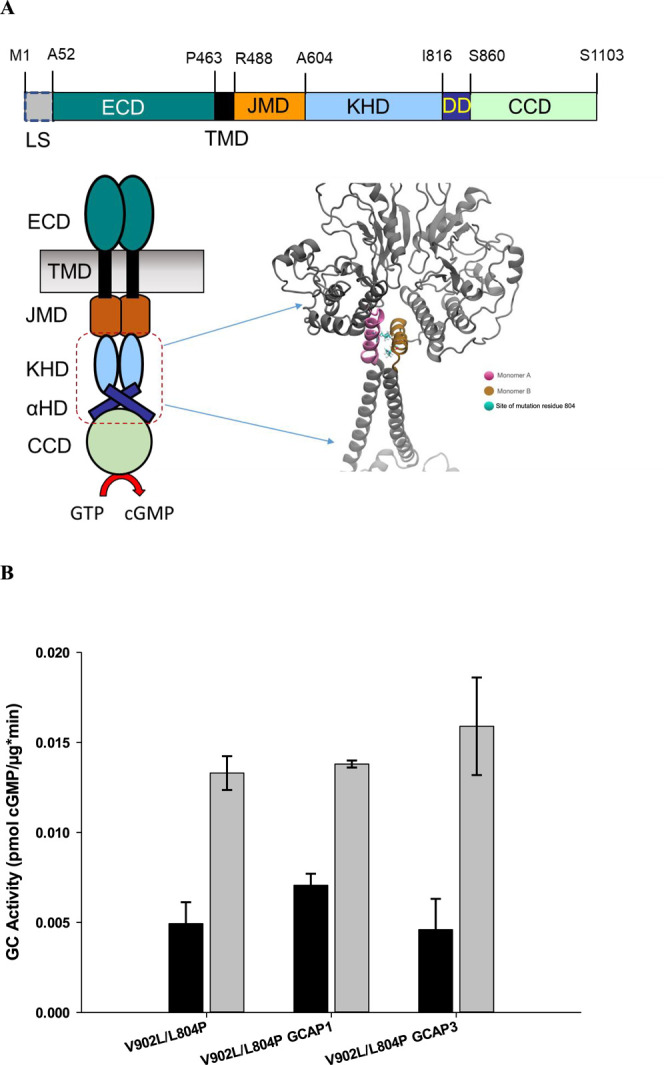 Figure 3
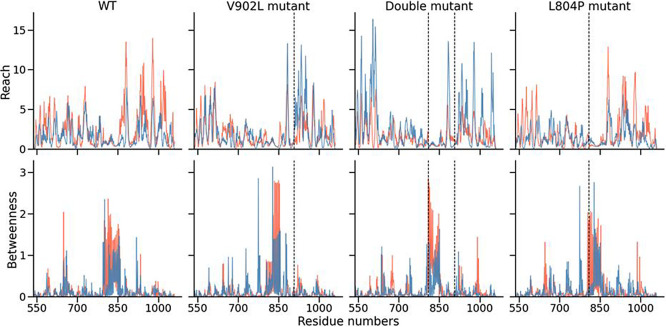 Figure 4
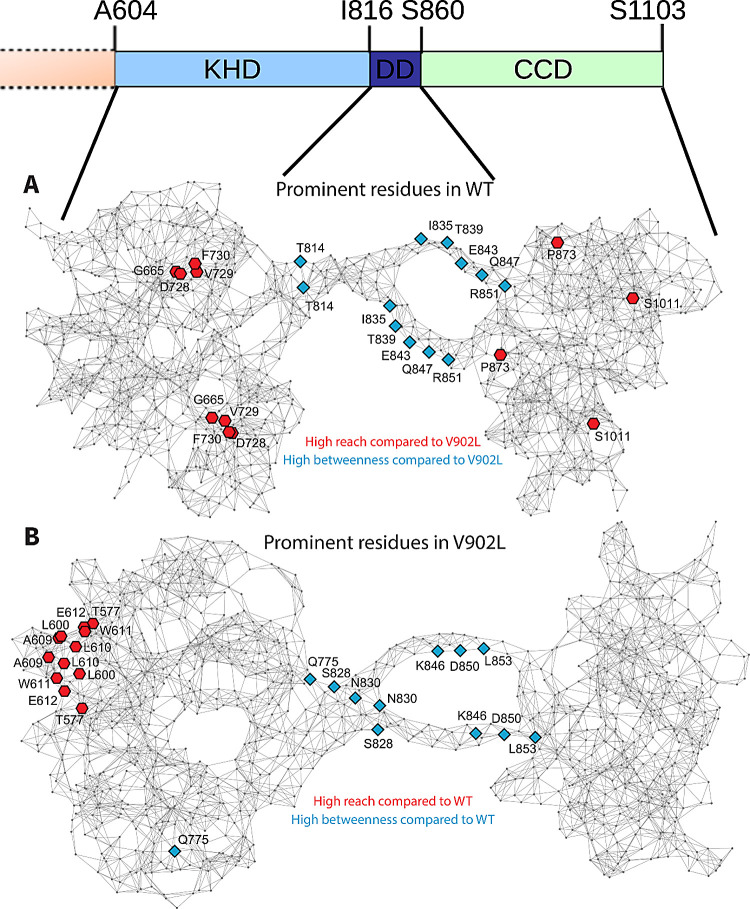 Figure 5
 Figure 6
 Figure 7
 Figure 8
 Figure 9
 Figure 10
 Figure 11
 Figure 12
 Figure 13
 Figure 14
Peer Reviews
No public reviews on file for this paper yet. If you reviewed it on a platform where reviews are public (OpenReview, ICLR, NeurIPS, ICML), you can paste yours below so the community can read it here.
Videos
No videos yet. Explain this paper in a talk, walkthrough, or lecture? Add one.
Taxonomy
TopicsRetinal Development and Disorders · Retinal Diseases and Treatments · Photoreceptor and optogenetics research